
A Critical Perspective on the Creative Works of the Kazakh Philosopher “Abai” after180 Years of Birth
By Dr. Abdulrahim Ibrahim Abdulwahid
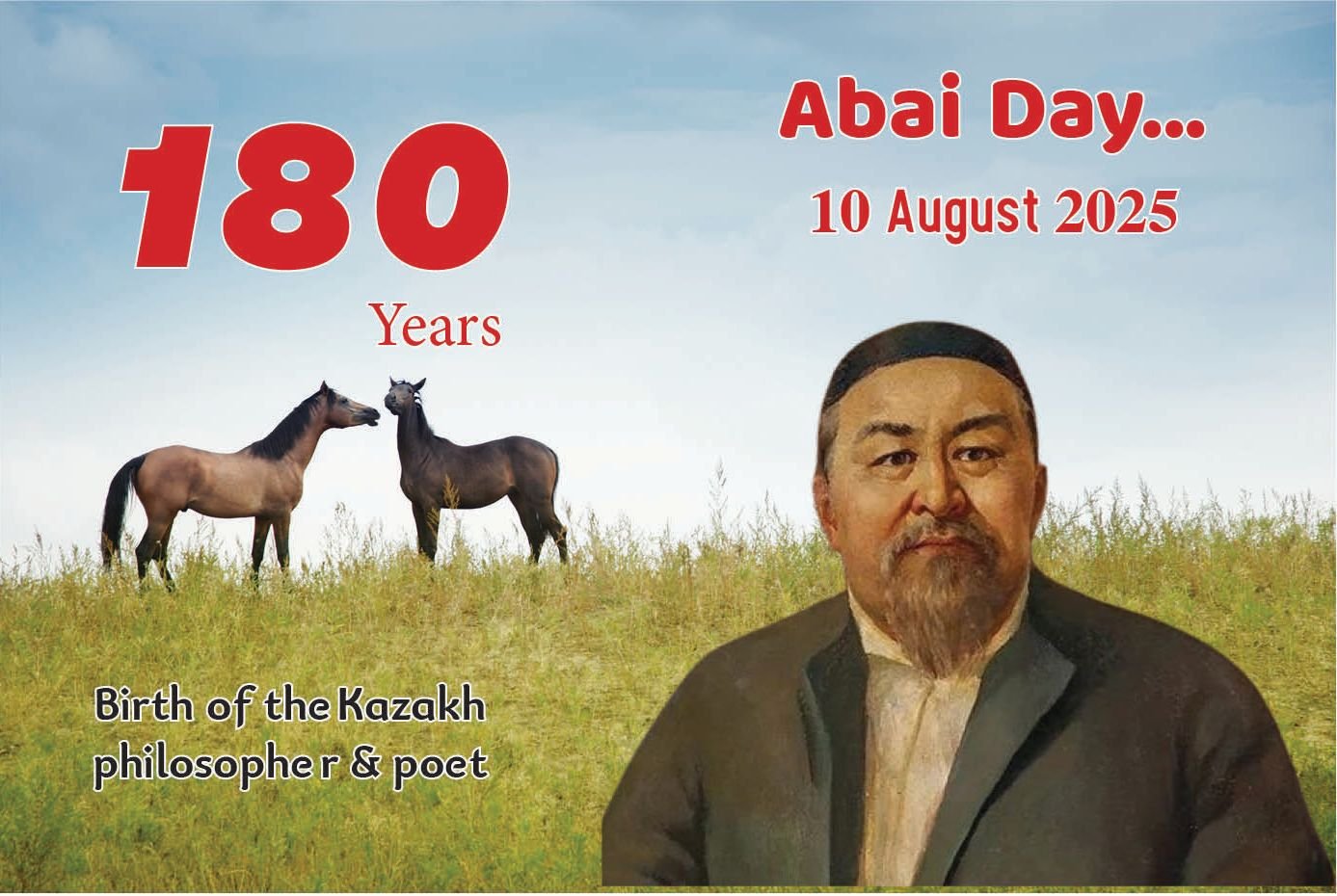
Astana – Dubai: From the wind-swept steppes of the 19th century to the bustling cities of modern Kazakhstan, one name has continued to echo across generations — Abai Qunanbaiuly. Poet, philosopher, educator, and moral guide, Abai’s words have carried the heartbeat of a nation and the wisdom of humanity. In 2025, Kazakhstan does more than mark the 180th anniversary of his birth; it rekindles his spirit through music, poetry, and shared memory. The celebrations stretch from Abai’s birthplace in Semey to the cultural centers of the world, reminding us that his vision of enlightenment, compassion, and responsibility remains as urgent today as it was more than a century ago.
We can say that:180 years have passed since the birth of Abai Qunanbaiuly, the eminent Kazakh poet, philosopher, and educator, whose thoughts continue to resonate across generations. Abai’s works, which encompass poetry, prose, and philosophical reflections, offer profound insights into morality, culture, and the human condition. This critical perspective seeks to explore the enduring relevance of his creative legacy, examining how his ethical, philosophical, and spiritual ideas continue to influence Kazakh society and the broader intellectual world nearly two centuries after his birth.
Presidential Tribute
In a special address to participants of the commemorative celebrations, President Kassym-Jomart Tokayev described Abai as “a towering figure of world culture and the founding father of modern Kazakh literature.” The President emphasized that Abai’s poetry, philosophical insights, and call for education, diligence, and civic responsibility remain vital for shaping the values of modern Kazakhstan.
Tokayev underlined that Abai’s legacy transcends borders, offering timeless guidance for humanity. He called for deeper study and broader promotion of the poet’s works, noting that the celebrations are taking place on sacred land that also gave rise to other great Kazakh figures such as Shakarim Kudaibergen and Mukhtar Auezov.
Abai – Poet, Philosopher, Educator, and National Symbol
Born in 1845, Abai was more than a poet; he was a composer, thinker, educator, and reformer whose works reflected the realities of Kazakh life and proposed a vision of progress through education, cultural enrichment, and scientific knowledge. His writings sought a balance between Kazakh traditions and new global ideas.
Over his lifetime, Abai produced around 170 original poems, 56 literary translations, and his famed prose collection “Words of Edification” (Kara Sozder). He introduced innovative poetic forms and meters to Kazakh literature, leaving a legacy that remains essential for understanding the nation’s cultural and moral foundations.
Our vision of his works
It can be said that the work that has personally attracted the most of my attention and admiration is the book “The Words”, considered among the greatest intellectual and literary achievements. In it, the poet Abai presented his moral, philosophical, and Islamic views through 45 sayings, opinions, pieces of advice, and stances on all aspects of life concerning Kazakhs and others. There is also the encyclopaedia “The Works of Abai” and “The Path of Abai” …
We must affirm a constant truth: one of the main reasons for the continuity of Abai’s works and poetry lies in the fact that they contain some of the most profound and beautiful human, social, and national meanings.
Therefore, given the limited time available in this symposium, we can extract many principles established by the poet Abai:
- Promoting and highlighting the concepts of the culture of the Kazakh steppe people.
- Extending Abai’s creativity to wider horizons across the entire world.
- Encouraging adherence to authentic values, accepting truth, and rejecting falsehood in all its forms, which helped strengthen and highlight the cultural concepts of human life in the Kazakh steppes.
- Calling for the emulation of the noble traits of the first Muslims and the preservation of customs and traditions passed down through generations.
- Abai’s creative works serve noble causes, including fostering closeness among peoples and civilizations.
- Abai elaborated in detail on how a person can build themselves and serve their community.
- He undertook many roles, including defending national values and the fundamentals of Kazakh identity—language, religion, history, customs, and traditions.
- Abai’s poetry became a faithful guardian of the collective memory and a trustee of Kazakh cultural heritage.
- His works contributed to repairing the fractures in social relations in his country and promoting an independent and resistant spirit against colonialism.
- He adapted the content of poetry to serve the causes of uplifting society and the Kazakh ethnic group.
- He introduced forms previously unknown in Kazakh poetry and established new ways to make broad use of the possibilities of the Kazakh mother tongue.
- Abai’s poems were distinguished by diversity in form and subject matter.
- His poetry was characterized by simplicity and the “deceptively simple” style, alongside the beauty of an artistic expression that reflected genuine poetic skill and talent.
- As a composer of his own poems and those of others, Abai possessed refined musical taste and deep knowledge of folk music.
- He constantly called for abandoning sins, vices, and all that diminishes human dignity.
- He invited all Kazakhs and others to spiritual elevation and transcendence above all else.
- He relied primarily on knowledge and the arts and on benefiting from the cultures of other peoples.
- Abai’s works defined the values he upheld: education and knowledge, respect, truth and honesty, peace, and love.
- His poetry addressed a wide range of life’s issues—from nature and love to life and death, as well as the personal flaws of the nation.
- Abai was the first to devise the idea of composing verses on the four seasons: “Summer”, “Autumn”, “Winter”, and “Spring”.
- He composed satirical verses targeting opportunism and criticizing powerful officials, which helped reinforce the standing of his long narrative poems such as “Iskander” (dedicated to Alexander the Great), “Masghud”, and “The Legend of the Great One”, cementing his distinguished reputation as a prominent poet of the Kazakh people.
Recognition Beyond Kazakhstan
Abai’s influence has spread far beyond his homeland. His works, translated into 116 languages, have been compared to the writings of Johann Goethe and the moral vision of Mahatma Gandhi. The year 1995, marking his 150th anniversary, saw a wave of global publications under UNESCO’s auspices.
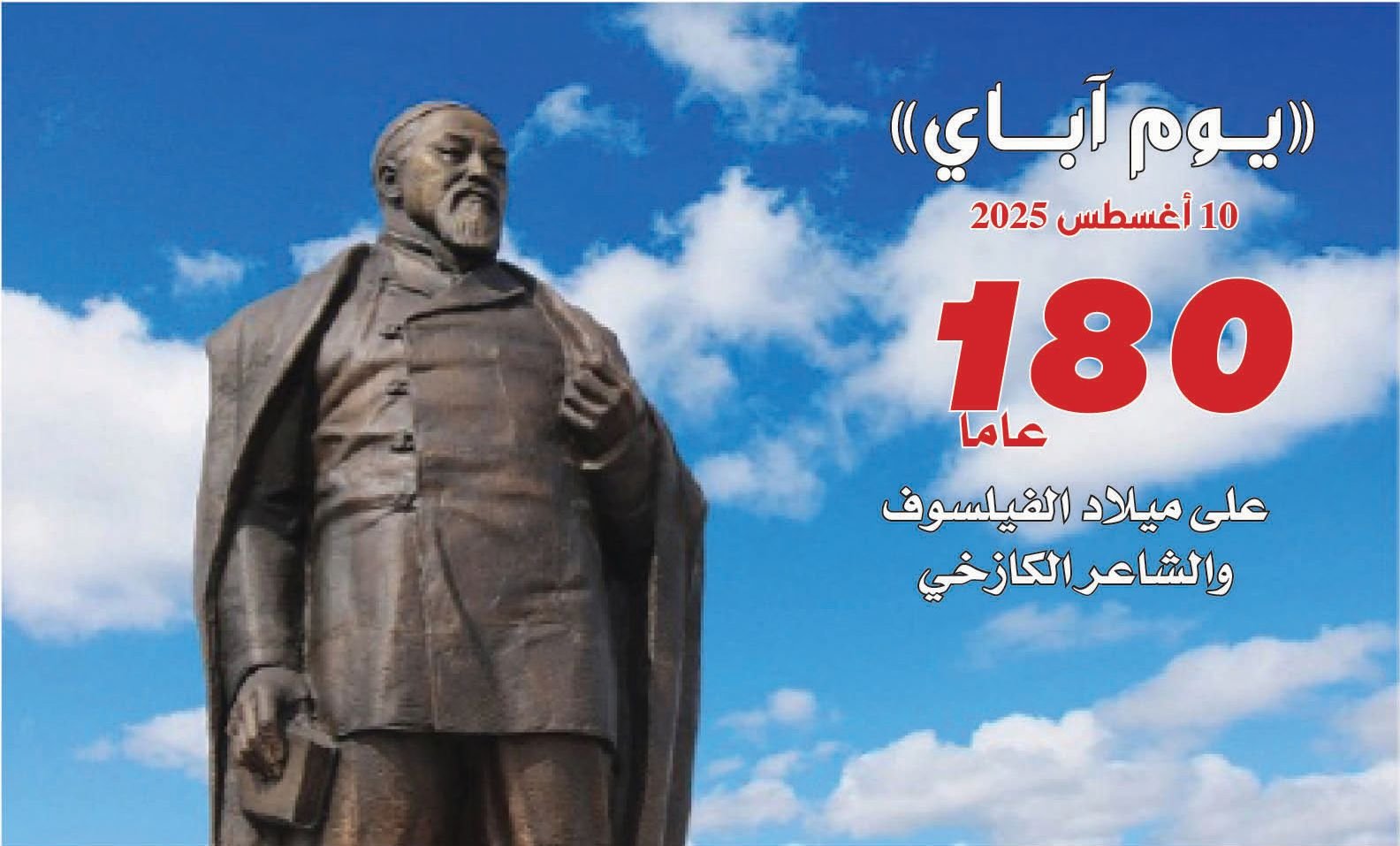
Monuments to Abai now stand in major cities worldwide – from Moscow, Paris, and Ankara to Cairo, Seoul, Berlin, and even at the UN Office in Geneva. Streets and parks bear his name, and cultural landmarks continue to be established in his honor.
A major driver of Abai’s global reputation was Mukhtar Auezov’s epic four-volume novel The Path of Abai (1942–1956), which immortalized the poet’s life and the spiritual journey of the Kazakh people. Translated into over 100 languages, it remains a cornerstone of Kazakh literature.
Nationwide Festivities
Across Kazakhstan, Abai Day is being marked with cultural, educational, and artistic programs. In Astana, the festivities began with a flower-laying ceremony at Abai’s monument, followed by a Dombyra Party featuring his best-loved songs performed on the traditional Kazakh instrument.
Five thousand schoolchildren are performing Abai’s works, while exhibitions such as “World of Abai” and “Repressed Relatives and Descendants of Abai Kunanbayev” are on display in museums and cultural centers. Public libraries and community spaces are hosting open lessons, poetry readings, and discussions on the continuing relevance of Abai’s wisdom.
In Shymkent, plans are underway to construct a major cultural and educational center dedicated to Abai’s legacy.
Semey – The Heart of the Celebrations
In Abai’s birthplace of Semey, the anniversary has taken the form of a ten-day cultural marathon involving more than 30,000 participants, including international delegations, academics, artists, and media representatives. Over 200 traditional yurts have been set up, with hundreds of cultural workers, cooks, technical staff, and more than 500 volunteers contributing to the festivities.
From August 1–10, the program includes 70 events: concerts, theater performances, exhibitions, festivals, and sports competitions. Highlights include the launch of the Abai Academy digital platform, the opening of an ethnic village to showcase Kazakh heritage, the Assyl Mura cultural festival, and an anniversary concert titled “Adamzattyn Alyby – Hakim Abai.”
The national intellectual contest Abai Quiz, featuring over 1,000 participants, has been nominated for inclusion in the Kazakhstan Book of Records.
A Legacy That Endures
For Kazakhstan, Abai is more than a historical figure; he is a moral compass, a unifying national symbol, and a bridge between Kazakh heritage and global culture. The scale of this year’s anniversary celebrations reflects his enduring role in shaping the country’s identity — and in inspiring people far beyond its borders.


