
Tokayev Outlines Compressive Agenda with 20 tasks for digital transformation and long-term modernization.
Written by Dr. Abdel Rahim Ibrahim Abdel Wahid
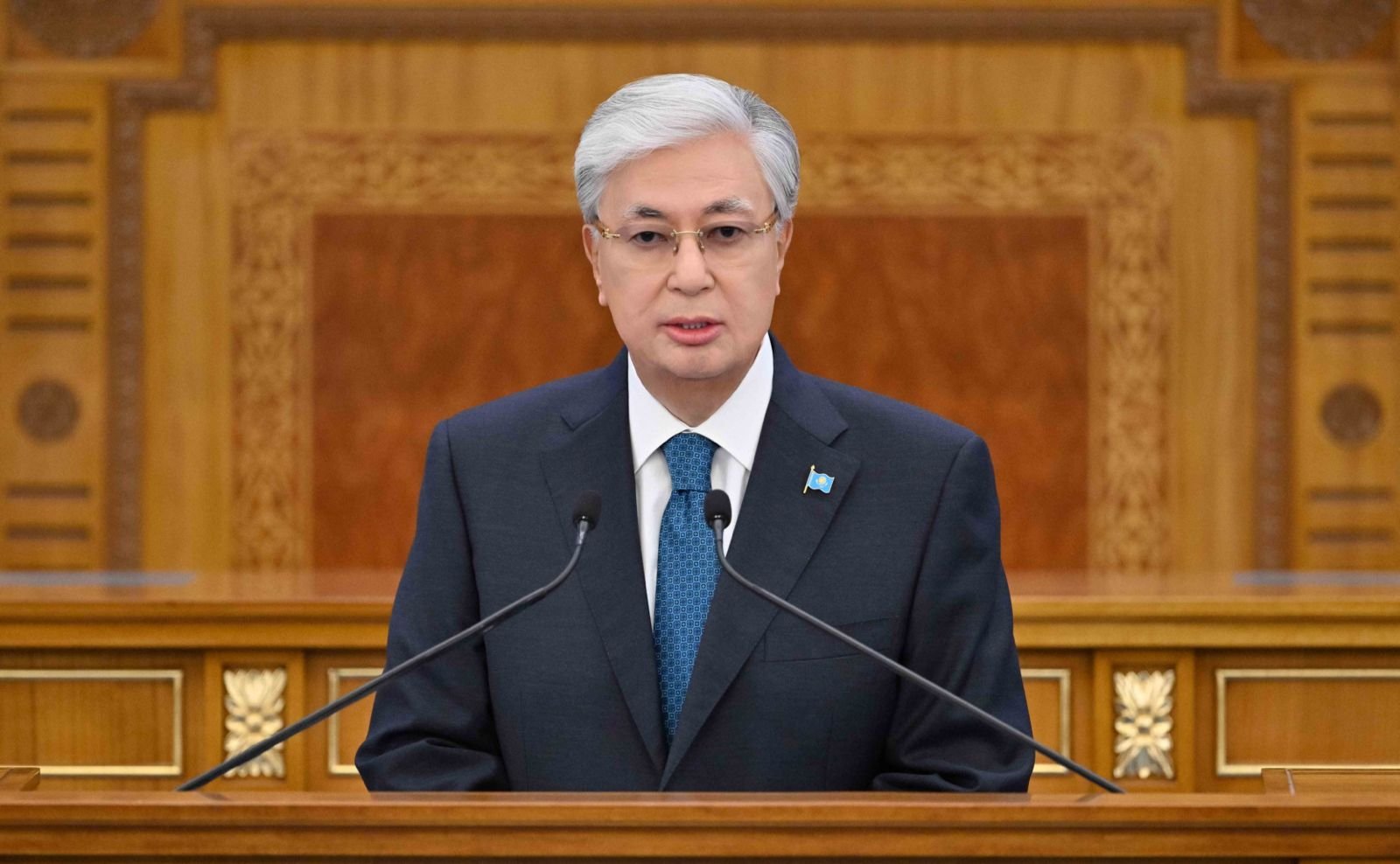
Astana – Kazakhstan President Kassym-Jomart Tokayev Set 20 Tasks and unveiled a sweeping reform agenda that positions Kazakhstan at the forefront of digital transformation and long-term modernization. Under the theme “Kazakhstan in the Era of Artificial Intelligence: Key Tasks and Their Solutions through Digital Transformation,” the President announced the creation of a Ministry of Artificial Intelligence and Digital Development, the establishment of a State Digital Asset Fund, and a new Banking Law to advance fintech and liberalize digital assets.
President Tokayev outlined plans for a fundamental overhaul of the investment system, the introduction of a Regional Investment Attractiveness Index, and the transformation of Kazakhstan into Eurasia’s leading aviation hub through major transport and logistics upgrades.
Politically, Tokayev proposed a nationwide referendum in 2027 to move toward a unicameral Parliament, marking a historic constitutional shift. On energy, he confirmed the launch of Kazakhstan’s first nuclear power plant alongside ambitious renewable targets, while announcing Alatau City as a fully digital innovation hub.
President Tokayev also highlighted diversification in manufacturing, agriculture, and tourism, reforms in education and healthcare driven by AI, balanced foreign policy engagements, and a strong emphasis on rule of law, social policy, and environmental sustainability — together forming a comprehensive blueprint to secure Kazakhstan’s resilience and leadership in the AI era.
20 tasks
The main tasks of the president speech was: Digital Transformation and Artificial Intelligence, Investment Policy and Economic Modernization, Transport and Transit Corridors, Balanced Foreign Policy and UN Reform, Parliamentary Reform, Energy Transition, Nuclear Build-out & Clean Coal, Macroeconomic Stability and Financial Sector, Alatau City – New Innovation Hub, Manufacturing and Industrial Diversification, Geological Exploration and Subsoil Data Modernization, Agriculture and Food Security, Tourism Reform, Utilities, Smart Cities and PPP, Water Security and Environmental Protection, SME Growth, Deregulation and Regulatory Intelligence, Human Capital, Education, and AI Skills, Healthcare Modernization , Culture and Sports, Social Policy and Demographics and Rule of Law, Civic Culture & National Unity.
Comprehensive Digital
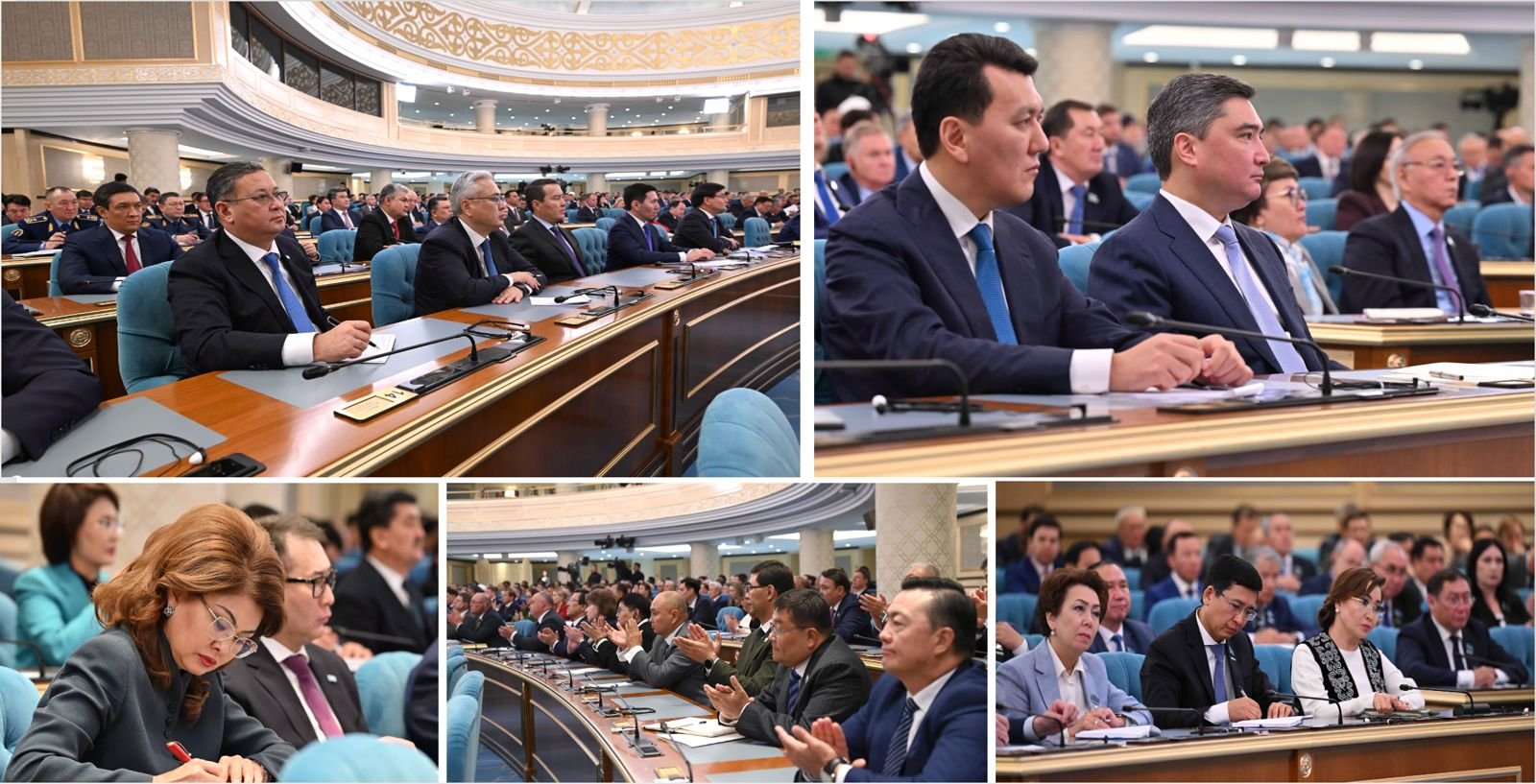
The President called for rapid adoption of a comprehensive Digital Code covering artificial intelligence, big data, and the platform economy, and directed the Government to ensure total integration of AI across all sectors of the economy.
Alongside digital transformation, the President focused on investment and economic modernization. He called for a renewal of Kazakhstan’s investment attraction system, noting that excessive bureaucracy had undermined efficiency. “Attracting investment is a priority that requires new approaches,” he stated, stressing that the Prime Minister is directly responsible for overseeing this process. Tokayev also proposed introducing a Regional Investment Attractiveness Index to hold local government accountable for their economic performance, while urging a rethink of the role of the National Fund. “The Fund’s resources should be used wisely to finance promising projects with high market potential,” he said.
Transport and logistics featured prominently as Kazakhstan continues to strengthen its role as a vital bridge between Europe and Asia. Tokayev announced the imminent completion of the Dostyk–Moyinty double-track railway, a project he described as “of special significance for the East–West corridor,” and pledged timely progress on other key railway links.
On foreign policy, President Tokayev reaffirmed Kazakhstan’s multi-vector approach, emphasizing the importance of balance and constructive engagement. He welcomed the results of recent high-level summits, including U.S.–Russia dialogue in Alaska and peace efforts between Azerbaijan and Armenia, and highlighted Kazakhstan’s growing partnerships with China, Türkiye, the Central Asia, the European Union, and the United States.
Reforms of the UN
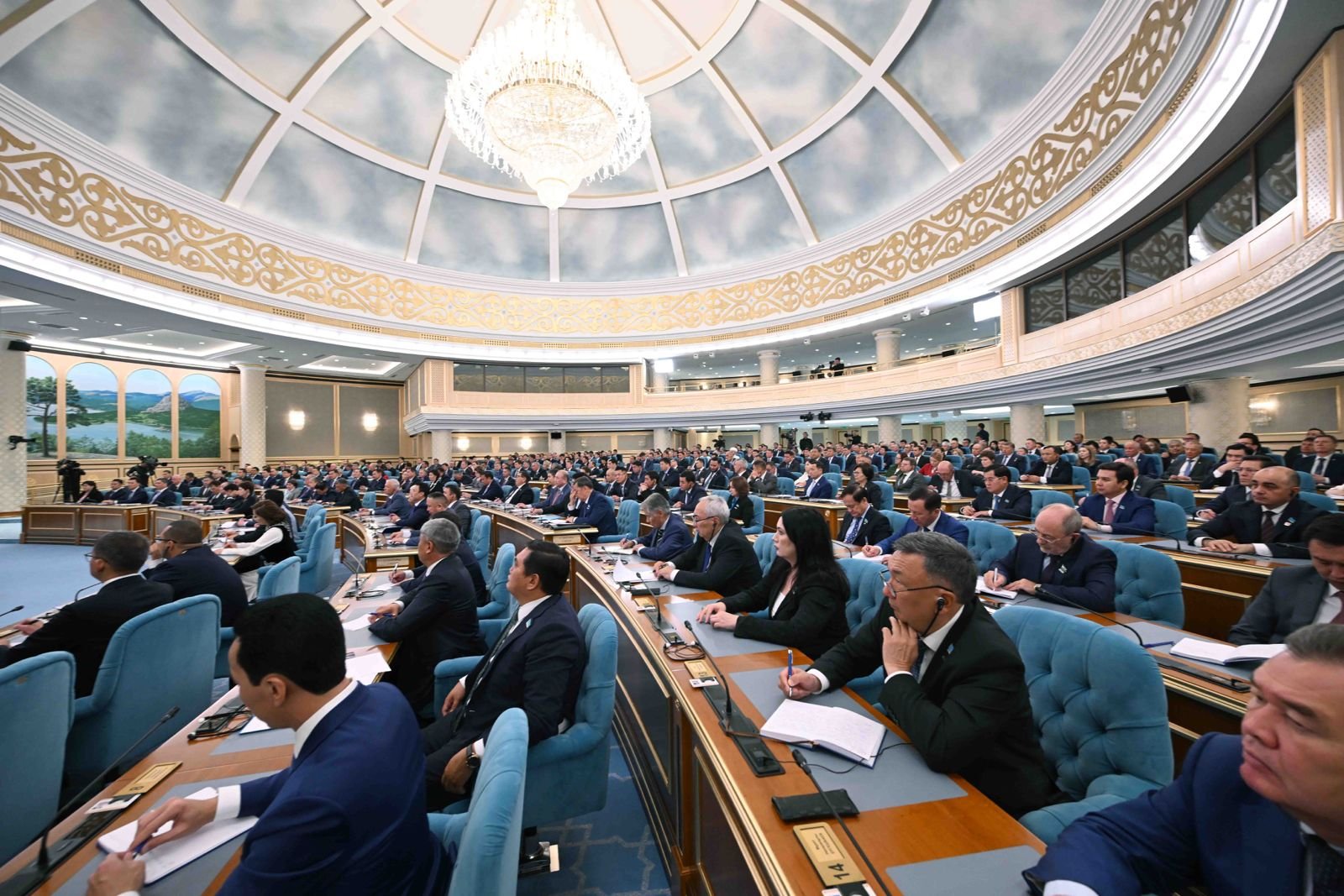
Looking ahead, he underscored the need for reform of the United Nations, particularly its Security Council. “The UN still has no alternative,” he said, “but reform is overdue, above all of its key body, the Security Council.” He added he would present Kazakhstan’s views on global reform during the upcoming session of the UN General Assembly in New York.
The President also proposed a major institutional reform that will have long-term political implications. He suggested a transition toward a unicameral Parliament, with the issue to be decided by a nationwide referendum in 2027.
The President also outlined broader national priorities. These included granting special status to Alatau City as a new innovation hub, adopting a new Construction Code by the end of the year, creating a unified digital land resources map, and pursuing long-term strategies for food security and water management. He called for continued restoration of the Aral Sea, joint efforts to preserve the Caspian Sea, and accelerated use of advanced water-saving technologies. In social policy, Tokayev urged reform of Kazakhstan’s extensive system of benefits to ensure sustainability and fairness, alongside measures to strengthen pensions, expand healthcare, and improve financial literacy.
Closing his speech, President Tokayev stressed the unifying principles of law, order, and patriotism as Kazakhstan navigates global change. “If our people are united and the internal situation is stable, we will overcome all difficulties and meet any trial,” he stated.


