
Jesse Jackson death latest: Trump praises civil rights hero’s ‘personality, grit, and street smarts’

Civil rights leader Rev. Jesse Jackson, an ally of Dr Martin Luther King Jr who twice ran for the Democratic presidential nomination, has died at age 84, his family said in a statement Tuesday.
“Our father was a servant leader – not only to our family, but to the oppressed, the voiceless, and the overlooked around the world,” the family said.
Jackson was diagnosed with Parkinson’s disease in 2017 and has struggled with his health in recent months.
President Donald Trump praised Jackson’s “personality, grit, and street smarts” on Truth Social, remembering their long association, while Bernice King and Rev. Al Sharpton also paid moving tribute, the latter calling his friend a “transformative leader.”
Jackson had advocated for the rights of Black Americans and other marginalized communities since helping spearhead the civil rights movement of the 1960s alongside Dr. King, a fellow Baptist minister.
He ran for the presidency in 1984 and 1988, attracting Black voters and many white liberals in two strong campaigns that ultimately fell short at a time when Ronald Reagan dominated the political scene.
Jackson also founded the Chicago-based civil rights groups Operation PUSH and the National Rainbow Coalition.
Trump praises Jackson’s ‘personality, grit, and street smarts’
No sooner had I said that than the president posted the following tribute on Truth Social, which is largely complimentary while also underlining how much he “helped Jesse along the way.”
“The Reverend Jesse Jackson is Dead at 84. I knew him well, long before becoming President. He was a good man, with lots of personality, grit, and ‘street smarts.’ He was very gregarious – Someone who truly loved people! Despite the fact that I am falsely and consistently called a Racist by the Scoundrels and Lunatics on the Radical Left, Democrats ALL, it was always my pleasure to help Jesse along the way. I provided office space for him and his Rainbow Coalition, for years, in the Trump Building at 40 Wall Street; Responded to his request for help in getting CRIMINAL JUSTICE REFORM passed and signed, when no other President would even try; Single handedly pushed and passed long term funding for Historically Black Colleges & Universities (HBCUs), which Jesse loved, but also, which other Presidents would not do; Responded to Jesse’s support for Opportunity Zones, the single most successful economic development package yet approved for Black business men/women, and much more. Jesse was a force of nature like few others before him. He had much to do with the Election, without acknowledgment or credit, of Barack Hussein Obama, a man who Jesse could not stand. He loved his family greatly, and to them I send my deepest sympathies and condolences. Jesse will be missed!”
Joe Sommerlad17 February 2026 13:35
Trump praised Jackson as ‘tough negotiator’
We have yet to hear from the president on the civil rights leader’s passing but they have had a pretty mixed relationship in the past, with Jackson at one time speaking admiringly of Trump’s support for minority entrepreneurs and later warning against his divisive political rhetoric.
The president did have this to say about Jackson in 1998, which counts as huge praise given Trump’s view of the world.
Joe Sommerlad17 February 2026 13:30
Bernice King pays tribute to Jackson
MLK’s daughter pays her respects.
Joe Sommerlad17 February 2026 12:55
‘I was afraid to fail’: Jackson’s early life
The future civil rights leader and minister was born Jesse Louis Burns on October 8, 1941, in Greenville, South Carolina, to Helen Burns, 16, and Noah Louis Robinson, a 33-year-old married neighbor.
However, Jackson would not learn the identity of his biological father until he was seven years-old.
Later in his childhood, he took the last name of his stepfather, Charles Jackson, whom his mother married when he was an infant. Jackson considered both men to be his fathers.
Growing up in poverty in the Jim Crow era, facing societal judgment for being born out of wedlock and personal challenges with his biological father, Jackson learned to channel his fears into excellence.
“I was afraid to fail,” Jackson told The Chicago Tribune in 1996. “An all-around excellence in sports and academics, being a first-string athlete and an honor student, could protect you from feeling a certain form of rejection. People don’t laugh at you when you get A’s.”
From his early adolescence, Jackson was defined by his charisma and intelligence, being elected class president of Sterling High School and graduating with honors.
Jackson rejected an offer from a minor league baseball team and instead took a football scholarship at the University of Illinois. He later transferred to North Carolina A&T State University, where he got his start in student politics.
Joe Sommerlad17 February 2026 12:40
Watch: Jesse Jackson’s most iconic speeches
Here’s a look at some of Jackson’s finest public addresses.

Jesse Jackson’s most iconic speeches as civil rights icon dies aged 84
Jesse Jackson, longtime civil rights leader and two-time presidential candidate, has died at the age of 84. Announcing his death, his family paid tribute to Jackson as a “servant leader – not only to our family, but to the oppressed, the voiceless, and the overlooked around the world”. A protégé of Martin Luther King Jr., Jackson became well known for his engaging and rousing speeches that championed racial equality. From his call-and-response chant, known as “I Am Somebody”, which encouraged people to uplift themselves, to his “Rainbow Coalition” speech, which advocated for a broad alliance of marginalised groups, The Independent takes a look at some of Jackson’s most iconic speeches.
Joe Sommerlad17 February 2026 12:25
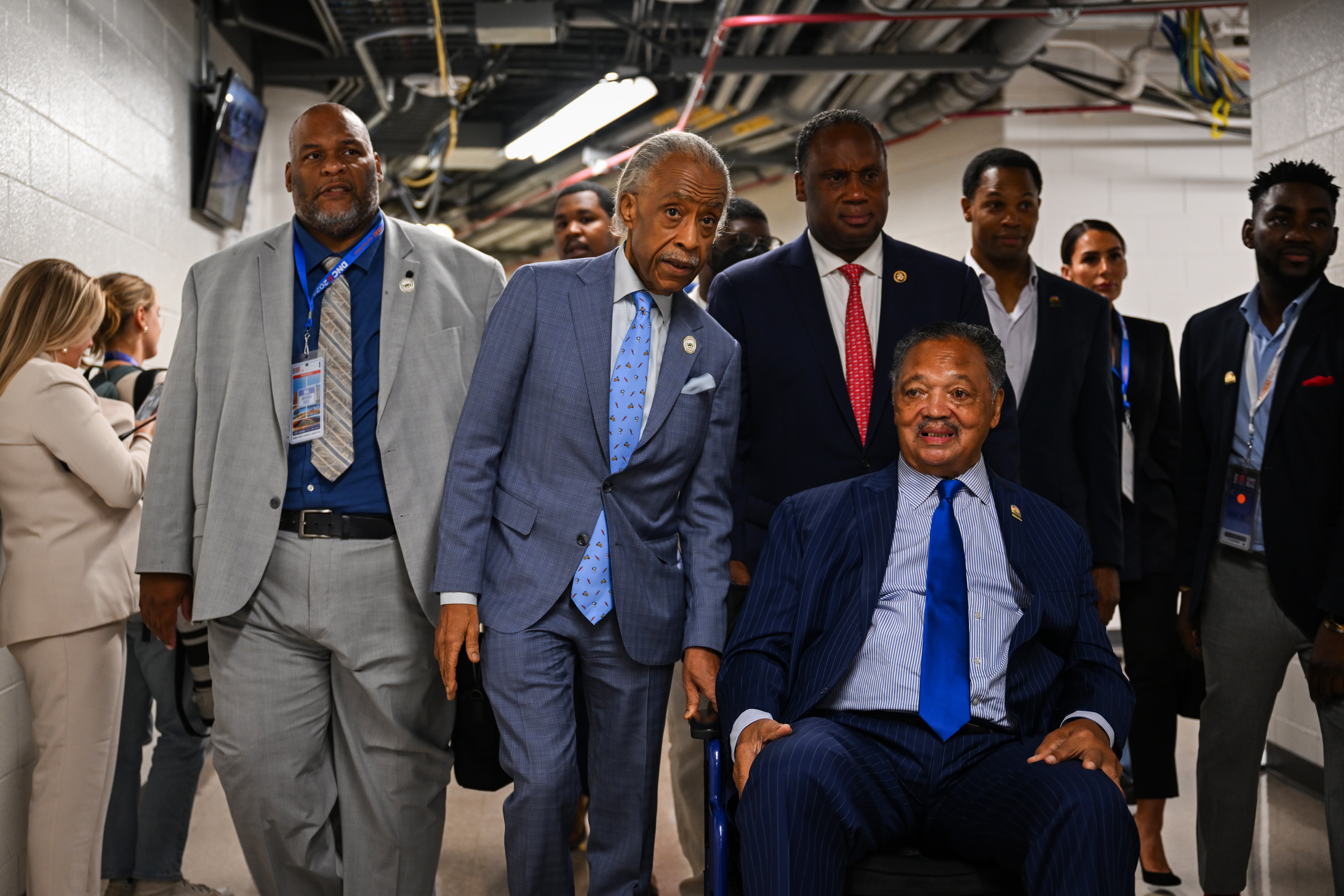
Al Sharpton: ‘My mentor has passed’
Here’s a very moving tribute from the Rev. Al Sharpton, who knew Jackson for decades.
“My mentor, Rev. Jesse Jackson, has passed. I just prayed with his family by phone. He was a consequential and transformative leader who changed this nation and the world. He shaped public policy and changed laws. He kept the dream alive and taught young children from broken homes, like me, that we don’t have broken spirits.”
Speaking about Jackson in 2017, Sharpton said:
“As I watched him, I thought about the greatness of this man. How he continued Martin Luther King’s movement for justice, how he cemented it in the north and made the King movement truly national.
“He changed the nation. He served in ways he never got credit. No one in our lifetime served longer and stronger. We pray for him, because he’s given his life for us.”
Joe Sommerlad17 February 2026 12:10
Jackson’s tears as Obama made history
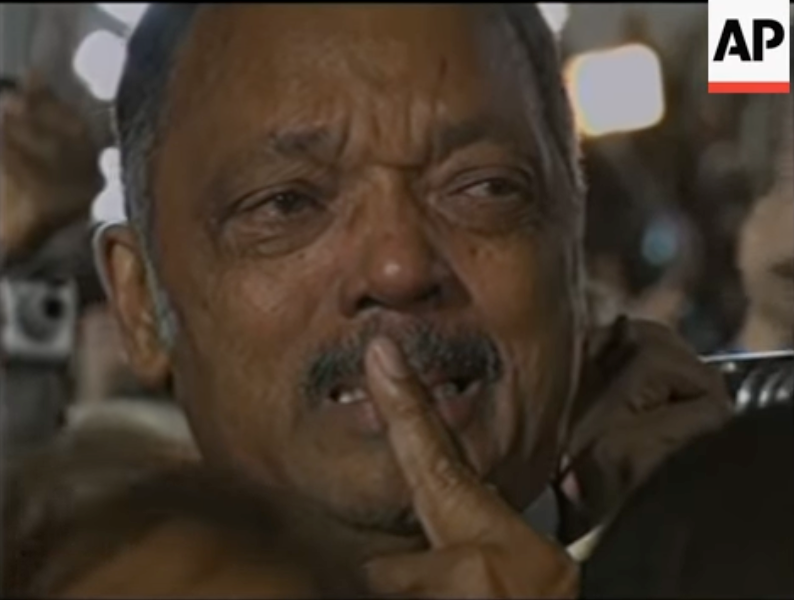
Another memorable moment in Jackson’s career came after he endorsed Barack Obama’s campaign and went on to see the young Democrat make history by become the first Black U.S. president in 2008.
Watching Obama’s acceptance speech in Grant Park, Chicago,, Jackson was seen with tears in his eyes.
“You know, I was crying. We saw on the screen that he had won. And I thought about the moment. The movement.
“Those who could not make it to Chicago. The people who made that night possible – they were not there. They couldn’t make it,” Jackson said of Obama’s winning night in conversation with Vanity Fair in 2020.
“I wish they could have been there. Dr. King and Medgar Evers and Fannie Lou Hamer. People who’d paid the supreme price,” he said.
“If God had let them live just 15 seconds more to see the fruits of their labor.”
Joe Sommerlad17 February 2026 11:40
How Jackson befriended Dr Martin Luther King
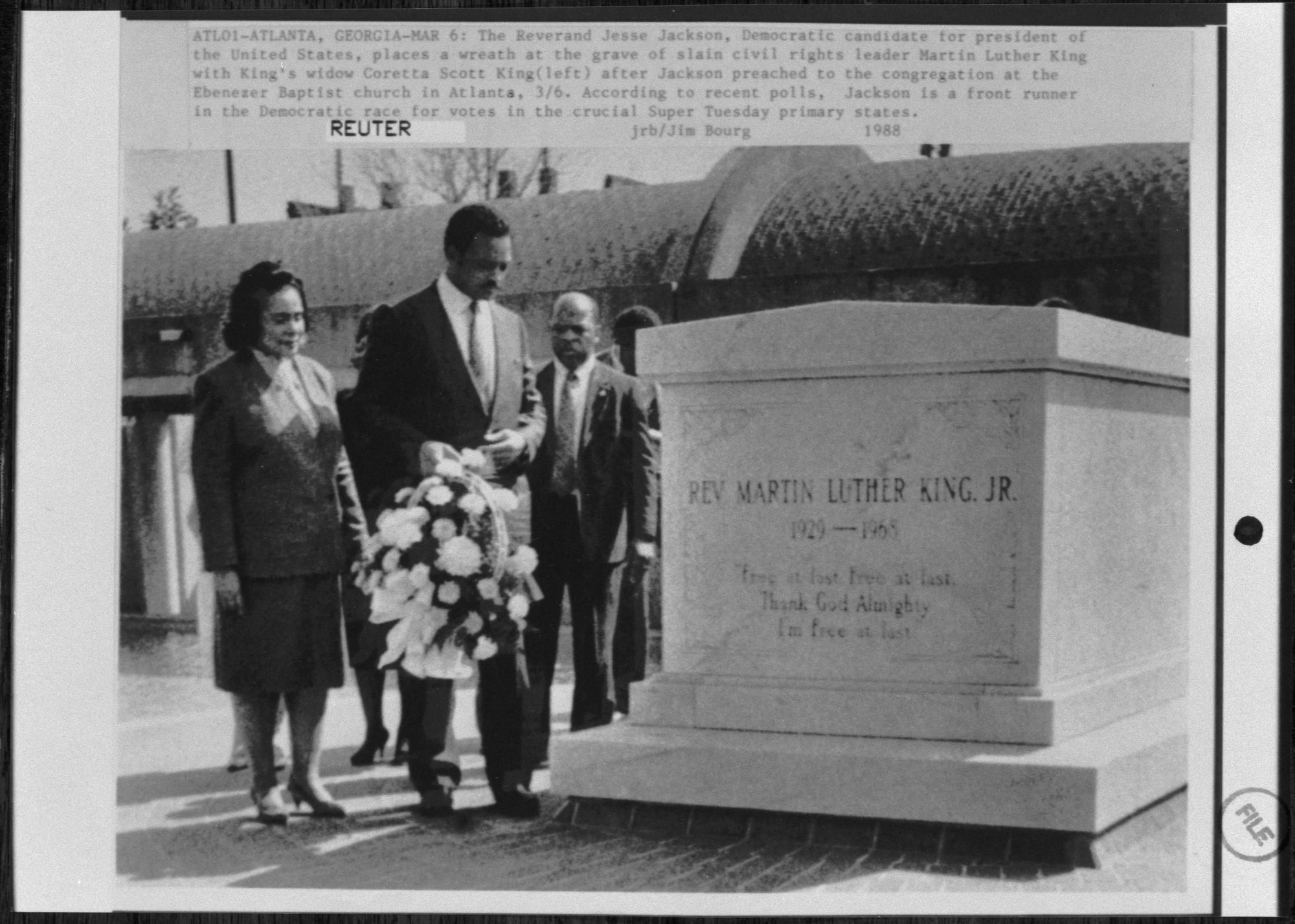
While attending North Carolina A&T State University in 1960, Jesse Jackson became active in the institution’s burgeoning civil rights movement, joining his local Congress of Racial Equality chapter and taking a leadership role in organizing sit-ins.
Among these was a demonstration he organized on July 16, 1960, at the “whites only” Greenville County Public Library, which would later land Jackson and seven other Black students with the nickname the “Greenville Eight.”
As a result of that protest, the library closed down its segregated branches and later opened a single integrated one, attracting the attention of Dr King.
While studying theology at the Chicago Theological Seminary, Jackson was recruited by King to be an organizer with the Southern Christian Leadership Conference and the older man soon appointed him director of the Operation Breadbasket program, dedicated to improving the economic conditions of Black communities.
At 27, Jackson was a rising voice in the movement and considered by many as a contender to become MLK’s successor.

But King’s assassination changed the future of the SCLC and Jackson’s position within it. Jackson was on the balcony of the Lorraine Motel in Memphis when King was fatally shot on April 4, 1968, and remained haunted by the tragedy for the rest of his life.
“Every time I think about it, it’s like pulling a scab off a sore,” he said of the killing in a 2018 interview with The Guardian.
“It’s a hurtful, painful thought: that a man of love is killed by hate; that a man of peace should be killed by violence; a man who cared is killed by the careless.”
Joe Sommerlad17 February 2026 11:25


