

The so-called ‘special relationship‘ between the United Kingdom and the United States has long waxed hot and cold, but is now under critical strain as Donald Trump’s administration escalates war in the Middle East.
The UK has not directly joined the US-Israeli assault on Iran, and amid retaliatory strikes on countries across the region, the US president has lashed out at Sir Keir Starmer as being “no Winston Churchill”, after he did not allow the Washington to use UK bases to launch initial air strikes against Tehran.
Churchill popularised the term “special relationship” in a 1946 speech warning about the threat posed by the Soviet Union to the West following the end of the Second World War.
Since then, intelligence sharing, military co-operation, trade and cultural ties have bound the two nations in varying degrees of dependence and trust, which has endured despite shifting global politics.
Here we examine which subsequent conflicts the two countries have fought alongside one another, and the ones they haven’t.
The Cold War (1947-1991)
The Cold War turned the US–UK partnership into one of the most tightly aligned global alliances of the 20th century, with the special relationship forming the practical framework for how the West organised its defence and intelligence strategies.
Even as Britain’s global influence waned after 1945, Washington continued to rely on London as a trusted partner whose diplomatic weight, military support and intelligence capabilities helped anchor the Western response to the Soviet Union.

Nato’s creation in 1949 strengthened ties further by binding the two countries into a shared military command structure and a long‑term security commitment designed to see off the communist threat.
Nuclear cooperation also deepened the relationship, with the UK ultimately adopting US systems such as Polaris and later Trident.
The Korean War (1950-1953)
On 25 June 1950, North Korean forces invaded the South, triggering a major international crisis and the start of the Korean War.
Acting through the newly formed United Nations, the US rapidly deployed to defend South Korea, launching what became a gruelling three‑year conflict marked by heavy casualties, shifting front lines and intense Cold War tensions.
As a founding UN member, Britain regarded the conflict as a critical test of the organisation’s ability to prevent aggression, and the US and UK’s relationship became central to the UN‑led effort.
Over the three years of war, Washington sent over 300,000 troops, with Britain contributing the second-largest contingent of more than 81,000 personnel, reinforcing UN naval strength and taking part in some of the conflict’s most demanding ground operations.
Together, the two countries formed the backbone of the coalition that pushed back North Korean forces and shaped the early military character of the Western alliance during the Cold War.
Vietnam War (1955-1975)

The conflict between North and South Vietnam, which spread into Laos and Cambodia, became a proxy war of the Cold War between the Soviet Union and the United States. Direct US military involvement began in 1965, and ended in 1973.
Despite intense pressure from President Lyndon Johnson, Britain was not involved, with the UK government facing economic constraints, lack of public support, and resulting in a decision by Prime Minister Harold Wilson to avoid a costly, “unwinnable” conflict.
This led to U.S. officials reportedly describing this as the “blood price” for the UK-US alliance.
Nonetheless, Britain provided indirect support for America, including training US forces in jungle warfare, sharing intelligence, and supplying military hardware. This diplomatic support came as the US provided crucial financial support for the British economy.
Wilson explained his refusal to publicly condemn the Vietnam War by telling a Labour colleague: “We can’t kick our creditors in the balls”.
First Gulf War (1990-1991)
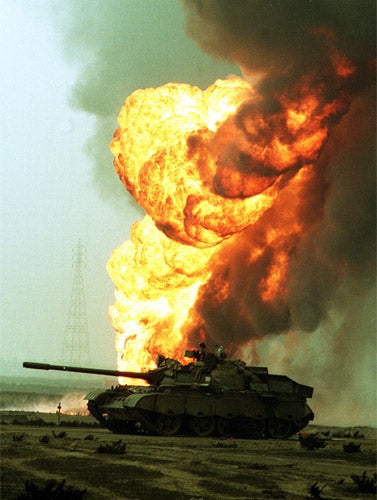
The First Gulf War became a landmark moment for US–UK cooperation in the immediate post‑Cold War era, and the first time troops from both nations had fought side by side since the Korean War.
The conflict began when Saddam Hussein sent Iraqi forces across the border to annex Kuwait, prompting a swift international response under UN authority.
British prime minister Margaret Thatcher, in her final months in office, strongly backed US President George H. W. Bush’s insistence that the aggression must be countered, and John Major maintained that stance after replacing the Iron Lady.
Britain provided the second‑largest military contribution to the US‑led coalition, working closely with American commanders on air strikes, naval operations in the Gulf and the ground offensive of Operation Desert Storm.
The war reaffirmed the special relationship, demonstrating that London and Washington remained aligned on questions of international security and the use of force.
The Afghanistan War (2001-2021)
The Afghanistan War brought the US and UK into another period of intense military and political alignment, beginning in October 2001 in the heated aftermath of al‑Qaeda’s 9/11 attacks on the World Trade Center and the Pentagon, and the Taliban’s refusal to hand over Osama Bin Laden.
President George W. Bush and Prime Minister Tony Blair forged a close partnership as the US launched Operation Enduring Freedom commencing with airstrikes on the Taliban and al-Qaeda, with Blair becoming Washington’s most vocal international supporter and committing British forces from the outset.
Speaking on 7 October, Blair said: “We know that sometimes to safeguard peace we have to fight. Britain has learnt that lesson many times in our history.
“We only do it if the cause is just but this cause is just…. We waited so that those responsible could be yielded up by those shielding them. That offer was refused, we have now no choice so we will act. And our determination in acting is total. We will not let up or rest until our objectives are met in full.”

The UK provided the largest non‑US troop deployment, working alongside American forces in combat operations, counterinsurgency efforts and later Nato‑led stabilisation missions.
The war became increasingly controversial as civilian casualties, allegations of detainee abuse, and growing doubts about long‑term strategy fuelled public and political criticism on both sides of the Atlantic.
The Taliban launched a major offensive throughout the summer of 2021 successfully reestablishing their control over Afghanistan as US forces pulled out under the terms of a 2020 deal.
Second Gulf War (2003-2011)
After accusing Saddam Hussein’s regime of possessing weapons of mass destruction and defying UN disarmament resolutions, a US-led coalition again drew the US and UK into a tightly coordinated military and political partnership,
The conflict began in March 2003, when US‑led forces invaded Iraq, and again saw George W Bush and Blair leading the international charge.
Blair again committed British forces to the initial invasion and also to the long occupation that followed.
The UK provided the second‑largest military contingent, worked closely with US commanders in southern Iraq, and aligned itself with American strategic goals despite domestic outcry and international controversy.
Speaking later about the state of the special relationship, Bush said: “Some of our allies wavered. Tony never did”.
But the UK’s decision to support the war has long proved controversial and looms large over Blair’s legacy. The damning Chilcot inquiry in 2016 found that the invasion had been unnecessary and that support was achieved through the misrepresentation of evidence.
Libya (2011)
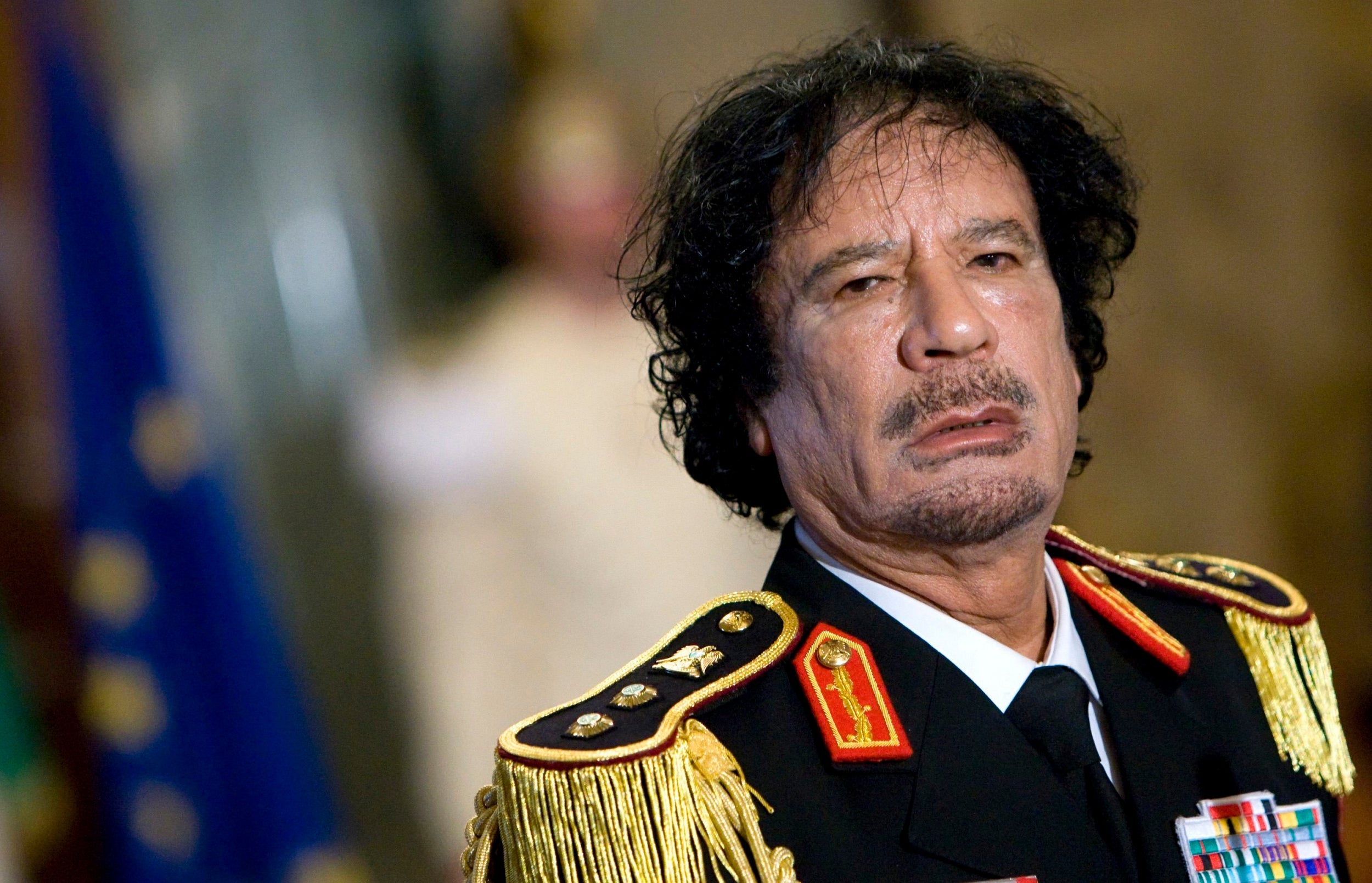
A 2011 intervention in Libya brought the US and UK into a different realm of military and diplomatic coordination, this time under President Barack Obama and Prime Minister David Cameron.
The conflict began when an uprising against Libyan leader Muammar Gaddafi was met with violent repression, prompting the UN to authorise military action to protect civilians.
Britain and France pushed hardest for intervention, and the US provided early assistance in the form of airpower, intelligence and cruise‑missile strikes – before shifting to a supporting role.
The UK deployed fighter jets, warships and surveillance aircraft, working closely with American forces during the initial assault on Libyan air defences and throughout Nato’s subsequent campaign.
The Nato‑led campaign ended with the collapse of Gaddafi’s regime in late 2011, after sustained airstrikes and rebel advances saw Gaddafi killed and forced his regime from power.


