

Dead Man’s Wire (2025)
Gallery / 25 images
When Luigi Mangione shot the CEO of UnitedHealthcare in December 2024, the cast and crew of Gus Van Sant’s Dead Man’s Wire were a month away from principal photography. Asked about it now, Bill Skarsgård, the star of the film, denies it had much impact, yet the parallels are there: the crime-thriller is a dramatisation of a real-life incident from 1977 whereby a gun-wielding American, Tony Kiritsis, made international news by kidnapping a mortgage broker’s son in what he claimed to be standing up for the little man.
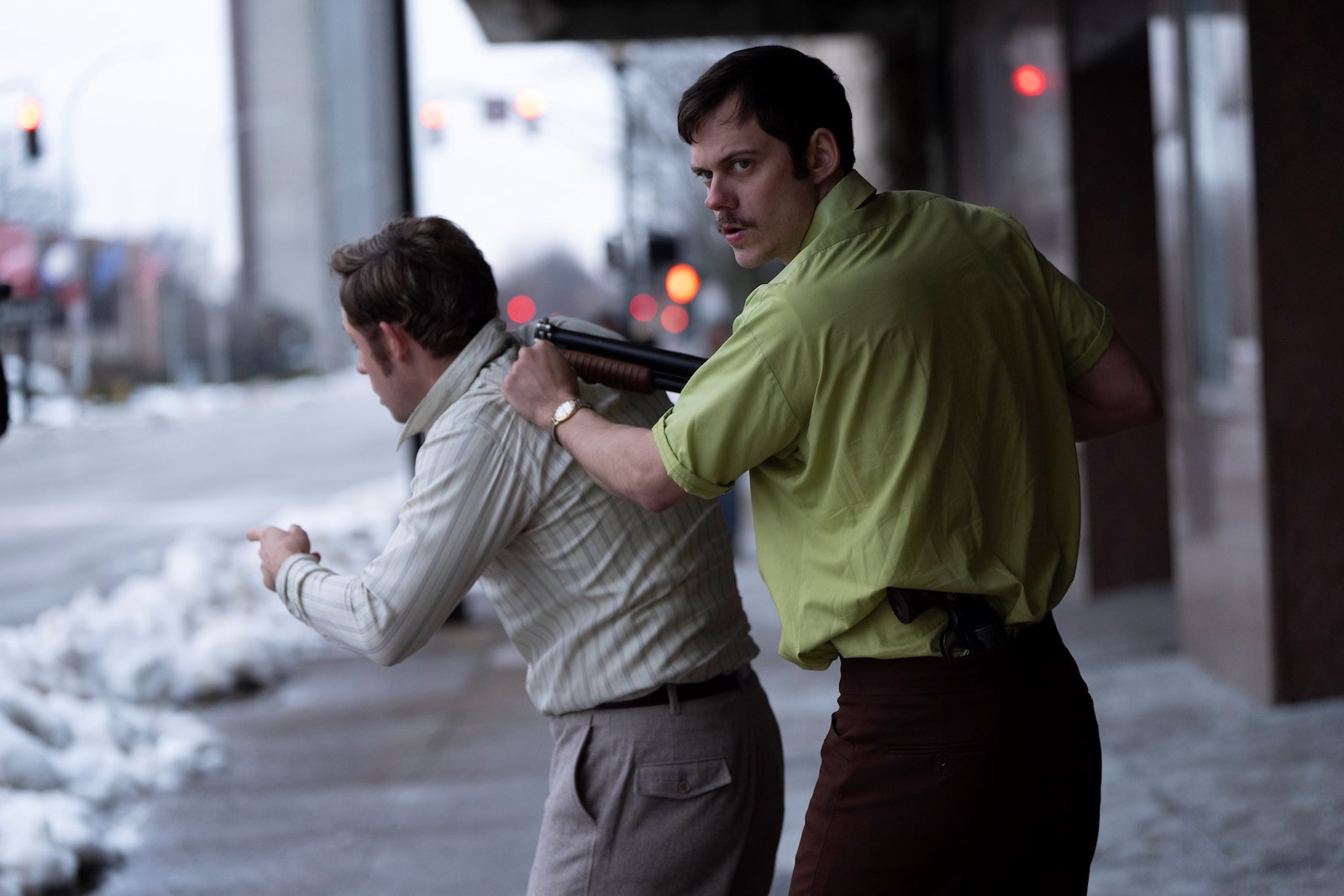
Van Sant’s first film in seven years, Dead Man’s Wire is a scrappy, low-budget callback to the director’s early indies like Drugstore Cowboy and My Own Private Idaho. In Indianapolis, Kiritsis – played with frenzied, frantic eyes by Skarsgård – arranges a meeting with super-rich businessman M.L. Hall (Al Pacino) only to instead encounter his son, Richard Hall (Dacre Montgomery). Improvising on the spot, Kiritsis takes Richard hostage by attaching a gun and wire to his neck (if he moves, it’ll fire). In exchange for his release, Kiritsis demands money and an apology from M.L. Hall: the abductor claims Hall’s company sabotaged his property deal.
Van Sant, the 73-year-old director of Elephant, My Own Private Idaho, and To Die For, has been here before. After the Oscar success of Good Will Hunting, Van Sant cashed in his good will for a shot-by-shot remake of Psycho, a recreation of Hitchcock’s classic but with colour and Vince Vaughn. Likewise, Dead Man’s Wire builds upon newsreel footage of Kiritsis from 1977, but with Skarsgård physically and mentally unravelling as the crime reaches its inevitable conclusion. Despite looking nothing like the real Kiritsis, the 35-year-old star of It and Nosferatu fully disappears into the role and exposes the human behind the crime.
In two separate conversations, I spoke to Gus Van Sant and Bill Skarsgård about the topicality of Dead Man’s Wire, filming it in the shadow of Luigi Mangione, and Van Sant’s unreleased collaboration with Harmony Korine. Below are some edited highlights.
Is there a connection between doing a shot-by-shot remake of Psycho and Dead Man’s Wire? They’re both recreating famous bits of footage but with new actors who look very different to their original counterparts.
Bill Skarsgård: Gus is a genuine artist who goes, ‘I want to make a frame-by-frame remake of Psycho,’ when I’m sure he had all the offers imaginable after the success of Good Will Hunting. That was his own artistic exercise. I never saw this as being parallel to that.
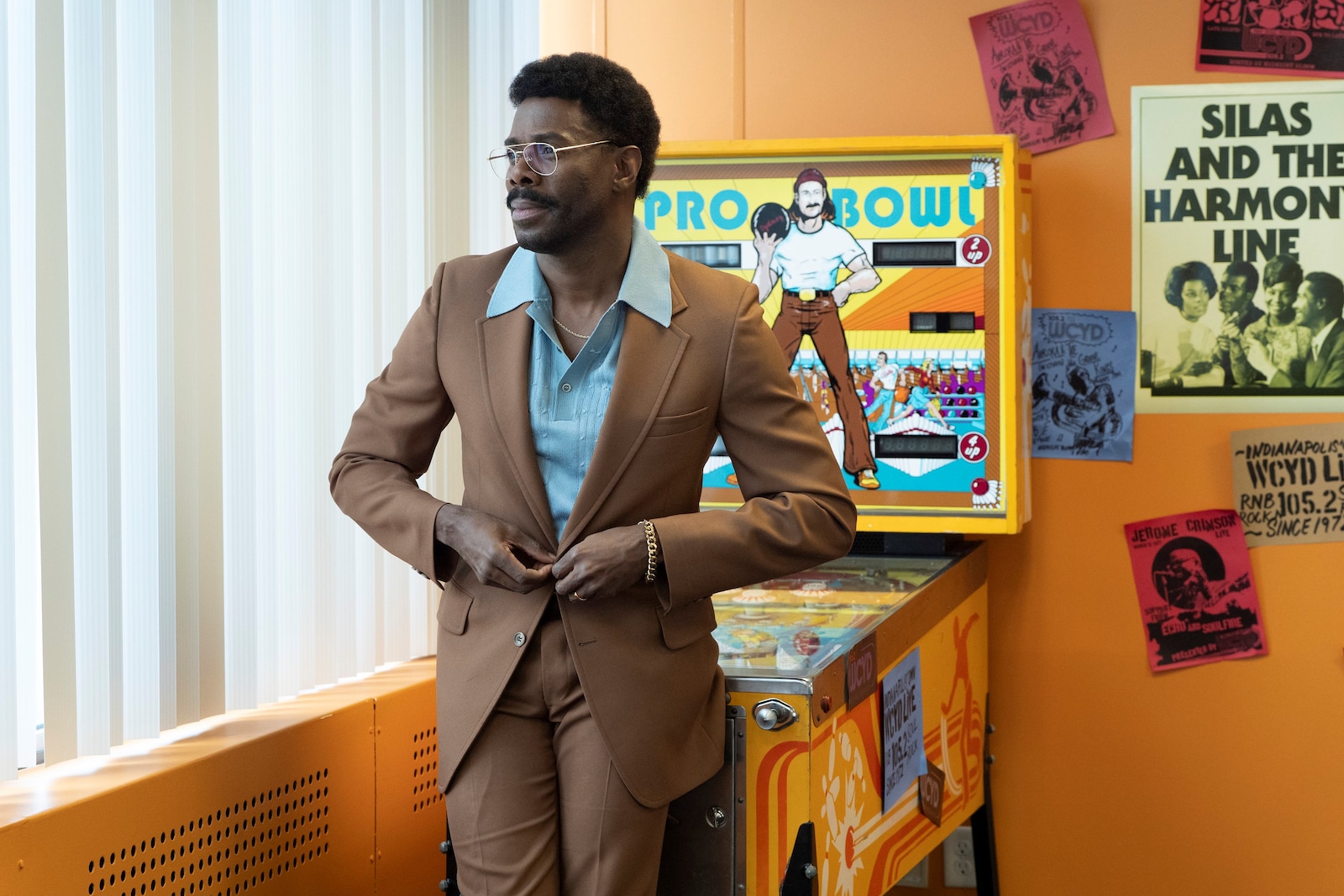
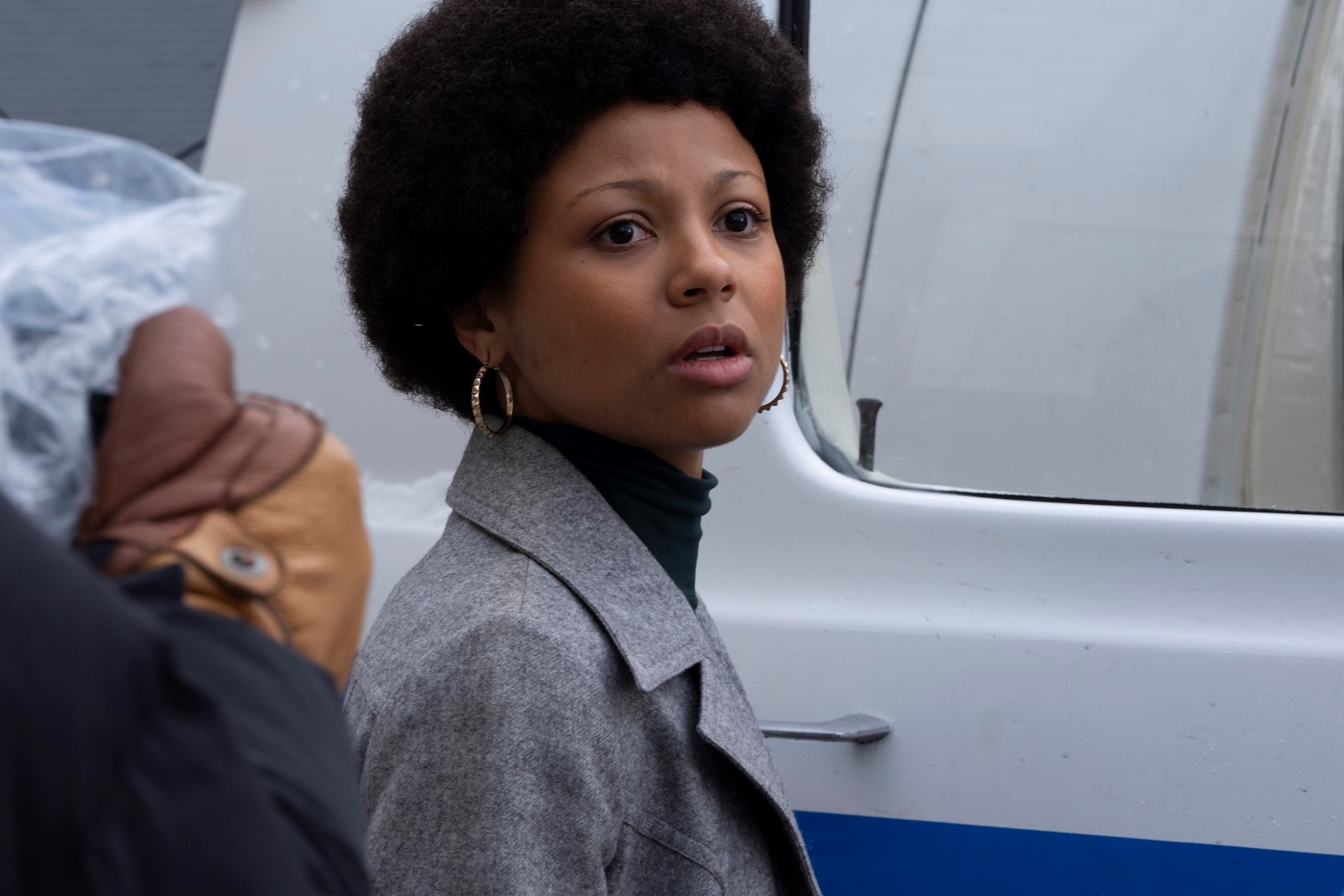
Arnaud, our DP, bought these two Ikegami video cameras that were the same cameras used for newsreel footage in the 70s. We would shoot scenes with the regular cameras, and do a last take on the Ikegamis. And that just looked awesome. What surprised me about the final cut was the comedic effect of the uncut footage of news anchors, where they go, ‘I’m going to say that again. Let’s go.’ Intercutting Myha’la’s reporter character with actual people was seamless and great.
Gus Van Sant: Here, our inspiration was the original event. I’ve done films based on well-known people, like Harvey Milk, for instance. But he’s not so well-known that he’s burned in your consciousness, except for people who lived in San Francisco. I’ve cast people that I thought were good actors for the part, rather than lookalikes.
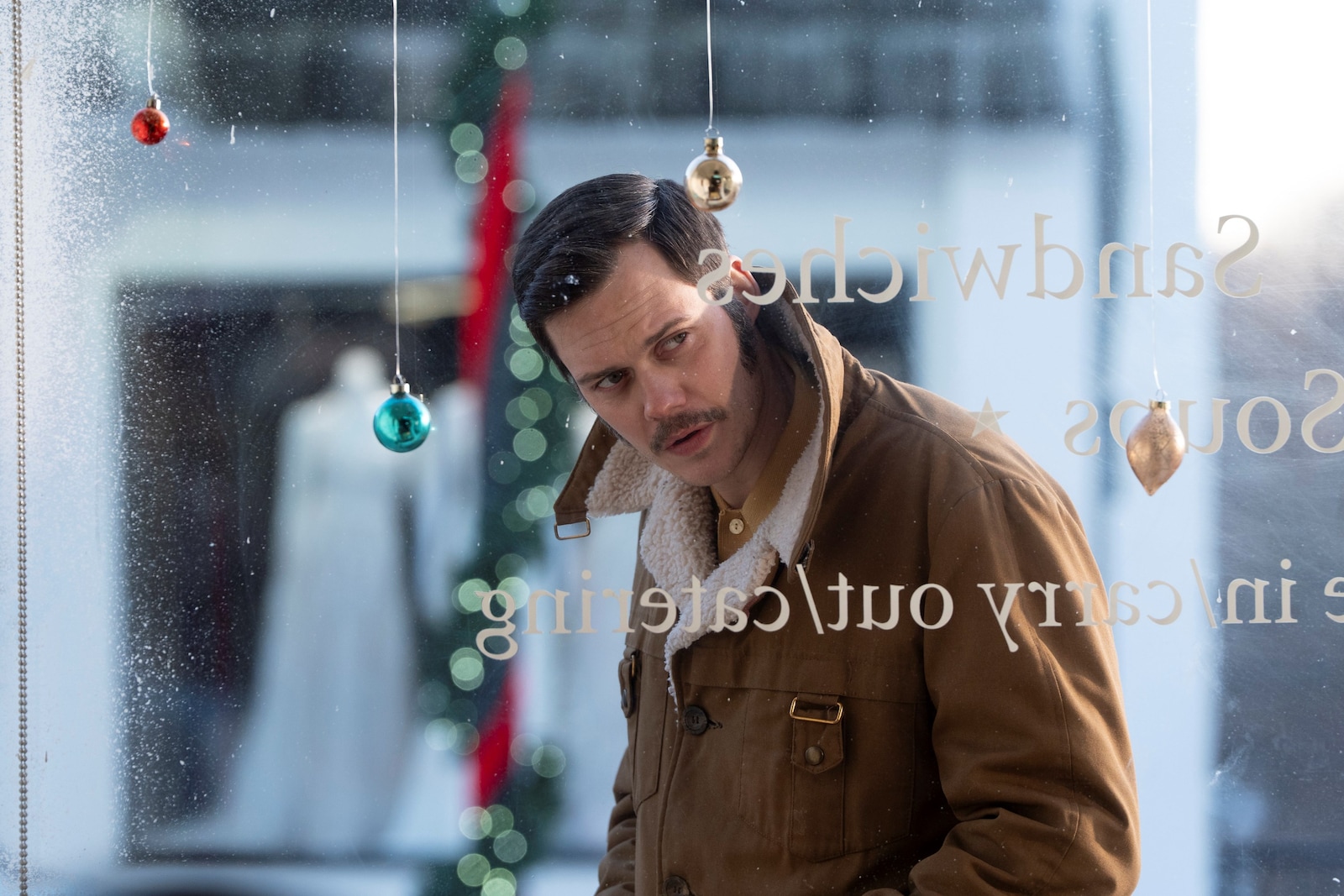
Dead Man’s Wire reminds me a lot of Gus’s early films, like Drugstore Cowboy and My Own Private Idaho, especially how it will change camera formats several times within a single scene.
Bill Skarsgård: There’s an edgy youthfulness about this film that might come surprising when you know that the filmmaker is in his 70s. Great filmmakers never age out of it. There’s a punky edginess that they can activate throughout their life. When The Wolf of Wall Street came out, Scorsese was in his mid-70s.
It’s interesting because with Nosferatu, I wouldn’t have guessed that Robert Eggers is only in his early 40s.
Bill Skarsgård: [laughs] Yeah. He’s in his early 40s, but also 350 years old.
“Great filmmakers never age out of it” – Bill Skarsgård
In the film, Tony seems to be more scared about speaking to a radio DJ on the phone, than carrying out the actual kidnapping.
Gus Van Sant: Probably. His plan to abduct Richard was such an operation. He was rehearsed. But this call to the DJ was more of a surprise for him. I thought he was improvising a way to gather more attention to get Al’s character, M.L. Hall, on the phone. It was a desperate move.
Bill Skarsgård: Getting on the phone with his idol, makes him incredibly nervous. It’s endearing. I’ve gotten these silly questions, like, “Is Tony a villain?” The terminology of “villain” and “hero” doesn’t apply to a movie like this. Tony’s very human. He’s definitely not a psychopath, even though he might be crazy. Arguably, he’s someone with too much emotion, and he constantly feels guilt for what he’s doing.
Luigi Mangione shot the UnitedHealthcare CEO a month before you filmed Dead Man’s Wire. In retrospect, did it affect your performance?
Bill Skarsgård: I was very much in the process of prepping this film when it happened. Even before Mangione, I knew it was a current story. Even though it’s set in the 70s, it feels very relevant, because this isn’t something that we’ve matured out of. There’s parallels to the 70s with civil unrest, the cost of living skyrocketing, and inflation. Everybody believes that the government’s corrupt, and institutions are not to be trusted – with good reason. If anything, Luigi Mangione validated my initial thought of the story being current.

Right. It’s not as if you did the film because of Luigi Mangione.
Bill Skarsgård: Things are happening so rapidly that Luigi Mangione feels like a thousand years ago. In some ways, who was that guy? I can’t even remember it. We’re talking about parallels to this movie – it’s like, yeah, but did you read the news yesterday? Every week, there’s a crazy, sensationalising thing of the world coming to an end.
Gus, your cinematographer is Arnaud Potier, who would have just done Aggro Dr1ft with Harmony Korine. Were you looking for a collaborator with a playful camera style?
Gus Van Sant: Yeah. I had known about the Aggro Dr1ft project, and I had worked with him on a commercial. At first, Arnaud was busy, and we had Chris Doyle doing it. And then Chris Doyle couldn’t come over because he didn’t have a visa. And then Arnaud became available again. Switching them out was sort of last-minute.
Is that a fun or scary thing to change your cinematographer so late?
Gus Van Sant: I’ve had it happen before. On Drugstore Cowboy, [the cinematographer] left a couple of weeks before we were shooting. On a project, any part of it can be replaced. Your lead actor at the last minute can’t be the lead, and you find a new actor.
In the dream sequence, Tony has a memorable line reading of: “The fruit falls off the tree. You don’t shake it before it’s ready.” When I looked up that line on Google, it’s actually a quote by Al Pacino from a book of interviews that came out in 2008.
Bill Skarsgård: Interesting, interesting. That’s funny. It’s a line Al Pacino says to me on the phone, and I repeat it in the dream. Dacre really wanted a dream sequence where the focal point shifts, and you’re with Dick Hall praying, and when he falls asleep, the dream happens. Gus puts a lot of trust in his collaborators. He has a Buddhist, Zen vibe where he accepts things, and lets it materialise.
So Dacre really wanted this dream sequence, and the last shot of it is me opening the door. I was like, “If you dream something from the perspective of Dick, what would I say? Maybe I’m emphasising something his father said.” And Austin Kolodney, the screenwriter, was like, “But what if you said the ‘fruit falls of the tree’ line?”
Now that you’ve brought it up – I know that Austin spent time with Al in writing it, and I know that Austin read that book. There’s a conspiracy of Al and Austin putting that line in the movie! That whole Al Pacino speech – he wasn’t supposed to speak to me. In the original version, I start talking and he hangs up the phone. But Al wanted to do more, so he and Austin rewrote that scene.
Gus Van Sant: Austin was kind of inspired by Dog Day Afternoon. He may have read that in a Dog Day Afternoon interview.
So many actors have done their best performance with Gus. What’s his secret?
Bill Skarsgård: He likes actors, which is a good thing. Not all directors do. It’s his Zen approach. He read this script on a sun chair in Palm Springs at this hotel. Me and Dacre popped up in his head, and he went, “Those are the two guys I want.” And because he’s Gus Van Sant, we said yes.
He really trusted me and Dacre, and he just let us run with it. I don’t think I’ve ever worked on a movie where so much of the time spent on set was acting. The cameras were all handheld and there was a gritty, sort of ‘70s vibe of how it was shot. He invited us all to be his co-authors. We all felt like we were co-creating this thing with Gus, our fearless, Zen leader. That trust and respect is a good tool to get great performances.
My dad [Stellan Skarsgård] worked with him on Good Will Hunting. When this came up, he immediately said, “Do it. He’s fantastic. He doesn’t direct you much.” My dad loves that. If you’re an experienced actor, you can go, “OK, I feel like this filmmaker is trusting me, and I can explore different ways of doing it, and he’s not interfering with what I’m doing.” Of course, he would direct you if there was something that was off. But in general, he would say, “Great. Let’s do another one.” He created this beautiful, collaborative vibe and energy where everyone wanted to be at their very best, because we love Gus, and we love the film. Everybody really loved being part of this film. It’s very rare.

Gus, you made a film called Easter with Harmony Korine in 2000. Will it ever be released?
Gus Van Sant: It hasn’t been released because it was a company that had gone out of business. Also, it was something that I think was a nice idea, but I have played it occasionally at festivals, and it didn’t really play so well. I think my interpretation was a little bit stiff for Harmony’s craziness. It wasn’t necessarily a good match.
Completists would like to see it, regardless of what you consider to be its quality.
Gus Van Sant: Maybe we can find a home for it.
Have Arnaud and Harmony convinced you to experiment with AI? You do like to experiment with cameras and new technology.
Gus Van Sant: I have heard from… not Harmony, but from some other people about AI that sounded interesting. I saw some footage. It seems pretty advanced. I’m not sure. I don’t really know where to go until I work with AI.
Maybe an AI remake of Easter, to make it the way you want it.
Gus Van Sant: That would be good.
Dead Man’s Wire is out in UK cinemas on March 20


