

It was a spiritual experience, the moment that Margo XS knew she wanted to make pop music. Growing up in Michigan, she went through all of the sonic phases that a musical prodigy might: learning guitar aged seven, producing songs on GarageBand as a tween, a rite of passage as a teenage rocker, before discovering the wonders of electronic music on Chicago’s DIY industrial scene. But it was walking home one freezing night, while at university in Montreal, that it all fell into place. Margo heard “Toxic” by Britney Spears emanating from a bar, carrying a purity of emotion that struck her through the -20°C air. “It was an epiphany… that was the music I wanted to make.”
Suffice to say, she’s done just that. 2025 was a whirlwind year for the producer-slash-DJ, split between touring as one half of underground club-duo Debasement (which she founded with Alli Logout, frontwoman of New Orleans punk outfit Special Interest, the year prior), supporting the likes of Nia Archives and Soulwax, and being personally selected by Demna, no less, to soundtrack his Balenciaga leaving party.
But it’s Margo’s growing reputation behind the scenes, producing for the likes of Zara Larsson, Kim Petras, Hannah Diamond and Swank Mami, that is cementing her trajectory as one of the most exciting new minds in the industry. Last year was also the year that Margo quietly made history, becoming the first trans person ever to executive produce a major label record, while making Kim Petras’ hotly anticipated latest release over an intense but magical winter in Laurel Canyon.
Now, as if to seal her fate, Margo has earned her first Grammy nomination. Just before Margo dials in to speak to me over Zoom, it’s announced that “Midnight Sun”, Zara Larsson’s euphoric viral track, which Margo co-produced along with the critically acclaimed album of the same name, is nominated for Best Dance/Pop Recording at the awards next month.
“Margo came into my life at a point where I was taking control of my artistry. She made me feel so inspired, and like I could trust myself while simultaneously pushing the sound of my music”, Zara writes to me over email. “My album Midnight Sun that we made together is by far my proudest work, and it could have only been what it is thanks to Margo. The sounds, the structure of the songs, instrument choices… it’s different from anyone I’ve ever worked with”.
Talking to Margo, it’s easy to see why she garners respect. She’s erudite as much as she is technically skilled, the pursuit of emotional potency in her production extending beyond pure vibes into a keen feel for the contextual weight of the sounds she makes. “I’m working with people who have a very strong voice that is being distributed globally, and I need to make sure that that’s being used responsibly”, Margo explains during our conversation, sandwiched between her criticism of the state of global politics and an eulogy to her trans forebearers.
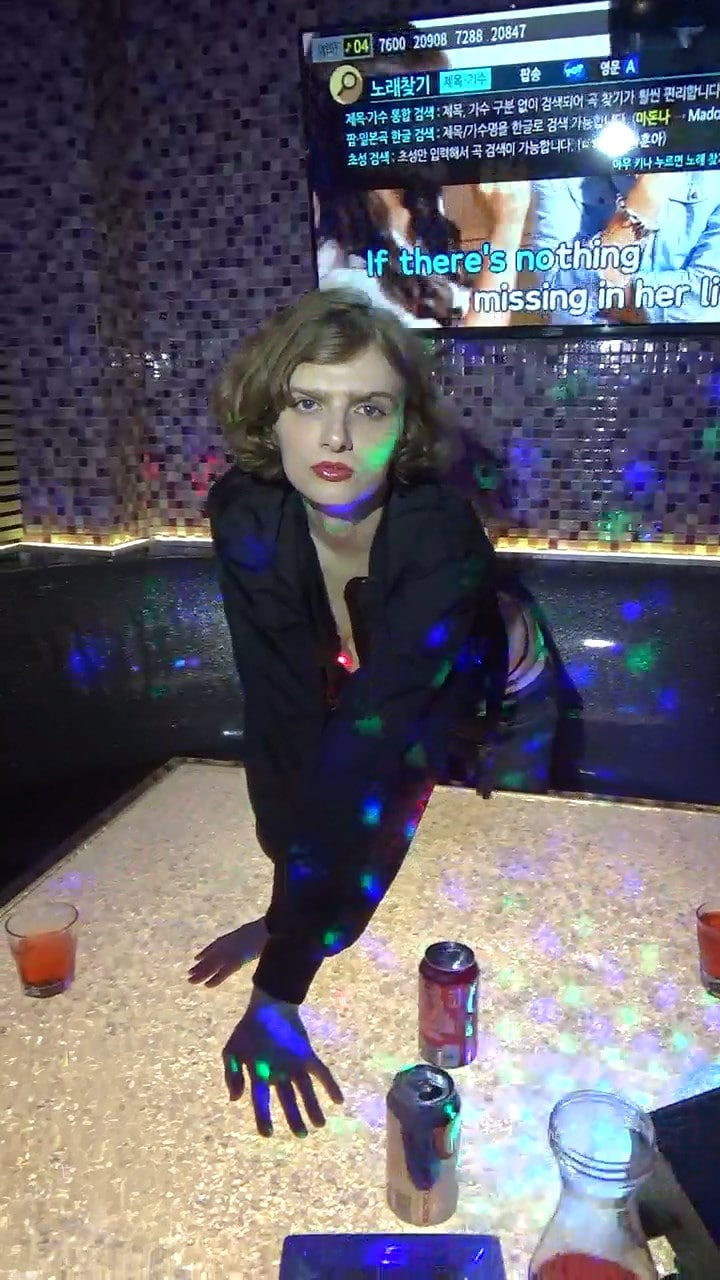
It’s a musical philosophy that allows Margo’s music to carry a sense of specificity and truth, one that empowers her collaborators and rings true to audiences amid the noise. Midnight Sun is a case in point. “Zara is a very grounded, very rare, pop star. There was no crazy breakup or traumatic incident that we were unpacking…She wanted to write about her summer house in Sweden,” Margo recounts, smiling at the unusual inspiration behind such a hit. The result, of course, is a deeply nostalgic and hopeful track that resonated far beyond its source material. Margo’s pop is a far cry from the cookie-cutter earworms that the genre leverages at its worst. Instead, this is music made by someone who firmly believes in the power of pop to bring the right kind of messages to the masses.
Read on for her prophecies on the state of pop, the sound of transness, and why all music is propaganda.
Last time we spoke, you explained how pop music has regained some of its cultural cache over the past couple of years. How are you feeling about the state of pop music today?
Margo XS: I still stand by that. I would say a thing that we’re kind of fighting against in pop music right now is a reversion to tradition, thanks to a more global right-wing shift. We’ve seen it very clearly with banks taking down their Pride Month pages, Netflix not doing Pride colour, not celebrating important achievements for minorities in America, and commercial entertainment tends to follow these trends.
During moments of progress and hope, pop music was pretty freaky, both aesthetically and musically. It was Kesha, Lady Gaga, these larger-than-life characters. We’ve gotten a little bit of that now with Chappell Roan. But then we also have [pop] artists like Tate McRae and Sabrina Carpenter, who I love, but fit into more of a traditional gender narrative, which I feel like is definitely attributed to a very palpable movement towards traditional values as a way for normal people to be able to survive a shift in political regime.
Making music, especially under capitalism, means you’re automatically getting into sticky territory of what message is being purveyed and distributed on a very global scale. That’s propaganda.
Where do you think it’s heading?
Margo XS: In the past 10 years, we’ve also seen pop music go from a bad word to something that can thrive in the underground. We’re seeing unlikely pop stars starting to defend pop music, and that is one thing that has been great about the democratisation of music production. I want to continue to foster that and make interesting records with interesting people who have different perspectives, because, ultimately, new perspectives are what’s going to shift this traditional moment we’re experiencing right now in Western commercial art.
You describe your duo deBasement, alongside Special Interest lead Alli Logout, as ‘FLINTA propaganda’ [Female, Lesbian, Intergender, Non-binary, Trans and Agender]. What does it mean to you to be a FLINTA person making music today?
Margo XS: Making music, especially under capitalism, and especially making commercial music, means you’re automatically getting into sticky territory of what message is being purveyed and distributed on a very global scale. That’s propaganda. American Hollywood movies historically have always been American propaganda.
And so I think, as opposed to shying away from this, from being like all propaganda is bad, it’s more so when I’m in a position where I have a voice. I’m working with people who have a very strong voice that is being distributed globally, and I need to make sure that that’s being used responsibly. And that’s kind of where this FLINTA propaganda thing for deBasement came from. We’re pushing an ideology that is pro gay, pro femme, pro trans. That’s important for me, understanding where not living in a vacuum, understanding where things reach and the power of that.
It’s a sonic thing, too. I don’t think it’s just lyrics. I think a lot of people think of it as lyrics, but I think that there’s a really strong trans sonic identity that I want to get all over the world.
How would you define that trans sonic identity in a few words? What does it sound like?
Margo XS: Malleable, synthetic, oftentimes confrontational, and oftentimes glossy. There’s also another side of it, [the idea that] it can be it can be anything, but there is a really beautiful lineage of trans women and the synthesizer, starting with Wendy Carlos and going up to SOPHIE.
The kind of equipment that was available at [Wendy Carlos’] time in the 70s was very analog sounding synthesizer, which had a lot of variables that could change to the weather in the room. It was very new. It was very unknown, and was very unstable. And, you know, think of that in relationship to being a trans woman in that period, it’s like it’s something you are. So you your body is still changeable and under your own control, but you are restricted by kind of the new of some of the technology surrounding these ideas at the time, and how that can change based on environment.
Whereas if you look at electronic musically by trans women in the 21st Century, there is a kind of refined plasticity that is able to be created or able to be synthesized due to less changing variables and more of a chance to have a platform. And so that’s just one, one way I think about kind of continuing a transgender lineage sonically and how sound mirrors the body and mirror our ideologies.
I don’t think I’ve heard someone speak about that kind of direct mirroring between the human form and sound before, but when you describe it, it feels like something we all already know.
Margo XS: We’re sonic creatures. And if you don’t feel comfortable as a trans person with your voice, an instrument can be a great substitute for that. That’s a way to express femininity, and that’s also a way to express gender discordance and anxiety. It can be a real extension of the body.
I think synthesizers speak strongly to trans people because of this already subversive and plastic and malleable quality to them that other instruments don’t have. You can only change your guitar so much. You can only change a violin so much. A synthesizer, you can turn into any sound you imagine.


