

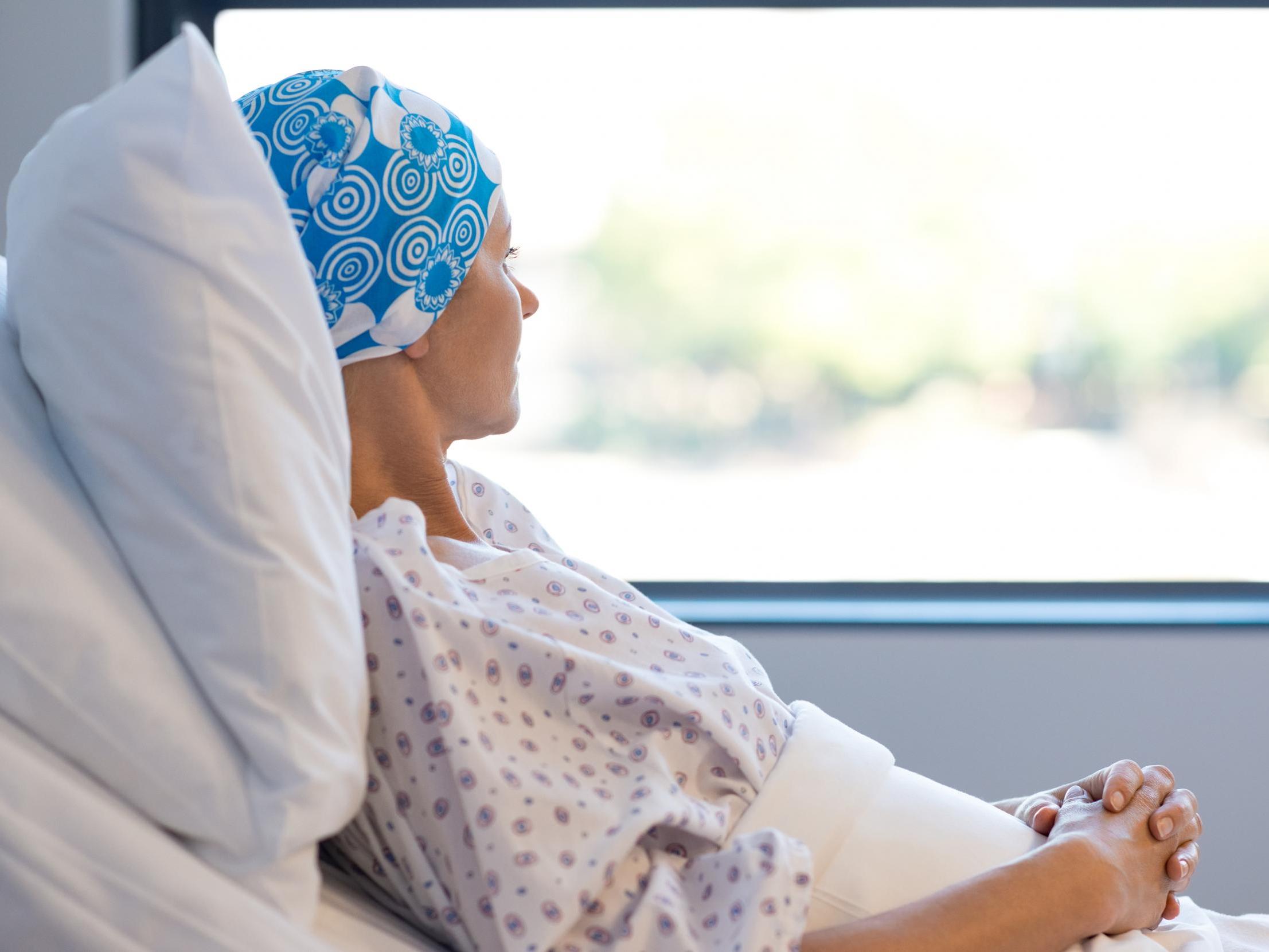
Cancer patients who develop a mental health condition within the first year of receiving a diagnosis have a greater risk of dying, a new study has found.
According to research from the University of California, one in every 10 patients will develop a mental health disorder within a year of being diagnosed with cancer, which is tied to a 51 per cent increased risk of death.
The findings, published in the Cancer journal, have prompted researchers to call for quick screening and treatment of mental health following a cancer diagnosis.
Speaking on the study, Claire Foster, a professor of psychosocial oncology at the University of Southampton, said: “We have consistently found that depression, anxiety, living with other health conditions that limit daily life and low confidence to manage illness-related problems are all associated with poorer quality of life and wellbeing in the months and years following cancer diagnosis.
“These are amenable to improvement with appropriate support and intervention at the right time.
“Early screening and assessment soon after cancer diagnosis to determine levels of need for support are key so that patients can be supported to manage both their physical and mental health – through support as part of routine cancer care; targeted support to address specific needs and referral to specialist support for those with high levels of need.”
Researchers in the US looked at the data of 371,189 adults who were diagnosed with cancer between 2013 and 2023, and had no documented mental health disorder before a diagnosis.
They found that 39,687 people (10.6 per cent) developed a mental health condition within a year of being diagnosed with cancer.
A diagnosis was linked to a 51 per cent higher risk of death in the first one to three years after people learning they had cancer. This risk lessened to a 17 per cent higher risk after three to five years, and then disappeared.
The most frequently diagnosed early mental health disorders were anxiety and depression.
According to Macmillan Cancer Support, more than 420,000 people are diagnosed with cancer each year in the UK.
Claire Taylor, the charity’s chief nursing officer, said the organisation hears from people every day in the UK about how cancer is taking a toll on mental health.
She said: “It’s so important that the wider needs of people living with cancer are factored into their care from the very beginning. Good cancer care does not start and end simply with what happens in hospital. Good cancer care happens when we take into account all the wider emotional and physical impacts a diagnosis can have on a person’s life.
“A holistic needs assessment can be a vital first step in connecting people to the wider support they so desperately need, like mental health services, but right now not everyone is offered this.”
The NHS offers free talking therapies for mental health problems like anxiety and depression.
Lead author Julian Hong, from the University of California, said: “Over the past several years, we’ve had an increasing appreciation for the important relationship between cancer, its treatment, and mental health.
“This study reproduces our prior work by leveraging the shared experience across the University of California system, reinforcing a relationship between mental health conditions and mortality for patients with cancer and highlighting the need to prioritise and manage mental health.”
An NHS spokesperson said: “Cancer can have an impact on every part of someone’s life, which is why the NHS is committed to providing people with a comprehensive package of support.
“As part of the new national cancer plan, every cancer patient will be offered a personal cancer plan that covers not just their treatment, but also their wider physical and mental health needs and social needs, such as employment and financial support.”


