
Cairo: Hani Kamal El-Din
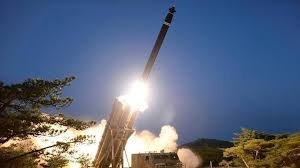
In a concerning escalation of tensions, North Korea has launched multiple ballistic missiles towards the Japan Sea, marking another provocative move in an ongoing pattern of military displays. According to reports from South Korean authorities, including the Joint Chiefs of Staff, the missile test was part of North Korea’s ongoing efforts to demonstrate military might, further unsettling an already volatile region.
Initial Report: Missiles Tracked Over 800 km Path
Initial analysis from the South Korean military indicates that the ballistic missiles launched by North Korea traveled approximately 800 kilometers before crashing into the sea, outside Japan’s exclusive economic zone (EEZ). While the South Korean authorities have yet to confirm any damage caused by the missiles, the launch has raised alarms regarding the stability of the region.
Japan’s Immediate Response: Emergency Measures in Place
Japan has reacted swiftly to the missile launch, with Prime Minister Shigeru Ishiba acknowledging the North Korean missile test. According to reports, Japan’s government was immediately informed about the missile launch and has formed an emergency task force to assess the situation. The Japanese government has outlined three main areas of action: ensuring air and maritime traffic safety, gathering and analyzing intelligence, and preparing contingency plans for unforeseen circumstances.
The Japanese media has reported that authorities are working to ensure that the launch does not pose any immediate threat to civilian or military infrastructure, though security protocols are being strictly followed across the country.
South Korea’s Military Watch: Strategic Monitoring and Alerts
On the other side of the peninsula, South Korea’s military has expressed deep concern over the missile test, which it has labeled a serious security threat. Authorities are increasing surveillance of North Korean activities and issuing heightened security warnings to ensure that any further missile tests are closely monitored.
In a statement, a South Korean defense spokesperson reiterated the country’s commitment to close coordination with the United States and other allies to safeguard regional security. South Korea continues to engage in military drills alongside its U.S. counterparts, further aggravating tensions with Pyongyang.
Military Implications: North Korea’s Strategic Messaging
North Korea’s missile launch is seen as part of its broader strategy to project military strength in the face of what it perceives as growing external threats. Pyongyang’s recent actions are likely in response to ongoing joint military drills conducted by South Korea and the United States, which North Korea views as hostile actions. The missile test serves as a clear reminder of North Korea’s resolve to maintain its military capabilities and assert its stance in a highly sensitive geopolitical environment.
Regional Security at Risk: The Bigger Picture
While the missiles have landed outside Japan’s territorial waters, the broader implications of North Korea’s missile launches are felt deeply across the region. The situation remains fluid, and experts suggest that continued military provocations could lead to a broader crisis in East Asia. Countries like Japan, South Korea, and others in the region are on high alert, and international calls for de-escalation have intensified.
The United States, which maintains a robust security presence in the region, has yet to comment extensively on the incident but is expected to offer full support to its allies in managing the fallout from the missile test.
The International Response: Calls for Diplomacy
The international community remains deeply concerned about the increased frequency of North Korean missile tests, with many countries calling for renewed diplomatic efforts to address the growing threat. United Nations Security Council resolutions have been largely ineffective in halting North Korea’s military advancements, leading some to question the viability of continued sanctions and diplomatic pressure.
Experts argue that a multi-faceted approach is needed to defuse tensions and encourage dialogue between North Korea and its regional neighbors. As the North Korean government continues to push forward with its ballistic missile program, the international community is left grappling with how best to ensure the security of East Asia and prevent further provocations.
Looking Ahead: A Delicate Balance of Power
The latest missile launch is another stark reminder of the fragility of peace in East Asia. With North Korea making clear its intentions to continue its military developments, regional security will remain a pressing concern for neighboring nations. The situation underscores the need for continued international cooperation to prevent an escalation that could have far-reaching consequences for global stability.
As tensions rise, it is evident that diplomacy must play a key role in managing the delicate balance of power in the region. For now, the world watches closely, hoping for de-escalation but preparing for any potential outcomes as the situation evolves.


