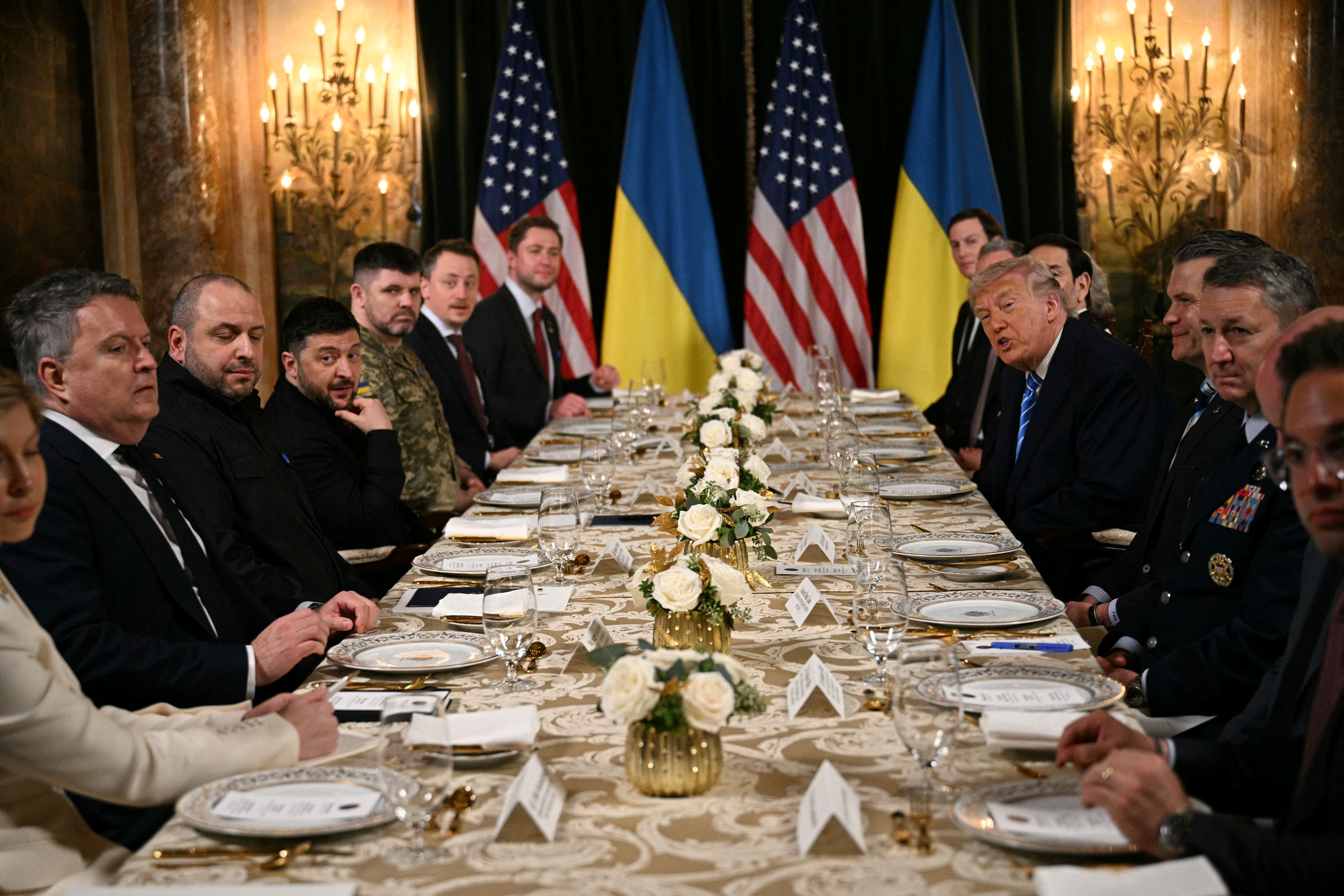
Ukrainian president Volodymyr Zelensky and Donald Trump met for crucial peace talks – but the US president’s call with Russian leader Vladimir Putin shortly beforehand suggests obstacles to the end of the war remain.
Mr Zelensky travelled to Mar-a-Lago in Florida on Sunday hoping to make progress on the proposed 20-point peace plan, with particular concerns over security and economic agreements.
He shook hands with Mr Trump on the steps of the Florida residence as the US president told reporters: “We’ll get it done,” and added: “I do think we have the makings of a deal… We are in the final stages of talking.”
Mr Trump said he would be speaking to Mr Putin following the meeting, as he described both Russia and Ukraine as “willing countries”.
The Russian president may have been physically absent from the talks, but his influence was felt distinctly. Mr Trump said he had a “very productive” call with Mr Putin over the phone ahead of the crunch negotiations – conversations Moscow said took place at the US leader’s request.
Later, Kremlin spokesperson Yury Ushakov said the pair had a “broadly similar view” that any temporary ceasefire would “prolong the conflict”, and urged Ukraine to make a decision over the Donbas region “without delay”.
Prior to the meeting, Mr Zelensky made it clear “territorial issues” would remain a key point as Moscow and Kyiv are still divided over the fate of the highly coveted Donbas region in eastern Ukraine.
Mr Zelensky said that while these have been “some of the most active diplomatic days of the year”, plenty would “depend on the partners” and whether or not they would put pressure on Moscow. The US and Ukrainian presidents added their talks would include a call with European leaders.
President Trump told Politico on Friday that Mr Zelensky “doesn’t have anything until I approve it”, as he continues to regulate negotiations between the warring countries. He also said he expected to speak with Mr Putin “as much as I want”.
Kremlin spokesperson Dmitry Peskov told reporters Friday that Moscow had been in contact with the US.
“It was agreed upon to continue the dialogue,” he said.
Ahead of the meeting, Russia’s foreign minister Sergei Lavrov warned that, as talks of security guarantees continue, any European troop contingents deployed to Ukraine would become legitimate targets for Russia’s armed forces.
In remarks published by Russia’s state news agency TASS, Lavrov, without evidence, accused European politicians of being driven by “ambitions” in their relations with Kyiv and disregarding the people of Ukraine and their own nations.
Russia’s president applied pressure on Saturday with a timely barrage of almost 500 drones and 40 missiles on Kyiv, where two people died while dozens were hospitalised, including two children.
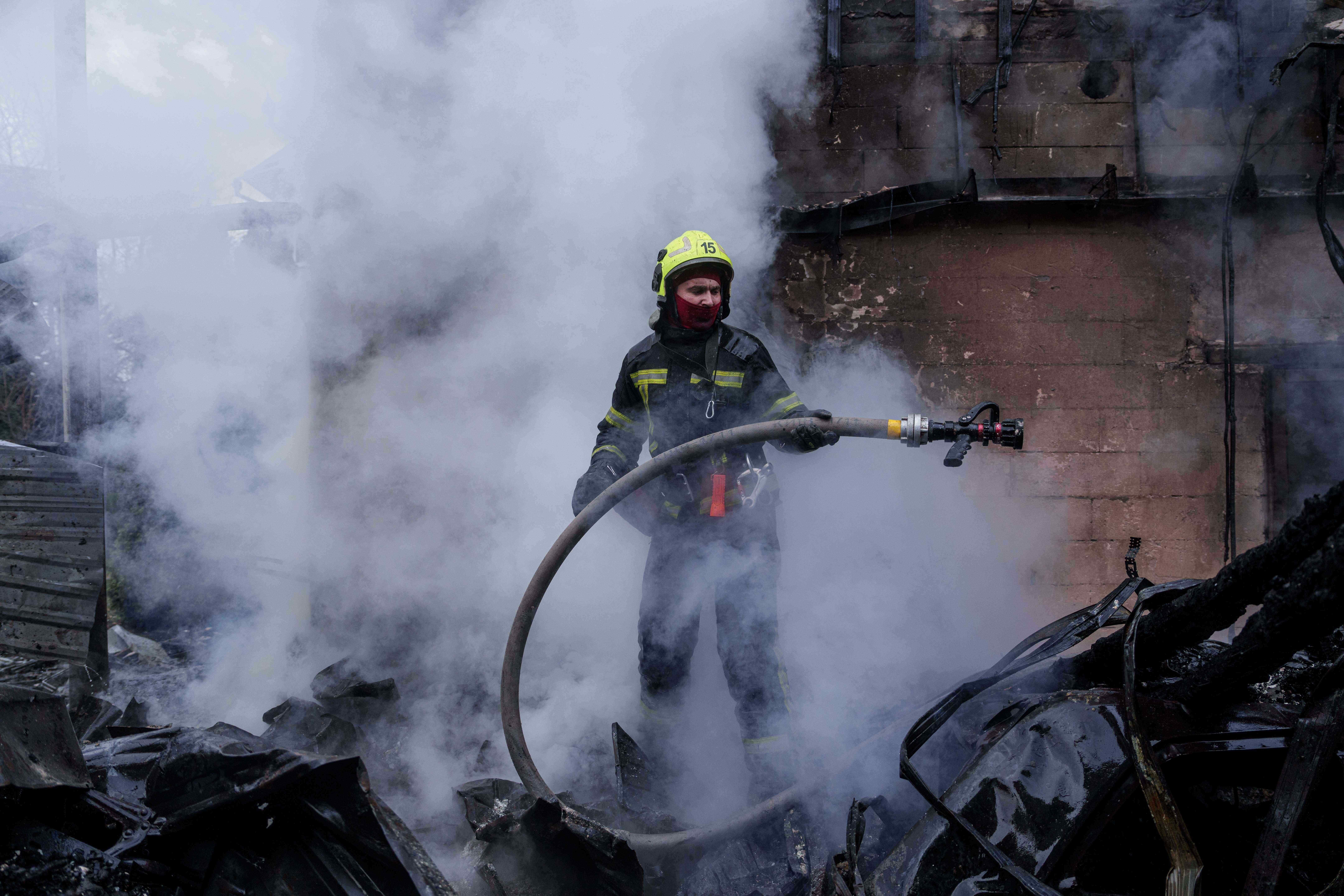
Ukraine’s capital faced large-scale power cuts that left citizens without heating during the sub-zero winter temperatures.
In a meeting with Canadian prime minister Mark Carney in Halifax, Nova Scotia, on Saturday, Mr Zelensky said the key to peace is “pressure on Russia and sufficient, strong support for Ukraine”. To that end, Mr Carney announced more economic assistance from his government to help Ukraine rebuild.
Mr Carney denounced the”barbarism” of Russia’s latest attacks on Kyiv and credited both Mr Zelensky and Mr Trump with creating the conditions for a “just and lasting peace” at a crucial moment.
“Ukraine is willing to do whatever it takes to stop this war,” Mr Zelensky posted on X on Saturday. “We need to be strong at the negotiating table.”