

As Ousmane Dembele and Julian Alvarez streaked away from ailing English defences, they weren’t just goals that went from end to end. They were also perfect illustrations of how this Champions League season has gone from extreme to extreme. With maybe more to come.
In those brilliant breakaway goals you also saw how so much Premier League financial power devolved into its teams desperately chasing ties, with a lot of ground to make up.
An unprecedented six clubs in the last-16 may yet become an unprecedented wipe-out, an unparalleled humiliation. Three first-leg thrashings were bad enough.
A lot can change in a week, of course, but there’s also a lot to do. A competition with more than double the revenue of any other league ended up with no victories, two draws and four defeats – three of them emphatic.
It was hard not to think of Michel Platini’s old quote, that The Independent this week reported has recently been repeated at the top of European football.
“The English are like lions in the autumn but like lambs in the spring.”
Some of them went to the slaughter.

English hubris meet nemesis, as the Premier League maybe also started to eat itself.
As ever with these kinds of generalisations, there are some individual explanations.
Tottenham Hotspur are a basketcase, reflective of nothing except their own dysfunction. A ponderous Liverpool can’t seem to find a solution without uncovering another problem, in a challenging campaign. Chelsea were mostly good against the European champions, who just showed their quality. Newcastle United gave a superior Barcelona side a proper game.
Out of all that, though, there were common problems that potentially point to wider trends.
Two teams conceded from set-pieces, with the added irony of Premier League norms finally being punished. Half of them endured goalkeeping issues. At least four saw further calamitous individual errors, especially at key moments.

And all of them faced very different kinds of matches – much more open matches – than they have become used to, that directly resulted in those two images of Dembele and Alvarez.
The last point perhaps leads to a bigger question for the Premier League as a whole. Debate over the style of football has been a theme of the season, leading to a trend where expensively assembled teams have become obsessed with all of the margins around the actual play – diamond pressing, counter-pressing, set-pieces. A quip made after many matches this season is that these clubs have spent well over a billion pounds each to produce this.
It might be high-end tactics but it’s also low on expressiveness.
All of a sudden, as the stakes rise, they find themselves in a very different type of games. They’re up against quality teams that seek to keep and use the ball.
Is there an argument that English clubs have “forgotten” how to play this kind of match, especially when the group stage was so forgiving?
It’s been said all season that the opening league phase can’t possibly create the intensity of knock-outs, but it barely mattered, perhaps allowing English sides to become too immersed in their own tactical entanglements.
So, this week, they were suddenly left looking to set-pieces when set-pieces weren’t allowed work in the same way.

At least one prominent Premier League coach privately believes this has also created a “complacency”.
Maybe too many teams expected games like the group stage – even subconsciously.
Both Liverpool and Arsenal looked like they got stuck in second gear against Galatasaray and Bayer Leverkusen, respectively.
And what of Pep Guardiola’s approach against Real Madrid? Despite the apparent advantage of the Spanish side missing big stars, the City manager went for a strikingly open midfield that played directly into the feet of Madrid’s most technical players. Federico Valverde more than used that, with one of the great individual Champions League performances.

The Uruguayan is one of those high-class players that Madrid always seem to have, someone often overshadowed by stars but who underpins everything they do. Here, without Kylian Mbappe or Jude Bellingham, Valverde had the stage.
There are many Premier League executives who believe such players reflect one crucial difference between the top English sides and the best European teams, the clubs who very much do have the revenues to compete. All of Madrid, Barcelona, Bayern Munich and Paris Saint-Germain, after all, were the four on top of Deloitte’s Football Money League of income.
That also means three of them – with the exception of Bayern – bring in the game’s genuinely elite players, the box-office stars the Premier League is largely missing.
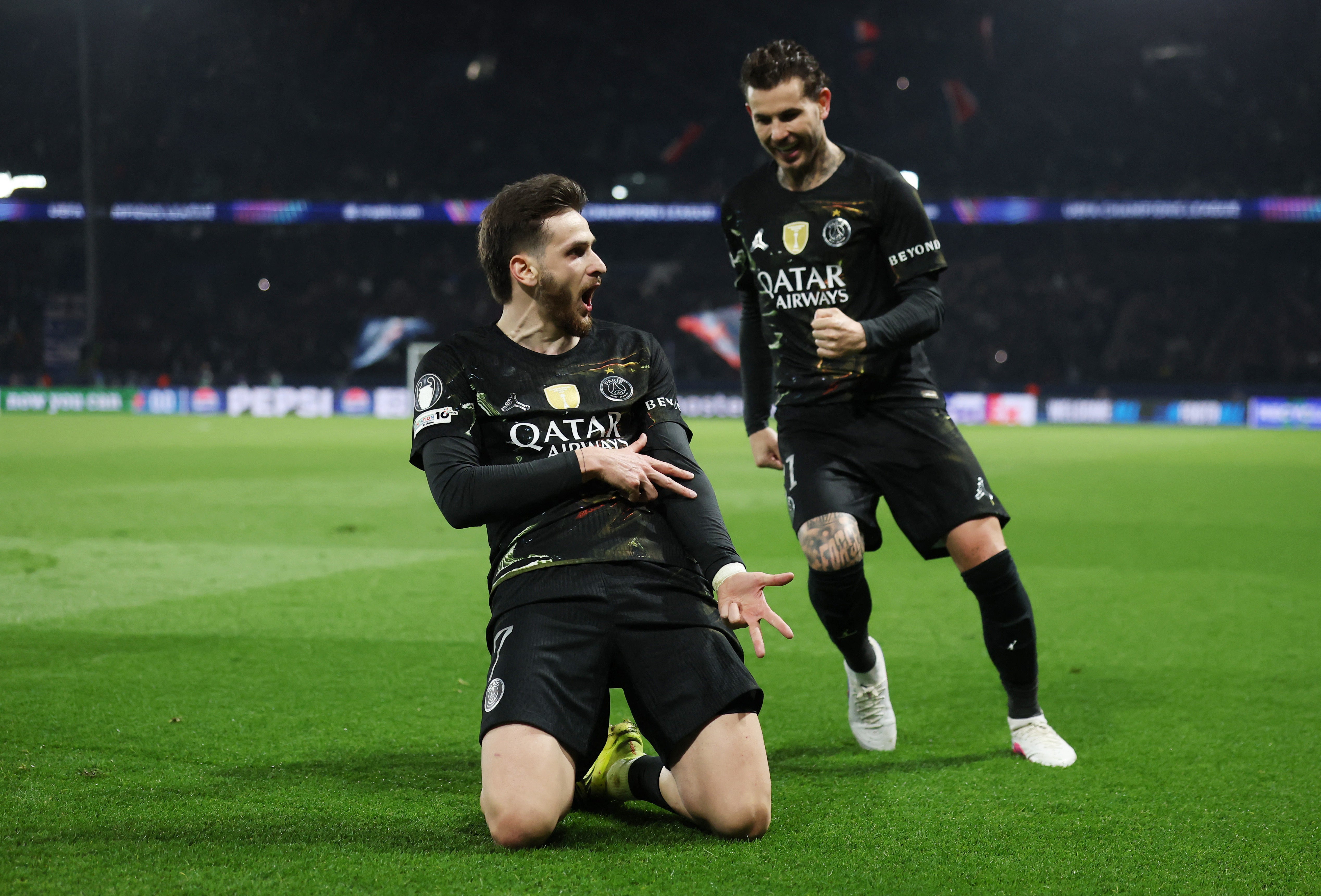
There may be some merit to this, and it may explain some differences in the latter stages. As PSG showed against Chelsea, they just have the players that can go further. Liam Rosenior almost seemed in awe of Khvicha Kvaratskhelia.
There is much less merit to the argument that this should see Premier League financial rules further loosened, since they already spend enough. Maybe just spend it better?
A superior argument is that the Premier League’s same lucrative selling point – its competitiveness – also acts as a necessary counter-balance to the huge money it brings in. This is probably good for European football as whole, especially with how English money just absorbs most of the rest of the talent.
But that does raise another crucial factor, that will be cast as a flailing excuse but is so obviously true.
English clubs have to build bigger squads – often at the expense of “stars” – because they face a much more gruelling schedule.

It’s not just about games, either. It’s about intensity. The very presence of six clubs in this last 16 proves this – even if one of them is Spurs.
LaLiga only has three clubs at this level. The Bundesliga and Ligue 1 only one. The Premier League also has Manchester United, Aston Villa and on down through a gradient that is not exactly as steep as other leagues.
That in turn makes every weekend much more demanding, at the same time that other leagues give their teams breathing space.
Madrid and PSG were able to play on Friday. They only have one cup competition.
Look, also, at how every single match becomes a psychodrama for Arsenal. Bayern don’t face that.

All of this builds up, especially as the season gets to its most demanding point. You can see it in the straining of a burgeoning star like Cole Palmer.
Players are fatigued, physically and mentally. Even if it’s by a small amount, that can erode a crucial edge at this level, especially when stars on the form of Kvaratskhelia punish you in an instant.
The English clubs are not yet put to death, though. There are still second legs to come, five of them at home. Premier League clubs have the wealth. Arsenal are still in a strong position. Liverpool remain favourites for their tie. There are meanwhile enough examples from modern Champions League history to show how even a three-goal lead can evaporate in minutes.
Maybe much of this will be reversed, so all of the issues raised here will end up being re-interpreted as strengths.
For Platini’s lambs to actually become lions, though, there is so much to claw back. The Premier Leagues clubs are going to have to go to extremes of their own.


