
‘I’m 34 and thought I just had stomach cramps – but it was stage 4 bowel cancer’

When Kirsty Laing started noticing a “twinge” in her stomach last summer, she never imagined it might be bowel cancer.
The 34-year-old mother, who works in the radiology department at the Royal Alexandra Hospital in Paisley, Scotland, realised fairly early on that these stomach cramps were not quite right. But what concerns her is that some people may not see this symptom as out of the ordinary.
“There are thousands of people out there who get menstrual pains that would think nothing of it,” she told The Independent. “I knew my gut instinct was go to my GP.”
Weeks went on and the stomach cramps left her bedbound. Too ill to attend multiple colonoscopy examinations arranged by her doctors, her concerned partner, James Mills, took her hospital.
Doctors scheduled her for a CT scan and found a tumour on her bowel that had spread to her liver, and she was warned that if they didn’t operate immediately, it could perforate at any time.
“From that point, I think my whole world stopped. Like I just agreed with everything that they said,” she said. “Honestly, those four days in hospital were just like a blur.
“I don’t remember being scared. I don’t remember crying. I don’t remember really having any sort of feeling about the situation that I was in because it all just happened so quickly.”
Not long after, she was formally diagnosed with stage four bowel cancer which had spread to her liver and started curative chemotherapy, which she is currently in the final stages of receiving.
Ms Laing’s shocking diagnosis has led her to launch a campaign for the screening age to be lowered from 50 to 30, with nearly 50,000 people signing her petition so far.

She believes that if the screening age were lower, she could have been diagnosed at an earlier stage, where it was easier to treat.
“I just want as many people to have a fighting chance at surviving if they are diagnosed with bowel cancer,” she said. “My main thing is I beat myself up so much over, why didn’t I catch this sooner? Because I physically couldn’t have.
“They asked me all the time: ‘Have you noticed any kind of changes in your bowel habits?’ I didn’t notice a lot of change in my bowel habits.”
Key symptoms for bowel cancer tend to involve blood found in stools, changed bowel habits, pain or a lump in the stomach, a sudden loss of weight, and extreme fatigue.

Early-onset bowel cancer, impacting 25- to 49-year-olds, has seen a 52 per cent increase in diagnosis since the 1990s, according to Cancer Research UK.
Bowel Cancer UK CEO, Genevieve Edwards, toldThe Independent that while the disease is far more common for people in their early fifties, the number of younger people being diagnosed is a cause for concern.
“What we’ve seen over recent years is the number of younger people being diagnosed going up around the world and here in the UK,” she said, describing the number as “small but significant”.
“We don’t really know what the reasons are for that,” she added. “Theories at the moment think that there might be factors including genetics, lifestyle and environmental.
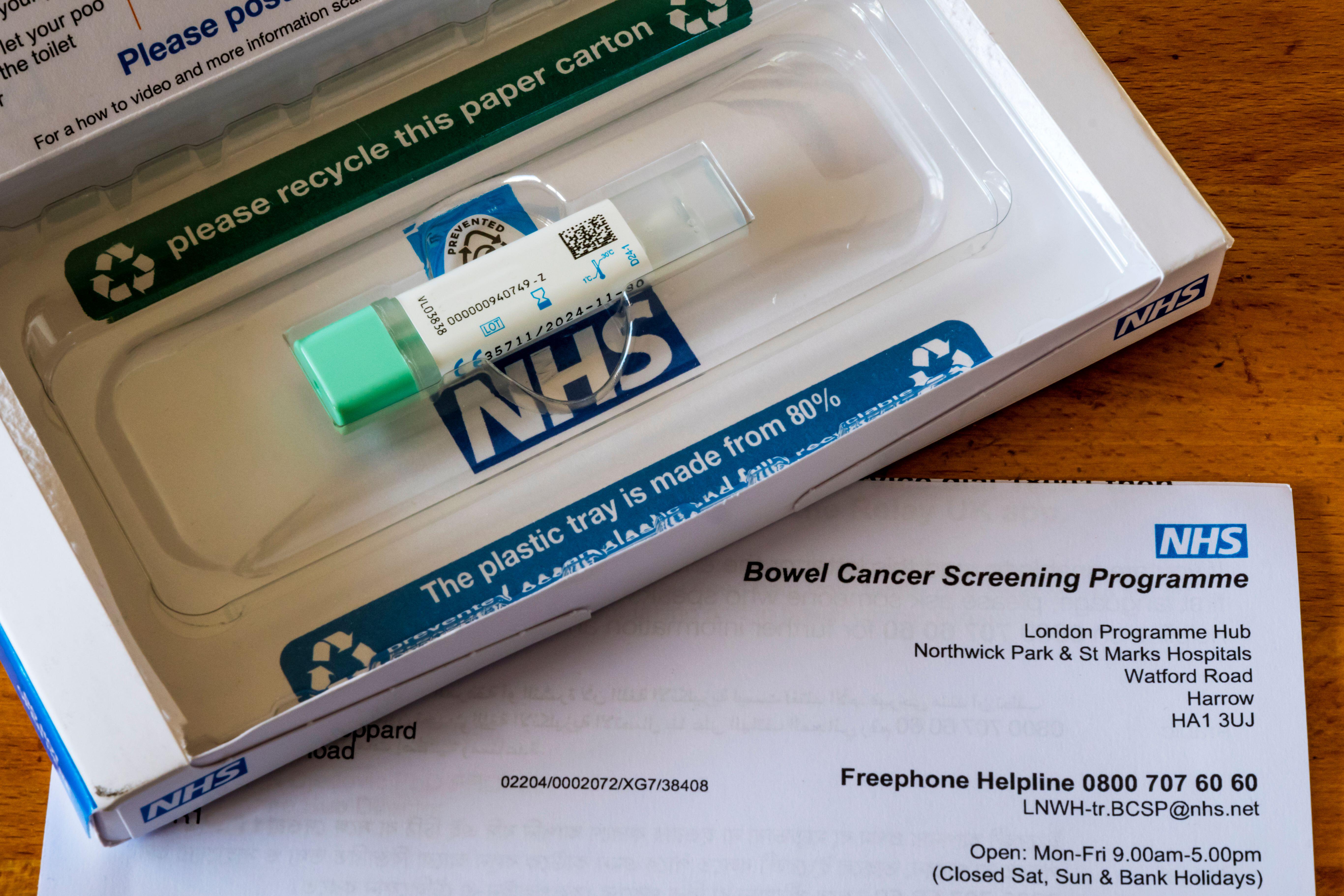
“So what’s really important is to get more research quickly into this area so that we can understand it, and then hopefully tackle it. I think the key thing is that, for people under the age of 50, there isn’t a screening programme available to them. But if you’ve got any symptoms of bowel cancer, go to your GP and ask for a test to do at home.
“It’s the same test as the screening test, and you don’t have to be over the age of 50 for that.”
The age set for cancer screenings is decided by the UK National Screening Committee (UK NSC), an independent body that looks into all the evidence available before making recommendations to ministers.
According to Nicola Smith, senior health information manager at Cancer Research UK, part of the evaluation process takes into consideration the harms that could come from screening.
“The biggest impact we’re seeing, in terms of harms, is overdiagnosis,” she explained. “Where harmless cancers that wouldn’t have gone on to cause any problems in a person’s lifetime are picked up.
“It is very clear for bowel screening that those benefits are more significant and the programme as a whole does save lives, but for a specific individual, we can never be sure whether it’s going to be a positive or negative overall impact on that person.”
Screening programmes are being optimised all the time, Ms Smith added. NHS England announced in January plans to lower the threshold for a home-screening kit to trigger urgent cancer testing.

A Department of Health and Social Care spokesperson said: “This government is committed to making it easier to get tested for bowel cancer.
“The NHS is rolling out a higher-sensitivity test for bowel cancer home-screening kits which would detect around 600 more bowel cancers early in England, and find 2,000 more people with pre-cancerous polyps.
“We’re also cutting cancer waiting times, with 227,000 more patients receiving a cancer diagnosis or having cancer ruled out on time in 2025, than did so in the 12 months to June 2024.”
Scottish public health minister Jenni Minto said: “I have every sympathy with Ms Laing and am sorry to hear of her diagnosis – I wish her well with her treatment.
“While I understand her desire for bowel screening to be offered to people from the age of 30, the Scottish government, along with the other UK nations, relies on screening advice from the independent expert advisory group, the UK NSC.
“After careful consideration of the evidence regarding the risks and benefits of screening people at different ages, the UK NSC only recommend offering bowel screening every two years to those aged 50 to 74. Scotland has therefore implemented this recommendation. However, if the committee’s advice changes, then we would of course look at it again.”
