
Trump’s UN ambassador declares ‘dominant victory’ in Iran — then says Pentagon could still send in US troops

The U.S. Ambassador to the United Nations has said that the White House could still decide to deploy troops to Iran in the coming weeks even after claiming that the U.S. had already achieved a “dominant victory” in the war.
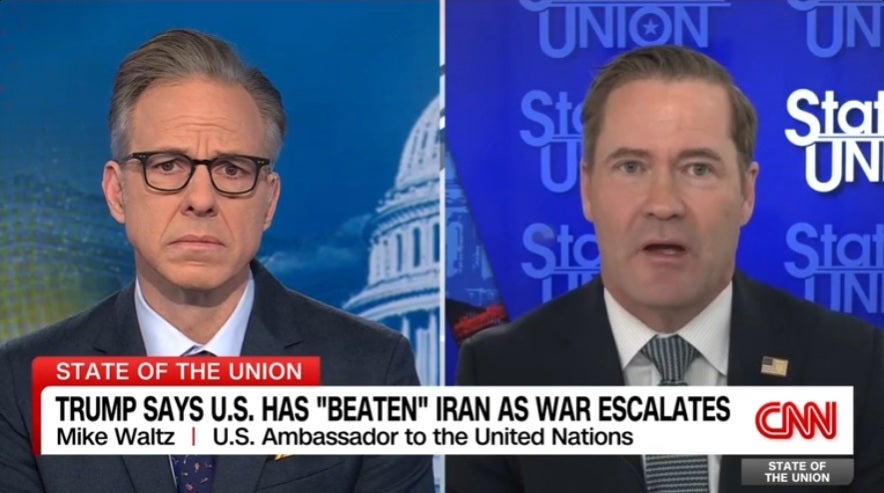
Mike Waltz, who served as Trump’s national security adviser before he was ousted in the wake of Signalgate, told CNN’s Jake Tapper on Sunday that the United States had “decimated” Iran’s military, including its naval, air and ballistic missile capabilities.
“This has been a dominant victory the likes of which we haven’t seen in modern American military history,” he told CNN.
He would not say when the war would end, saying he will “leave it to the president where he decides and when he decides and on what terms he decides as commander-in-chief to end hostilities.”
“But I think the important point here is, the United States has never been in such a position of strength and the Iranian regime has never been in such a position of weakness when it comes to its options,” Waltz added.
Energy Secretary Chris Wright said in a separate interview on Sunday that a worst-case scenario for the war would see it coming to an end within “weeks,” not months.
On Fox News, Waltz reiterated another point that has been politically inconvenient for Republicans as the party is faced with polling showing Trump’s war with Iran to be unpopular: The possibility that the U.S. could be forced to deploy troops to Iran in order to achieve the White House’s military objectives.
Republicans briefed by the administration have refused to rule out a force on the ground in Iran, while being careful to avoid any appearance of linking such a troop presence to the U.S. occupations of Iraq and Afghanistan.
Waltz parroted that same theme on Sunday.
“This isn’t going to be another 2003 Iraq,” he told Fox’s Shannon Bream on Fox News Sunday. “There are not going to be hundreds of thousands of troops occupying urban areas somewhere; certainly not Tehran.”
He added that if the need arose for a “targeted” strike using U.S. ground troops, however, he was “confident” that the Pentagon would give the president the option.
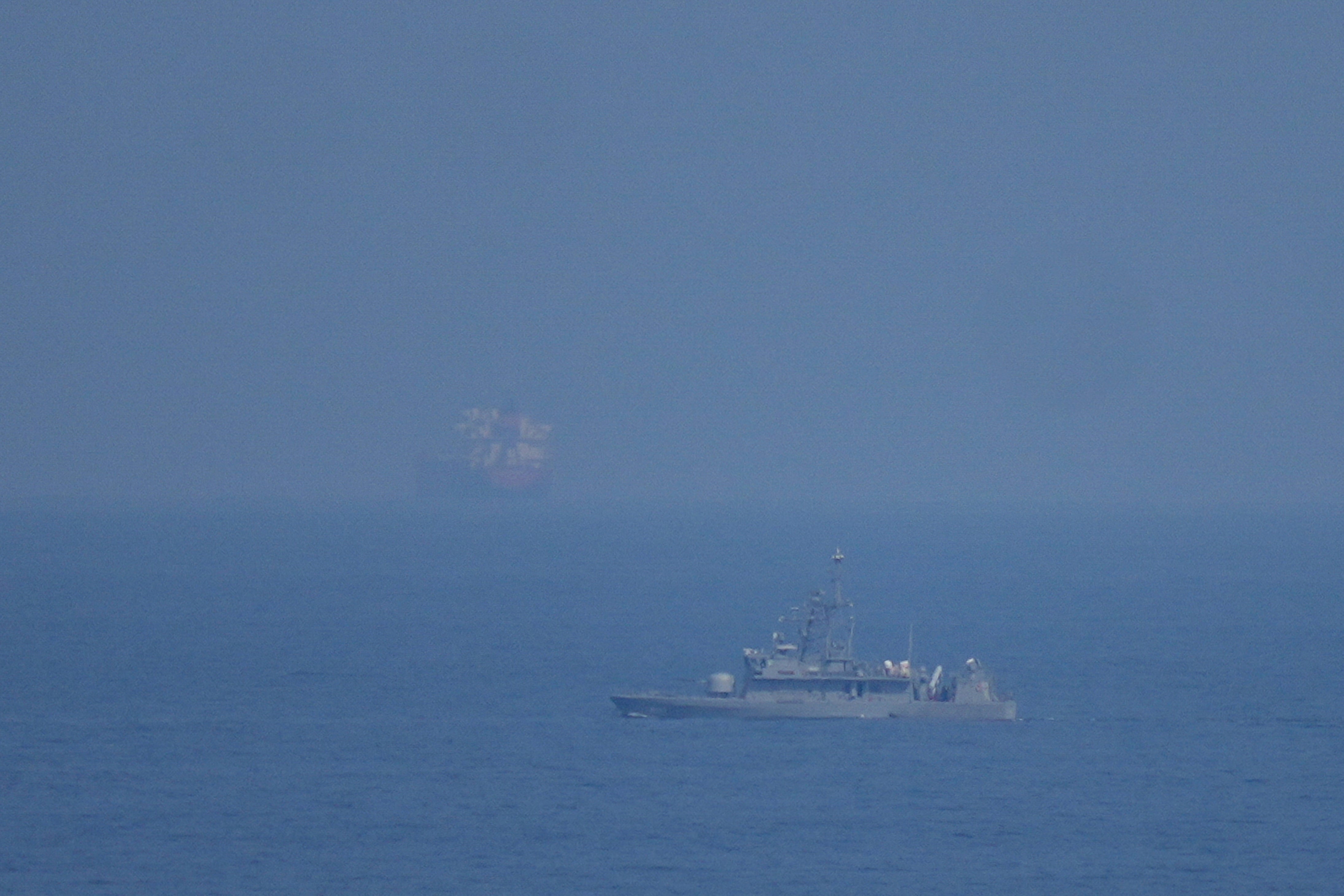
Waltz also admitted that the U.S. was still involved in conversations around the issue of reopening the crucial waterway off of Iran’s coast known as the Strait of Hormuz, which is a vital oil shipping route and has been closed by Iranian minelayers since the war began at the end of February.
Waltz said that the U.S. was asking — and in some cases even “demanding” support from its allies — though no major international coalition has stepped up to provide security for commercial vessels in the Strait of Hormuz.
The choking of shipping traffic through the strait has led to a surge in oil prices past $100 a barrel. In the U.S., gasoline prices have jumped by almost a dollar per gallon on average across the country in the little more than two weeks since the war began, a painful shock for many consumers.
“We certainly welcome, encourage, and even demand their participation to help their own economies,” Waltz told CNN. “I’ll leave those conversations to [Trump]. Those conversations are ongoing.”
Waltz could not name any countries that had committed to send ships to help escort oil tankers and other civilian vessels through the strait. Reports indicate that commercial ships linked to Iran and China have been allowed passage through the waterway as the conflict is ongoing.
The disruption to U.S. gas prices and the general unpopularity of the idea of American involvement in a costly and deadly military conflict have fueled concerns among lawmakers on Capitol Hill as midterm season arrives and Republicans look to the president for aid in defending twin congressional majorities despite his flagging approval ratings.
There’s little sign yet that the conflict in the Middle East is being resolved. The U.S. hasn’t yet shown the ability to open the Strait of Hormuz or stop the continued barrage of missile and drone attacks escalating across the region.
U.S. casualty counts are still climbing and mounted further this past week with the crash of a refueling aircraft in friendly airspace.
Trump said on Saturday that he is not ready to negotiate a peace agreement with Iran’s remaining leadership.
“Iran wants to make a deal, and I don’t want to make it because the terms aren’t good enough yet,” the president claimed.
Iran’s foreign minister Abbas Araghchi denied the U.S. president’s claims and vowed that his country would continue fighting.


