
La Mesías is the best TV show in years

The best TV show of 2026 actually came out in 2023. Broadcast in Spain three years ago, La mesías finally has a UK release, likely thanks to the sudden ascension in fame of its two writer-directors, Javier Ambrossi and Javier Calvo, also known as Los Javis. Soon to become household names (outside of Spain, where they’re already major celebrities) for their upcoming queer epic La bola negra, Los Javis are still beaming when it comes to La mesías, a sprawling, ambitious, coming-of-age thriller comprising UFOs, Christian Electronic Dance Music, religious cults, adolescent angst, internet virality, drug trafficking, and twisty family dynamics that zig and zag over decades. One episode starts as an intense, dialogue-driven chamber play and culminates in a Mad Max-esque car chase.
“I love La mesías,” says Calvo, 35, on a video call from Madrid. “I’m so proud of the anxiety, the darkness, and the way we worked with the little kids. We wrote 500 pages, then did six months of shooting that ended up in India. It’s a lot of genres. We dared to make it difficult for us.”
“Television is a chance to experiment,” says Ambrossi, 42, from another part of Madrid. “We wanted to go super-bold and try everything. People like that it’s a show with a weird vibe. No one wants to see the same thing all over again.”
A seven-episode series that’s basically an eight-hour film, La mesías starts in 2013 with Enric (Roger Casamajor), a middle-aged loner convinced he was once abducted by aliens. Staying at a hotel by Montserrat Mountain with fellow UFO obsessives, Enric spots a music video on TV of an all-girl Christian musical group, Stella Maris, and wets himself; the singers, it’s later revealed, are his estranged, brainwashed sisters. When Enric tracks down Irene (Macarena García), his only other sibling to escape their domineering mother, she slams the door in his face. As a sign of the show’s idiosyncratic tone, the previous scene involves Enric being comforted by a green alien.
Meanwhile, the storyline frequently jumps back to 1989 and 1997, with flashbacks shot on gorgeous 16mm to signify the time period. When Enric is 10, his mother, Montserrat (Ana Rujas), walks out on her husband, taking him and Irene with her. Initially, Montserrat has one-night stands, smuggles illegal substances, and encourages her offspring to rebel. In later episodes, she transforms into a cult leader (played by both Lola Dueñas and Carmen Machi) with a YouTube-loving husband (Albert Pla) who forbids her eight children (including Biel Rossell and Irene Balmes as the teenage Enric and Irene) from entering the outside world. As an ultimate compromise, the kids are allowed to perform at music festivals – but only to rid the world of sin.
Unlike La bola negra, La mesías is not explicitly about homosexuality. However, Los Javis, a former romantic couple, consider it a gay show. “It’s a metaphor for being LGBTQ+,” says Ambrossi. “You’re trapped for a long time in a house, or in your body, feeling alone. You’re in an environment that doesn’t make you feel free, that doesn’t allow you to be yourself. LGBTQ+ people connect to that.”
“It’s amazing how many people say they relate to the trauma,” says Calvo. “They tell us, ‘My mother was the same.’”
In the 1997 section, Enric steals a VCR player and a videotape of Singing in the Rain. In a musical-tinged episode, the kids – away from the mother’s watchful eyes, of course – create their own amateur film with songs and dance routines. When he’s locked up in isolation, Enric fantasises that he’s Gene Kelly running up walls and tapdancing on the ceiling. The show, then, captures the power of art for the deeply lonely. Was that what films meant to them as youths?
“People like that it’s a show with a weird vibe. No one wants to see the same thing all over again”
“I was a little kid trapped in my town,” says Calvo. “Pedro Almodóvar’s movies opened a window for me, and told me there was another world waiting for me.”
“I’m the same as Javi,” says Ambrossi. “I was in a very religious, traditional environment, and it was movies and books that were the window for me to understand that there were gay people. No one told me. Movies told me. It’s something we keep in our minds and souls.” The trio collaborated on Pedro x Javis, a three-part documentary about Almodóvar. Did he offer feedback on the show? “On La mesías, he was a friend. But on La bola negra, he’s a producer.”
Starting out as actors, Ambrossi and Calvo befriended each other through Facebook and became partners, both creatively and romantically. As a duo, their credits before La mesías include a hit musical, La llamada, and an award-winning TV series, Veneno, about the trans singer Cristina Ortiz Rodríguez. In Spain, they’re also known as judges on their country’s version of Drag Race and The Masked Singer. After shooting La bola negra, they announced their 13-year romance was over but their professional relationship would continue.
Given their closeness, do they write at the same laptop? “Yes!” says Ambrossi. “The writing took us almost one year and a half. We’re in the same room, on the same Final Draft. Javi is more into writing the dialogue and details with his fingers, and I tend to be at the whiteboard, creating the structure for episodes. It’s like four hands at the same time.”
“But we started shooting before we wrote the ending,” says Calvo. “We follow what the actors are doing. It makes the process more alive.”
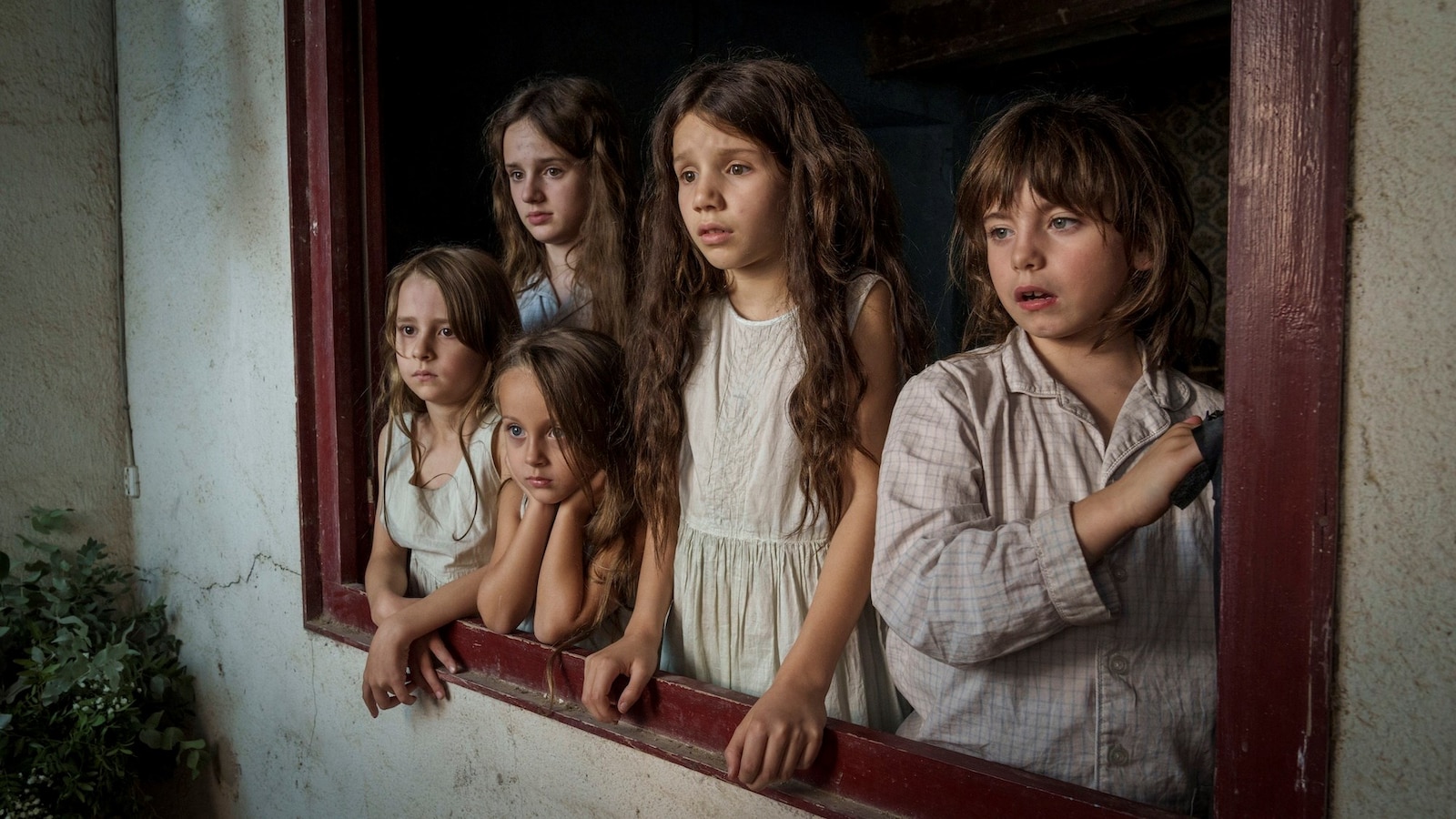
How did the UFO storyline come about? “We went to that hotel, where all those UFO lovers go, and heard stories from people who were contacted by aliens,” says Calvo. “Not all of them, but some of their stories were related to abuse. Your mind tends to imagine you’ve lived something else when you don’t want to face the reality. Many of them told us they realised it wasn’t an alien from out of space, but someone real. That felt like something psychological to investigate.”
In Spain, the response to La mesías was ecstatic. It broke a record for the number of awards won by a TV series in Spain, Stella Maris played the main stage at 2024’s Primavera Sound, and fans include Rosalía, who shared her adoration on social media. Calvo believes the show’s popularity in France is what led to La bola negra competing for the Palme d’Or at Cannes, where the duo won the Best Director prize; the film is predicted to compete in all the major Oscar categories.
“It felt natural to go from La mesías to La bola negra,” says Ambrossi. “It taught us to go bold with our imaginations and really listen to the story.”
“We learned from La mesías to be visual,” says Calvo. “We can use fewer shots, but they have to be beautiful, with people moving in a graceful way, and the camera being artistic.”
The nuanced nature of the show means that while the adult versions of Enric and Irene attempt to rescue their younger sisters from their mother’s imprisonment, they also acknowledge that the outside world is full of misery, heartbreak, and violence. In their indoctrinated bubble, the children are to some extent protected from the pain of modern life?
“Sometimes you doubt it,” says Calvo. “Is Enric trapped in the world the same way he was trapped in that house? In the end, the show says: you have to see what’s outside, and find your own way.”
“Yes,” says Ambrossi. “You have to suffer in order to grow up. You have to find the bad stuff, too.”
La mesías is streaming on MUBI now
