
Beauty under siege: The women in Gaza holding onto self-care

“We lost everything, but we won’t lose our beauty,” says Dr Sana’a Kabariti, a skincare specialist in Gaza. A poet-turned-pharmacist-turned-aesthetician, Dr Kabariti has spent the last two and a half years treating the skin conditions affecting women in Gaza during the genocide.
Since October 2023, Israel’s attacks on Gaza have internally displaced 1.9 million Palestinians and destroyed the homes of 60 per cent of the population. An estimated 10 per cent of Gaza’s residents have been killed or injured, though the real number of casualties is likely higher and impossible to accurately measure while thousands remain under the rubble. Hospitals and schools have been destroyed, and famine and disease have ravaged the Strip. Amidst these colossal tragedies, there exists a host of quieter sufferings. Among them are the impacts of displacement, malnutrition and stress on the skin of women in Gaza. These sufferings leave visible traces, inscribing themselves onto their faces and bodies.
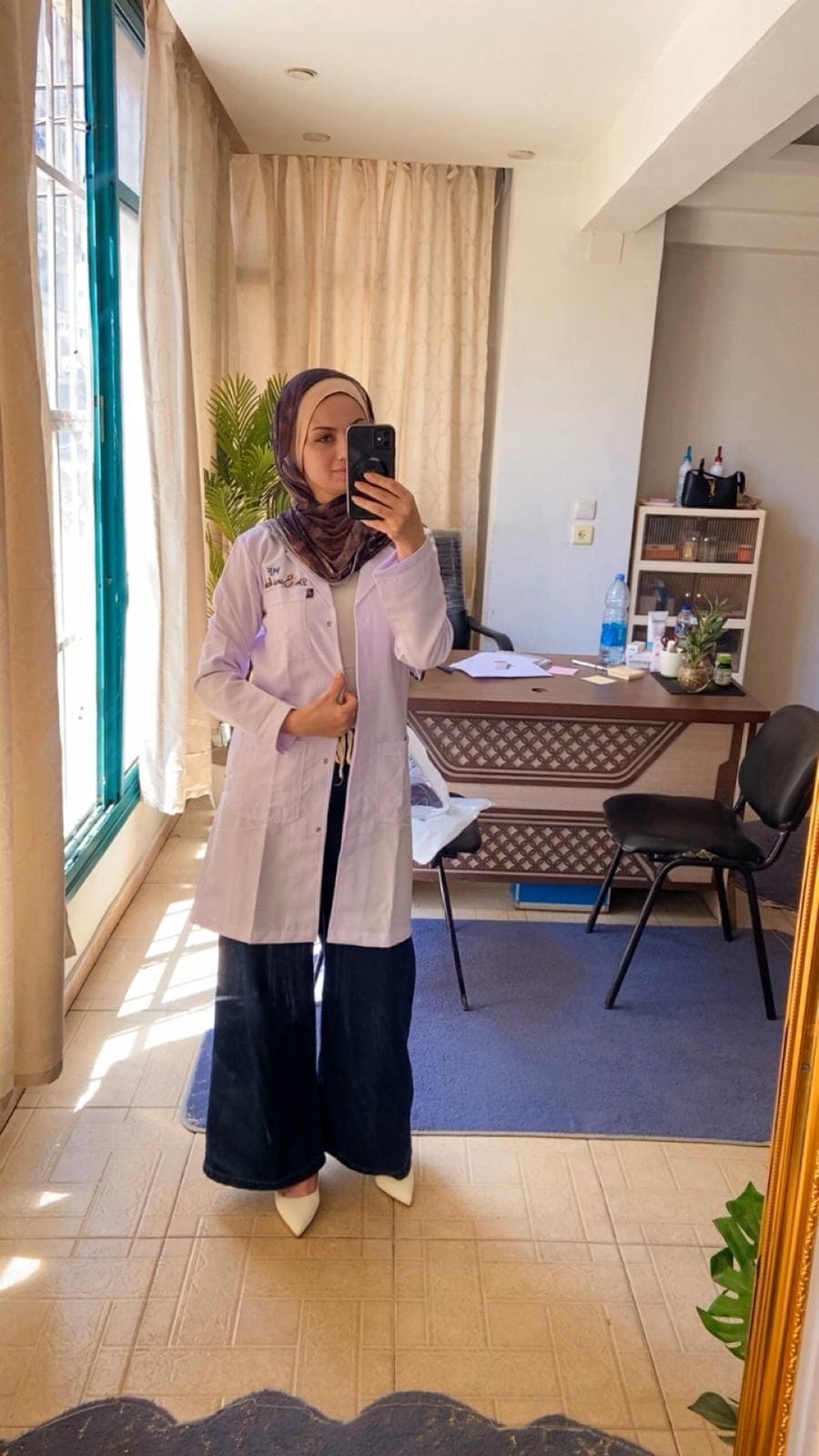
It is these traces that Dr Kabariti attends to. After initially studying pharmacy, she transitioned to her true passion, skincare, taking 15 courses and diplomas in the subject, training other Gazan medical professionals in the field, and eventually offering services and treatments in a clinic. Dr Kabariti was displaced very early on in the war, and has been displaced a further 14 times. When she first left home, she brought with her cleanser, moisturiser and SPF. But these products weren’t enough. “Displacement majorly impacted my skin. I suffered from exhaustion, malnutrition, and a constant feeling of fear. I walked for extremely long distances in the blazing sun, the skin’s biggest enemy, and had to move from a coastal area to a desert climate. I started to suffer from discolouration,” she says.
After five months of not working due to the genocide, and witnessing its effects on her own skin, Dr Kabariti decided to resume her practice. When she first started giving free consultations in Rafah, she assumed that people in Gaza wouldn’t have the mental capacity to think about their skin, but found the exact opposite. “The clients were very engaged. Before the war, their concerns were about maintenance, but they now faced skin conditions that could not be ignored and clearly required treatment.”
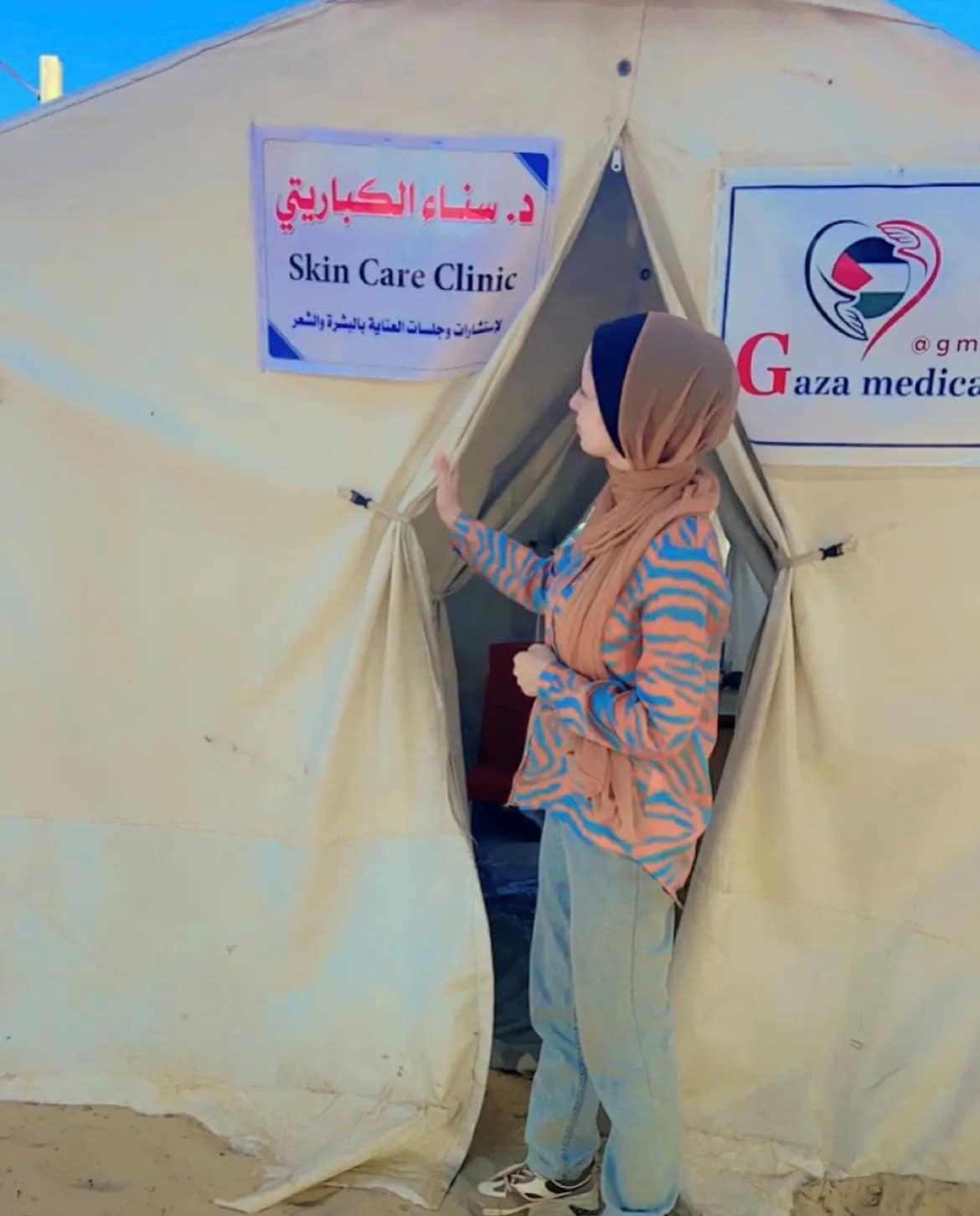

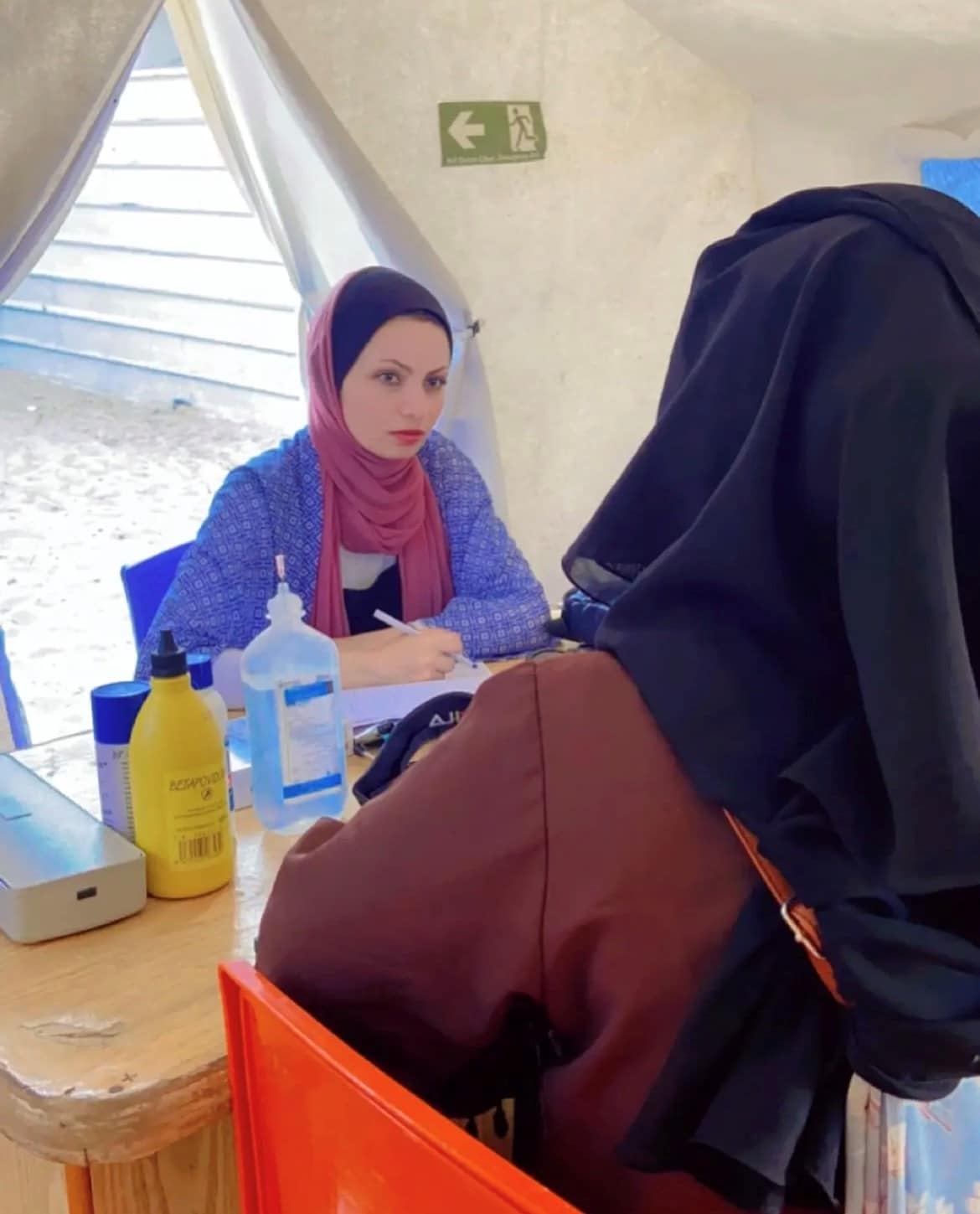
The main problem she encountered was discolouration and sunburn from prolonged sun exposure. Repeated displacement meant women had to walk long distances in intense heat, only to then shelter in tents ill-equipped to block sunrays. “Women felt they had completely changed; not only had their skin colour changed, but they felt they had aged ten years. This is not just due to the sun, but stress, malnutrition and instability all speeding up the signs of ageing,” explains Dr Kabariti. She treats clients for hyperpigmentation, dryness, facial melasma, and dark circles, as well as skin conditions caused by pollution and overcrowding.
These treatments had to be carried out in extreme conditions. Today, she works from a clinic, but for nearly two years, she operated out of a tent, constantly relocating across different medical points in the Gaza Strip. These areas were constantly targeted, whether from aerial bombing or naval cruisers when near the sea. The range of treatments she could provide was limited due to a lack of proper facilities, and she struggled to source essential supplies and products due to scarcity and price gouging.
Despite this, Dr Kabariti has remained committed to her practice, which offers women in Gaza a lifeline beyond simple skincare. Throughout the genocide, Palestinians in Gaza have been forced into conditions of bare survival, stripped of basic rights and denied the space for the activities through which personhood is formed: work, education, rest, play, care. Within these conditions, beauty maintenance has emerged as a tool for survival and self-preservation. Healing the physical marks of displacement can restore a sense of dignity and normalcy, offering a measure of control amid the ceaseless violence that shapes everyday life. Beauty does not fade into the background in extreme distress; rather, it becomes a way of insisting on selfhood against a system hell-bent on erasing it.
Self-care can take many forms, beyond dermatology and cosmetics. Gazan content creator Shams Abdeen got married on October 6, 2023, full of plans and fantasies for how she would decorate her new marital home. The war began the following day, forcing Abdeen and her husband into displacement soon after, before they had the chance to make their new house a home. Suddenly living in a tent with few belongings save for a couple of mattresses and pillows, Abdeen slowly began to document her daily routine organising her space. Her videos capture the minutiae of her everyday life, marked by a meticulous attention to detail and a sense of aesthetic care. She neatly lays out her skincare and cosmetics, applies liquid musk to her wrists, plants mint around her tent, and organises her and her husband’s clothing. “I’ve always been a very organised and tidy person,” Abdeen says, “I can’t exist in an unorganised place, and there always has to be a strong attention to aesthetics.”
This tendency took on a new significance in the war. “I was extremely depressed, and I was searching for an escape. My studies were paused due to the war and subsequent poor internet connection, so there was nothing for me except the tent I was in,” she says. “I filmed these personal videos to show we can carry on and take care of ourselves despite the tragedies we face.”
Beautifying one’s living space has long been shown to have a tremendous impact on mental health, particularly in cases of displacement. A 2021 study investigated the impact of gardening among displaced Syrian women in Lebanon, and found that participants were significantly less depressed after taking part in a gardening programme. Among the various factors cited, the aesthetic value of the plants provided visual relief in otherwise deprived surroundings.
Ornamentation of the home serves as a restorative act of self-care: an assertion of agency, an insistence on aesthetics against enforced ugliness, an oasis of momentary calm amidst chaos and destruction. As Abdeen says, “When I organise what’s around me, my thoughts calm down, things become clearer. This was always my coping mechanism, but in the war, it became my only one. It doesn’t lessen the pain, but it clears my mind”. Like Dr Kabariti’s treatments, Abdeen’s rituals offered a sense of control and serenity in the face of unrelenting violence.
Both women are thoughtful about how their online audiences may interpret their practices. Abdeen resists one-dimensional narratives, stating that “Some people take it as proof that your life is fine, without understanding what it means to lose your home and basic life essentials. Just because I’m organising doesn’t mean I’m okay, but I want to show how one can carry on.” Dr Kabariti similarly emphasises this capacity to endure, but wants audiences to recognise the ingenuity and strength it takes to do so. “I want people to understand that Palestinians are innovative even in the harshest and cruellest conditions,” she says. “Every job description requires working well under pressure. We go beyond that – we work well under a genocidal war.”
While the violence these two women face is exceptional in its horror, their practices reflect a wider, more basic human truth: beauty is not frivolous, but bound up with the conditions that make life feel liveable. As philosopher of aesthetics Arthur Danto wrote, “[beauty] is not an option for life. It is a necessary condition for life as we would want to live it”, and it is “one of the values that defines what a fully human life means.”
Of course, under the weight of a violent colonial regime, skincare and home decor can only ever be a temporary balm. But when identity and personhood are stripped away by brute force, an insistence on care and beauty becomes an essential coping mechanism: one of the few acts available through which people can reclaim a sense of humanity for themselves.
