
How schools are struggling to teach 9/11 to a generation that wasn’t alive to see it

Over three summer days, educators gathered at the Flight 93 National Memorial in rural western Pennsylvania to address a complex challenge: how best to teach the September 11 attacks to a generation born long after 2001. Participants evaluated which details suit younger children and examined how victims’ families wish the dead to be commemorated.
Speaking to attendees during one panel, Gordon Felt, whose brother Edward Felt died aboard United Airlines Flight 93, stressed that silence poses the greatest danger to historical memory. “Even worse than getting started wrong or using inappropriate language is the total omission of telling the story,” he said. “That’s our biggest fear.”
Classroom instruction on 9/11 has become increasingly critical as roughly one-third of the American population was born after al-Qaida hijackers crashed four commercial airliners, killing nearly 3,000 people in New York City, at the Pentagon, and in Shanksville, Pennsylvania. An Associated Press investigation found that at least 40 states now mandate or recommend that public schools cover the attacks in some capacity, though state guidelines differ markedly in detail, scope, and perspective.
Educational standards across the country span from granular curriculum requirements to broad thematic objectives. As a result, several states offer no specific guidance on what educators should teach about the events of Sept. 11.
A decade after the tragedy, roughly 60 percent of states failed to make explicit mention of 9/11 in their educational frameworks. However, state curricula shifted over time as the attacks came to be regarded as “a settled event,” noted Jeremy Stoddard, an education professor at the University of Wisconsin. Stoddard has researched 9/11 pedagogy for decades alongside colleagues, including retired dean Diana Hess.
“For those states that include it, it seems to be going in much more depth than it was in the past,” Stoddard stated.
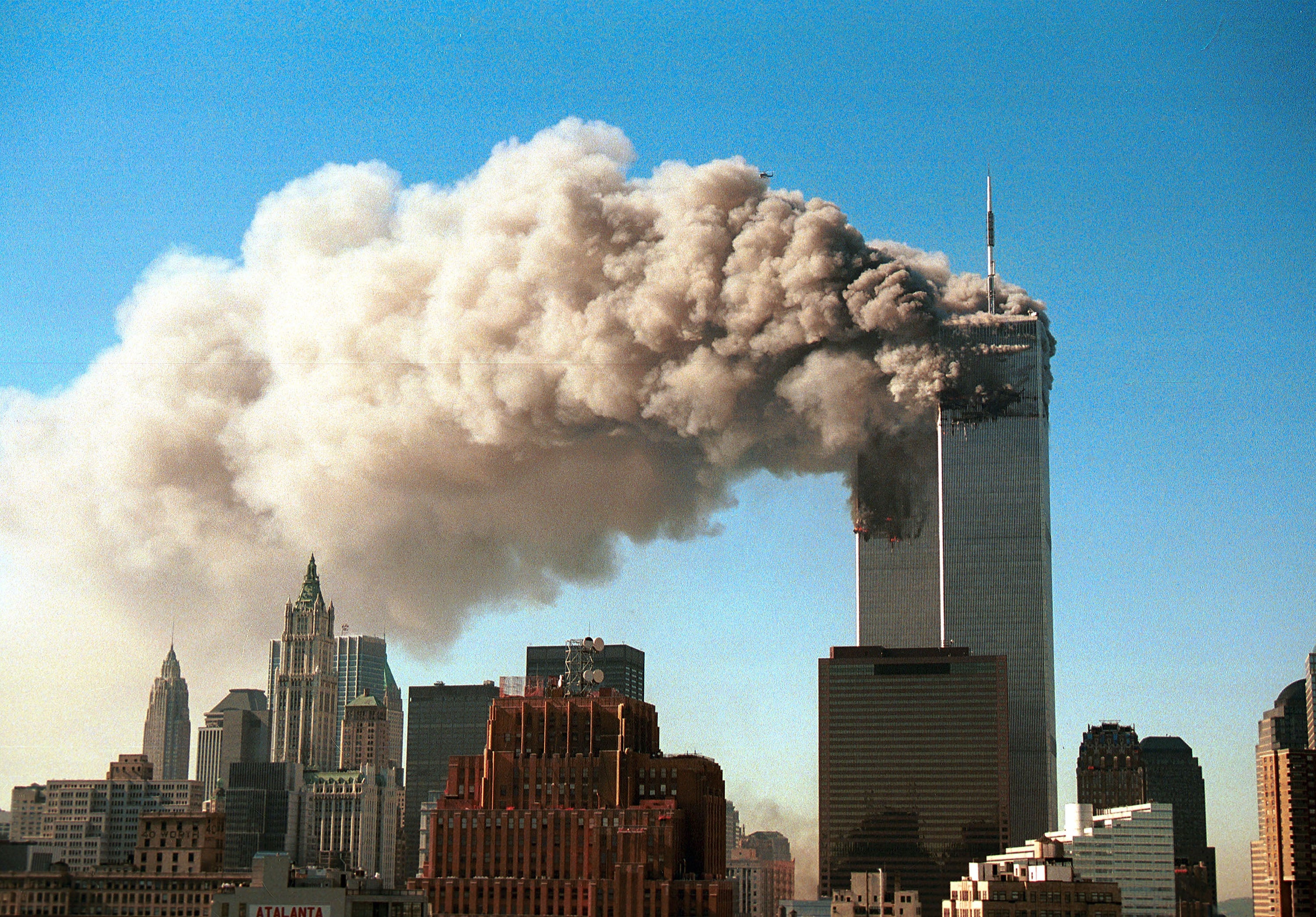
Data compiled by the AP through state inquiries, reviews of published standards, and interviews with educational officials show that 25 states currently have statutes or standards requiring or expecting public schools to provide targeted instruction on the Sept. 11 attacks.
An additional 13 states include discretionary references to 9/11, while several others require or advise formal school observances, bringing the total to at least 40 states with established policies. In jurisdictions without explicit state mandates, individual schools and teachers retain the authority to cover the topic at their own discretion.
While state authorities share a commitment to historical education, their curricular frameworks vary considerably.

In Alabama, 9/11 is integrated into coursework on “the United States’ military involvement in international conflicts since 1980” starting in the fifth grade. In Texas, state standards frame the attacks and subsequent events as an example of “radical Islamic terrorism” and a foundational element of modern world history.
Colorado encourages high school students to analyze the broader societal aftermath of the tragedy, including “Middle Eastern discrimination.” New Mexico proposes classroom discussions that extend beyond post-9/11 conflicts and legislation to encompass the U.S. detention of suspected enemy combatants at the Guantanamo Bay naval base in Cuba and the Abu Ghraib prisoner-abuse scandal.
Educational approaches do not always correspond neatly with regional political profiles. Geographically and politically diverse states—including California, Florida, New Jersey, and North Dakota—all recommend or require students to explore post-9/11 debates about the balance between national security demands and civil liberties.

Nevertheless, major revisions to social studies standards championed by conservative lawmakers have routinely incorporated 9/11 instruction. A Florida statute enacted in 2023 requires specific middle and high school classes to allocate 45 minutes of instructional time to the Sept. 11 attacks.
In Louisiana, the state’s “Freedom Framework”—developed in 2022 following conservative objections to a prior draft—introduces discussion of 9/11 as early as second grade.
Cade Brumley, Louisiana’s Education Superintendent, explained in a phone interview earlier this year that state officials “coalesced around our belief that Sept. 11 needed to be included in a very real way.” He noted his expectation that pupils grasp that “threats to our freedom are real, but as Americans, I think, we are quite powerful when we stand together and we face that adversity.”

Similarly, a 2022 Arizona statute mandated “age-appropriate education” on Sept. 11 across all public school grades, though lawmakers refined the requirement last year to apply specifically to seventh through 12th grades. Republican state Sen. John Kavanagh, who sponsored the original bill and endorsed the modification, observed: “We have to protect young children from the true horror of 9/11 and ensure older children never forget it.”
In Washington, Rep. Andrew Garbarino, R-N.Y., has introduced a congressional resolution encouraging all U.S. states to incorporate 9/11 instruction into their school curricula.
According to a recent Pew Research Center survey of approximately 250 young adults born after 2000, roughly 60 percent reported that they first learned about the attacks at school. Yet while schools play a central role, delivering effective instruction remains challenging for educators.

When Megan Jones became education director at the National Sept. 11 Memorial & Museum in 2014, teachers often hesitated about the emotional trauma such lessons might cause. Today, students typically require fundamental facts, forcing educators to navigate their own painful memories while recognizing that current students view Sept. 11, 2001, as distant history.
The core objective involves “helping them to understand how 9/11 ultimately shaped the world that they live in,” Jones emphasized. To bolster these educational efforts, the New York memorial raised over $25 million this year to expand student field trips, educator workshops, and instructional resources.
At the Flight 93 National Memorial, an annual summer gathering brought 40 Pennsylvania teachers to the site in June to encourage expanded classroom coverage of Sept. 11, according to Donna Gibson, executive director of Friends of Flight 93 National Memorial.

Among the attendees was Martha “Marty” Runzer, a fifth-grade teacher and former United Airlines flight attendant. Wearing her original flight wings pin every Sept. 11, Runzer shares memories of her lost colleagues with her West Chester students, framing the actions of ordinary citizens—such as the Flight 93 passengers and crew who fought to regain control from the hijackers—as those of “everyday superheroes.”
By contrast, 28-year-old social studies teacher John Boston Bradley has no personal recollection of 9/11. Although he has taught the subject to his Catholic high school students in Johnstown, Bradley said the memorial workshop motivated him to emphasize the “human, emotional aspect.”
“It will help our students understand that these difficult stories need to be told,” he remarked.

The practical realities of how children process 9/11 are evident at memorial sites across the country. During a recent visit to the Sept. 11 Memorial plaza in New York, nine-year-old Desmond Killian asked his parents: “Why did they want to crash into us?”
“It’s some tough things to talk about,” replied his father, Eric Killian.
Pondering the response, Desmond asked: “Which country?”
“It wasn’t so much a country,” Eric Killian explained.

The fourth-grader continued asking questions, noting he had heard the term “9/11” from classmates but had not yet studied it at his California school. California recommends that public schools observe a moment of silence and suggests high school instruction on how the attacks influenced American foreign and domestic policies.
For older students, understanding of the event is often far more detailed. Ameya Williams, a 17-year-old high school senior from New Jersey, has studied Sept. 11 extensively, examining everything from pre-attack intelligence failures to post-disaster rebuilding efforts.
New Jersey requires high schools to teach the subject while recommending age-appropriate lessons in earlier grades. Williams’ connection to the history is also personal; her grandfather was commuting to his workplace at New York’s World Trade Center when the attack occurred.
“I feel like understanding it is understanding what they went through,” Williams said.
