
Majority of men in UK will not be offered routine prostate cancer screening

The majority of men in the UK will not be offered routine prostate cancer screening.
The UK National Screening Committee (UKNSC) has concluded that using the prostate specific antigen (PSA) test to detect the disease is “likely to cause more harm than good.”
However, an exception has been made for men with BRCA2 genetic mutations, who face a significantly higher risk of prostate cancer. They are now recommended for screening every two years between the ages of 45 and 61, provided there is a family history of certain cancers. This final guidance marks a departure from a November draft, which had also included men with BRCA1 mutations.
The committee has also advised against screening for other high-risk demographics, including black men, citing “ongoing uncertainty on whether screening would cause more good than harm.” The UKNSC highlighted that the primary drawbacks of widespread population screening “include incontinence and erectile dysfunction in men who do not need treatment” for the condition.
Professor Sir Mike Richards, chairman of the UKNSC, told a briefing: “We absolutely recognise the strong support for prostate cancer screening amongst a large number of people, but also the very real harm that can be caused by the disease, which patients and indeed their families, experience.
“We do know that screening can reduce deaths from prostate cancer to a small extent, and it does not improve overall survival.”
He said that many men “will live full lives” without the disease causing harm, and screening can “only help if it can separate out that harmful disease from the harmless disease”.
“Once a prostate cancer is found, we still can’t reliably tell which cancers need treatment and which do not,” Prof Richards said.
“There’s a spectrum there, and the treatments available for prostate cancer can cause long-lasting harm.”
Prof Richards also said the levels of overdiagnosis in prostate cancer remain high “despite advances” such as MRI scans before a biopsy following a positive PSA test.
The committee recommends screening men with a BRCA2 variant and a family history of breast, ovarian, pancreatic or prostate cancers as prostate cancer is more common, develops earlier and can be more aggressive in this group.
Of 100 men with a BRCA2 variant, between 21 and 35 of them will develop prostate cancer before the age of 80.
Prof Richards said: “That was the only strategy where the UK National Screening Committee had confidence that screening would do more good than harm, and the reason for that is that prostate cancer is much more common in people with the BRCA2 variant, and it tends to be more aggressive.”
He added that more work needs to be done to figure out the best way of identifying and inviting these patients, which he said will be evaluated over time by working with NHS organisations in the UK.
The UKNSC also said that screening is likely to cause more harm than good in men who have a family history of breast, ovarian and prostate cancer, but do not have the BRCA2 mutation.
Its draft recommendation had included men with a BRCA1 gene variant but they are not included in the final recommendation.
The change was down to recent data which emerged between the draft guidance and final guidance being published, experts said.
Anneke Lucassen, professor of genomic medicine and director of the Centre for Personalised Medicine at the Nuffield Department of Medicine, University of Oxford, said previous studies “hadn’t been able to clearly separate out” the risks posed by both the BRCA1 and BRCA2 variants.
She said that two large studies published recently suggest the risk is mainly from BRCA2 and not BRCA1 when it comes to prostate cancer, and that the risk among those with BRCA1 is “significantly lower”.
The UKNSC estimates that its final recommendation will lead to “a few thousand” men being screened for prostate cancer each year.
It has also recommended against screening for at risk groups such as black men.
Prof Richards said: “There really is insufficient evidence at present as to whether screening would do more good than harm.”
He added: For black men, it’s more a question of do they differ from the population in the aggressiveness of the cancer.”
Prof Richards said that more research is needed to address evidence gaps.
The UKNSC will work closely with the Transform trial, which was launched last year by Prostate Cancer UK to gather more data.
Prof Richards said it is “particularly important” that a “sufficient number” of black men are invited to take part in the trial.
He also said the committee received a “very large” number of responses during the 12-week consultation period following publication of its draft recommendation last year.
Prof Richards added: “I personally, and the National Screening Committee as a whole, hope that new evidence and new tests and a better understanding of prostate cancer will support wider prostate cancer screening in future.
“We are in favour of doing that, but we do need the evidence first.
“We fully understand the public and political support for wider screening, but we stick with the fundamental principle of screening, that programmes should do more good than harm.”
The Government will now consider the recommendation and Prof Richards said he will be meeting with the new Health Secretary James Murray on Monday.
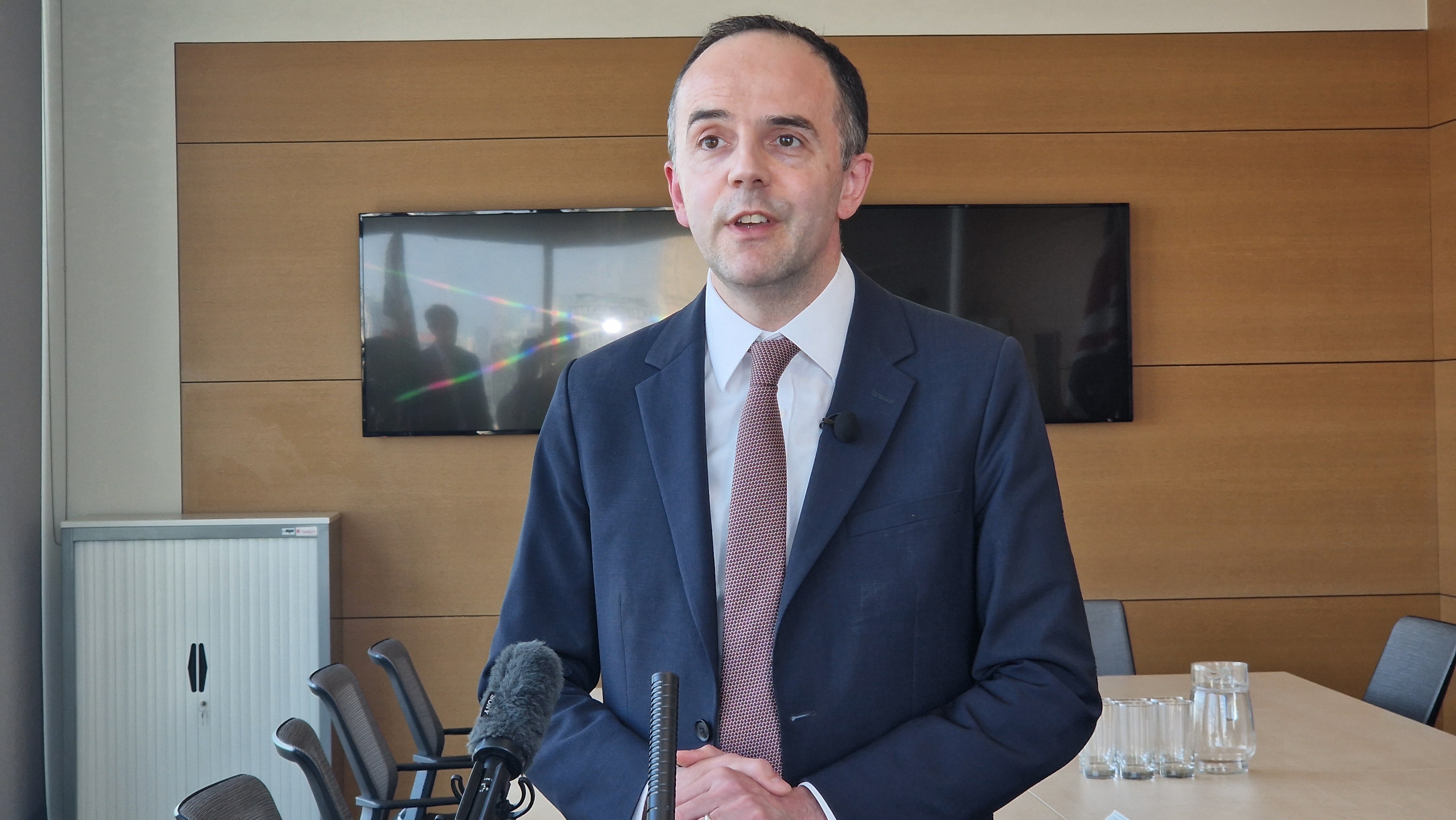
A Department of Health and Social Care spokesperson said Mr Murray “will give full and careful consideration to the recommendation” and will update on the Government’s response shortly.
Prostate cancer is the most common cancer in the UK, with more than 64,000 men diagnosed every year.
Freddie Hamdy, Nuffield professor of surgery and professor of urology at the University of Oxford, and honorary consultant urological surgeon at the Oxford Radcliffe Hospitals, said: “Any man who’s worried about prostate cancer should go to his GP and discuss that with him, and it’s a shared decision between the information that the GP is giving him and the level of concern that the patient has.”
Reacting to the recommendation, Dr Ian Walker, executive director of policy at Cancer Research UK, said: “Prostate cancer remains the second biggest cancer killer of men, so it’s critical that we find more ways to save lives from the disease.
“Today’s announcement, following an independent expert review, that the currently available evidence doesn’t support a broader prostate cancer screening programme will be disappointing for many people, but the PSA test currently used to detect prostate cancer is not effective enough to support wider screening, as shown in multiple large-scale trials.
“Screening decisions must be guided by the current evidence, with programmes only introduced when the benefits are shown to outweigh the harms, including unnecessary and invasive overtreatment.
“We urge the UK Government to accept the UKNSC’s recommendation.”
Chiara De Biase, fundraising and health strategy director at Prostate Cancer UK, said the charity is “deeply disappointed” with the UKNSC recommendation.
“Without a screening programme for the UK’s most common cancer, we lose more than 12,000 dads, brothers, and partners every single year,” she said.
“We know that a mass screening programme could save thousands of men’s lives, and while we recognise the current evidence does not yet show that screening all men at risk would do more good than harm, today’s decision is a step backwards, narrowing the recommendation to a smaller pool of eligible men.”
– What is prostate cancer?
The prostate is a gland next to the bladder whose main function is to help produce semen.
According to Prostate Cancer UK, more than 63,000 men are diagnosed with the disease every year and more than 12,000 die from it.
Early prostate cancer often has no symptoms, but in the later stages can include changes in urinary habits such as weak flow or needing to go more often.
Other signs include blood in the urine or semen, pain in the back, pelvis or hips, unexplained weight loss and erectile dysfunction.
Many cases progress too slowly to cause problems or early death, but some cases are very aggressive.
– Who is at higher risk?
Most cases of prostate cancer are in men over the age of 65 and risk goes up with every year.
Black men have double the risk of prostate cancer.
Any man with a family history of the disease is also at increased risk and men with a brother or father diagnosed with prostate cancer have a two to four-fold greater risk of developing prostate cancer.
The BRCA2 gene mutation is linked to a higher chance of developing prostate cancer at a younger age and in a more aggressive form.
