
Mortgage rates fall at fastest pace in 21 months but experts warn war could stop the trend

Fixed mortgage rates have fallen at the fastest rate since October 2024, as lenders bring back down prices which spiralled at the start of the Iran war.
The number of mortgage deal choices also continued to rise and the number of days they stayed on the market for remains at just 14 on average, as the industry grapples with fast-changing outlooks on inflation and borrowing costs.
At the end of February, the interest rate on an average two-year residential fix was 4.84 per cent, but it shot as high as 5.9 per cent by early April at the high of uncertainty around the Strait of Hormuz.
By late that month the downturn had begun, and Moneyfacts data shows fixed rates dropped for a second consecutive month in June, with the biggest monthly reductions since October 2024. Average two-year fixes fell 0.16 per cent, while five-year fixes dropped 0.11 per cent, both back to 5.52 per cent on average.
That was the lowest point since the start of March for both two- and five-year deals. In late April, Barclays brought back the first sub-4 per cent mortgage deal after the entire market had seen such offers withdrawn.
Further data showed the average rate for new mortgages also fell back to 5.47 per cent, though in March of this year that figure was at just 4.9 per cent – and the total number of deals on the mortgage market, while higher in June than May, remained more than 300 lower than in March at 7,177.
Rachel Springall, finance expert at Moneyfacts, said: “Borrowers will breathe a sigh of relief to see fixed mortgages falling at their fastest pace for almost two years, combined with a calmer period of product churn and an uplift in choice. Lenders responded positively to falling swap rates in June, seeing notable drops to the average two- and five-year fixed rates by 0.16% and 0.11 per cent respectively, both settling at 5.52 per cent.
“The last cuts of a similar scale came in October 2024, when the rates dropped by 0.16 per cent and 0.13 per cent respectively.
Get a free fractional share worth up to £100.
Capital at risk.
Terms and conditions apply.
ADVERTISEMENT
Get a free fractional share worth up to £100.
Capital at risk.
Terms and conditions apply.
ADVERTISEMENT
Usually, two-year fixes are priced lower than five-year fixes, but earlier this year at peak Iran war uncertainty, the script was flipped on that relationship with two-year deals more expensive due to short-term borrowing costs rising on inflation fears.
That situation has only just now reversed itself – Moneyfacts data shows on 13 July, the average 2-year fix is 5.46 per cent, with the average 5-year fix at 5.48 per cent.
But, Ms Springall warned, the resumption of strikes between the US and Iran means mortgage rate cuts could slow or even reverse once more.
“It has been three months since fixed rates inverted, where the two-year fixed has been higher than its five-year counterpart. This has started to unwind, so the rates should hopefully start to fall back into a more traditional pricing structure.
“However, this positive trajectory could be thrown off course, as renewed escalation in geopolitical tensions could slow the tempo of mortgage rate cuts,” she added.
Nathan Emerson, CEO at Propertymark, added that the political uncertainty at present combined with upcoming economic data could also see lenders hesitate over further lowering rates, until more certainty arises.
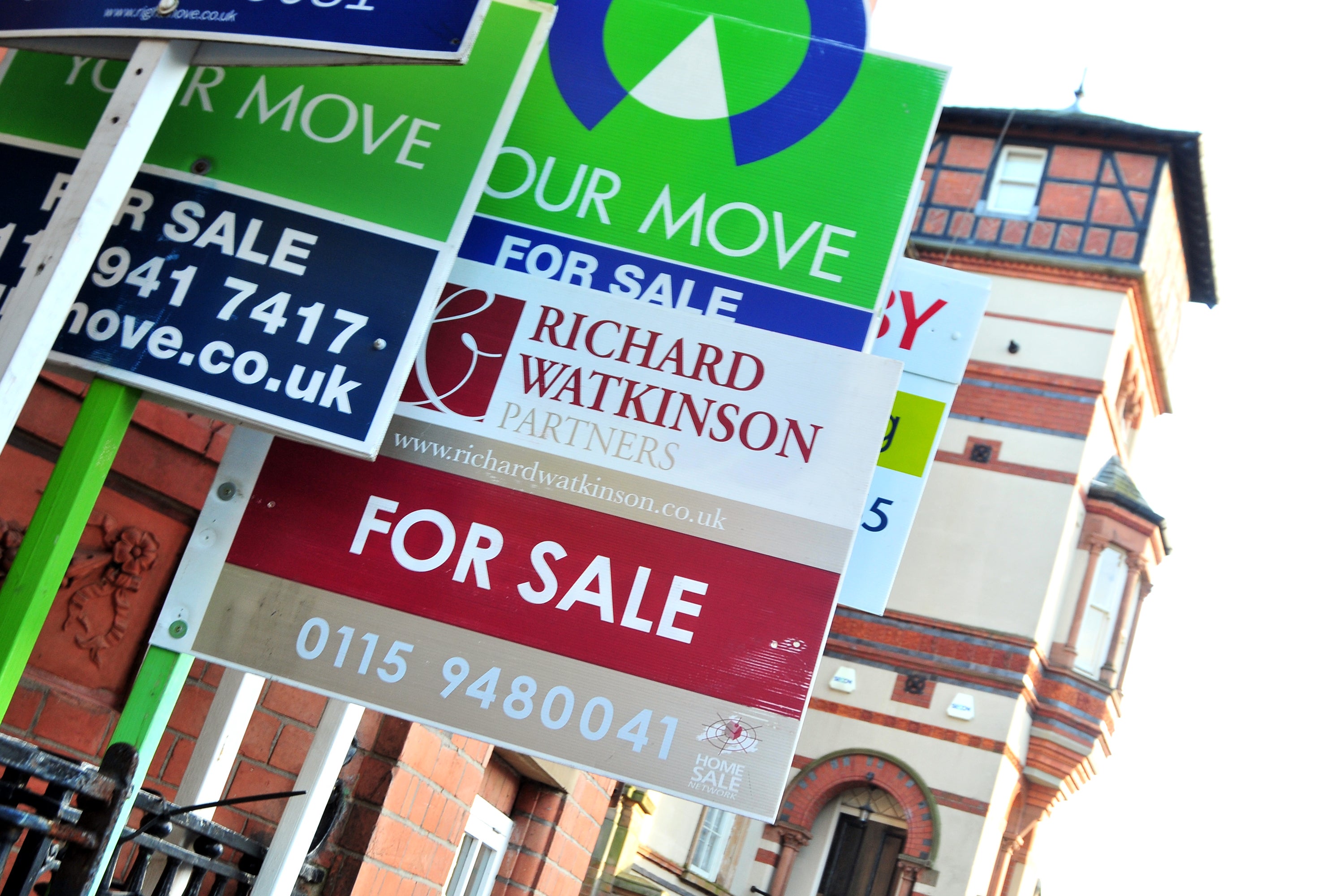
“Any fall in mortgage rates should help boost flexibility for both buyers and sellers, and it could perhaps be a sign that the UK housing market is overcoming what may be the worst of the mortgage rate rises witnessed in recent years,” he said.
“However, with inflation figures due next week, all eyes will likely turn to the Bank of England and its next base rate decision at the end of the month. There has been speculation that we may see a rate rise over the coming months, which could shift sentiment among lenders as the year progresses.
“Also, the appointment of a new prime minister could create uncertainty among buyers and sellers due to potential changes in housing policy going forward.
“So, while today’s news is welcome, it is important to consider the wider economic picture and the many different scenarios that could play out over the coming weeks and months.”
Emma Jones, MD at whenthebanksaysno.co.uk, added that the ups and downs recently served as a reminder that those seeking a new mortgage deal should lock in the best possible rate sooner rather than later. “In recent weeks, mortgage rates have been falling but the conflict in the Middle East is once again heightening and borrowers should have this firmly on their radars,” Ms Jones said.
“2026 has been a textbook example of how quickly mortgage rates can react to geopolitical events and a continued fall in rates should not be taken for granted.”
In most cases, people renewing their mortgage deals can do so with six months to run on their existing one – and change for a better deal should one crop up further down the line before the renewal takes effect.


.png?width=1200&auto=webp&trim=0%2C0%2C0%2C0&w=390&resize=390,220&ssl=1 "Rethinking the true cost of training: Why understanding your organisation matters before investing in learning")
