
The station that shamed New York is finally getting an $8bn makeover

A dramatic new vision has been unveiled for Manhattan’s Penn Station, promising to transform the notoriously gloomy transit hub back into a beacon of architectural grandeur, reminiscent of its original, majestic form.
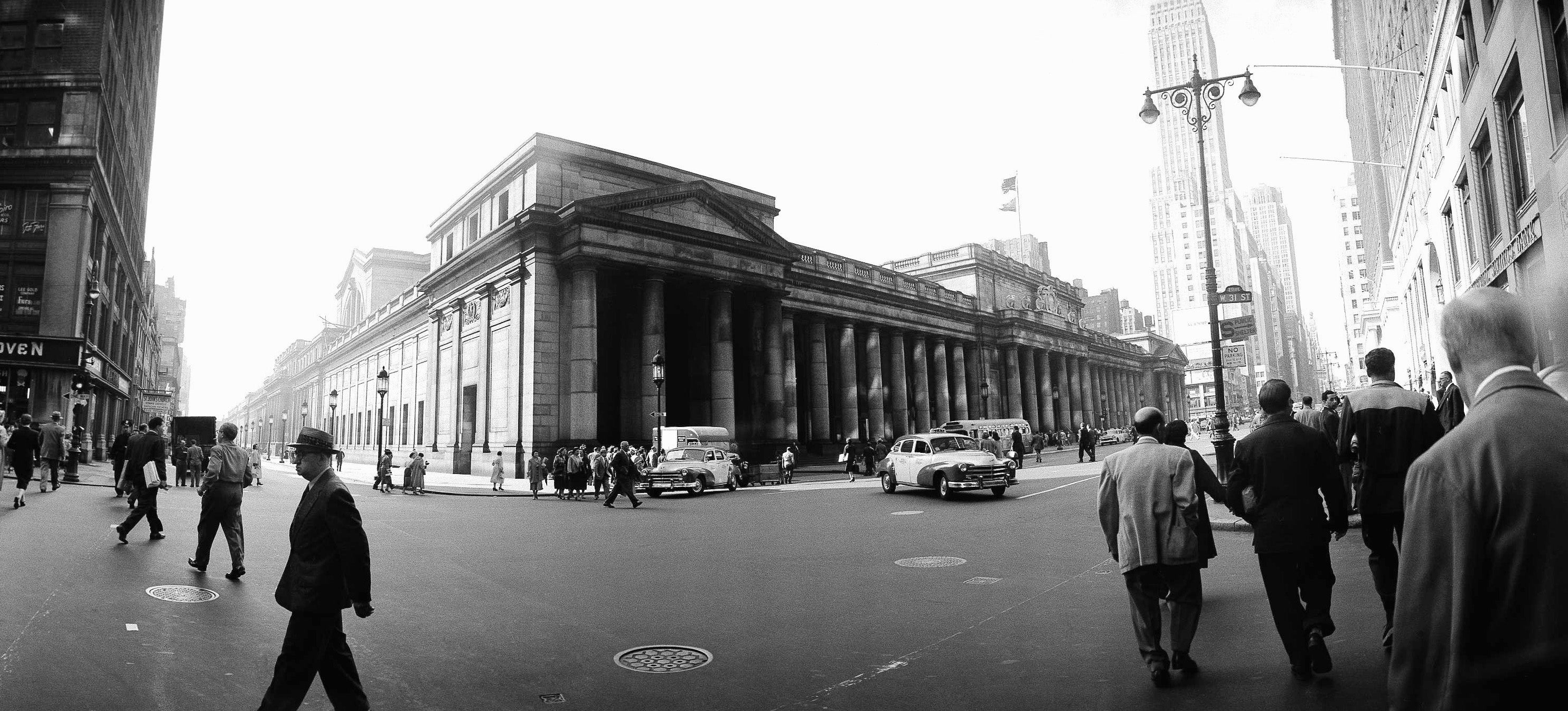
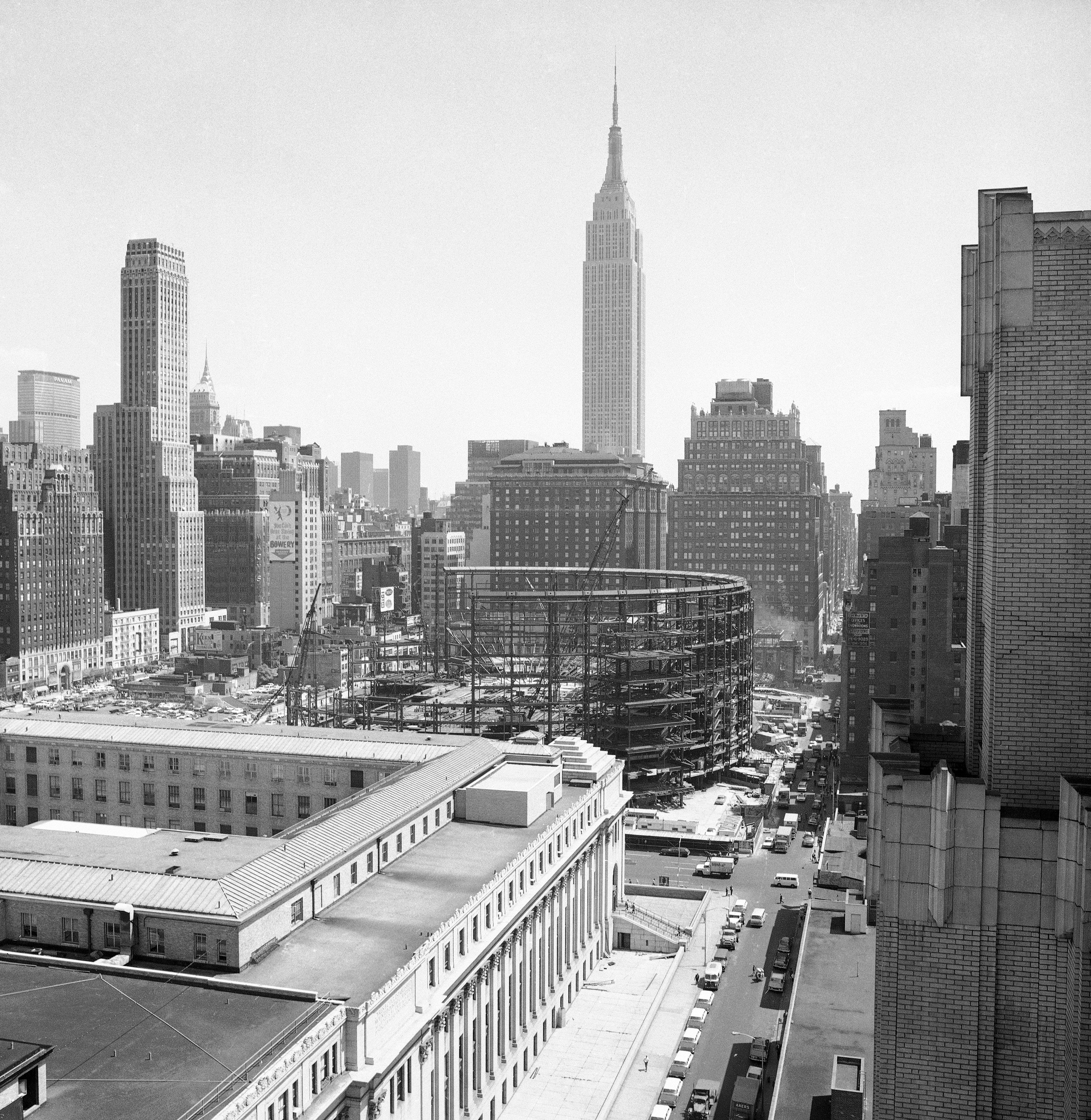
The station, once a monolithic Beaux Arts terminal with Roman-style columns and the city’s largest indoor space, was controversially demolished in 1963 to make way for Madison Square Garden. This left commuters to navigate “gloomy, claustrophobic, low-ceilinged corridors,” a stark contrast to its former glory.
Architectural historian Vincent Scully famously lamented the change, stating, “Through Pennsylvania Station one entered the city like a god. One scuttles in now like a rat.”
However, renderings released Monday by Amtrak and Penn Transformation Partners, the design and development consortium selected for the project, reveal a plan to restore that lost grandeur. The proposed design features a rectangular, stone facade lined with imposing columns along a grand entryway.
Inside, commuters would be greeted by a sunlight-drenched grand concourse with soaring ceilings over 50 feet high, complete with bronze finishings, a bas-relief of the city’s skyline, and a large, classic station clock.
The design draws inspiration from the ornate Beaux-Arts style of Grand Central Terminal, as well as Art Deco landmarks like the Empire State Building and Rockefeller Center.
Designers also looked to the monumental, Federalist-style of government buildings in Washington, D.C., and to those built by the Works Progress Administration during the Great Depression.
Vishaan Chakrabarti, a leader of the award-winning team, emphasized the goal of restoring Penn Station’s place among the city’s greatest landmarks and bringing a “sense of public ambition” back to a vital civic space.
“There was this fearless embrace of ornament and decoration that in some ways we’ve lost,” Chakrabarti said. “We want to bring some of that sense of craftsmanship back.”
The ambitious redesign is projected to cost between 7 and 8 billion, with construction targeted to begin before the end of 2027. The project is expected to unfold in phases over approximately six years, during which Penn Station will remain fully operational.
The station currently serves over 600,000 commuters on any given workday, a volume greater than the combined traffic of New York City’s three major international airports: John F. Kennedy, LaGuardia, and Newark Liberty.
While past proposals have often suggested relocating Madison Square Garden, the plans revealed Monday confirm that the “World’s Most Famous Arena” will remain in place. However, a theater owned by MSG and built directly above the tracks will need to be razed to accommodate the new facade and concourse.
Developers and MSG owner James Dolan have reached a “memorandum of agreement” for this critical component, a factor that helped Amtrak select this proposal over three other bidders.
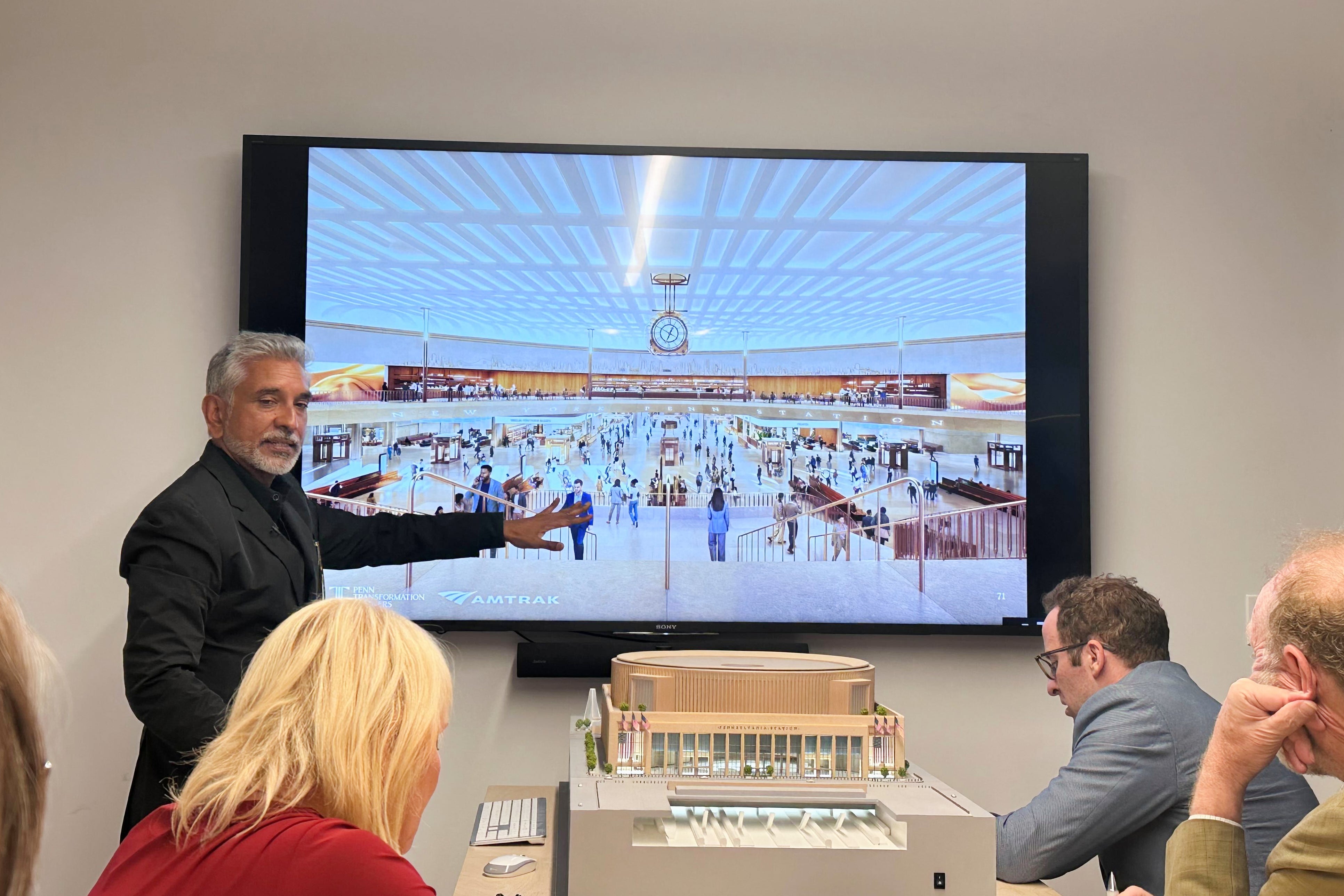
Andy Byford, Amtrak’s special adviser overseeing the redevelopment, noted that final terms, including payment, are still being determined. “You’ll understand why we wouldn’t want to negotiate that in public,” Byford stated.
An interior wall near an entryway bears the seal of Donald Trump, who had Amtrak assume control of the project last year after decades of bureaucratic red tape and political infighting among transit agencies and the competing interests of other powerful players, including James Dolan.
Trump has mentioned renaming his hometown station in his honor as he’s sought to burnish his legacy through public works projects. For now, however, renderings released Monday show the name etched in capital letters across the proposed grand facade would still read, “Pennsylvania Station.”

When asked about a potential name change, Byford said, “I’m not focused on names at all. This building has a name, and the name is there.” Peter Cipriano, one of the lead developers, echoed this sentiment.
The next phase of the project involves refining the preliminary designs and navigating the extensive federal environmental review process, which will help produce a more detailed cost breakdown.
Byford stressed that the government has no plans to acquire surrounding properties to expand the station, addressing concerns from local residents. He also assured the public that the project’s cost would not be passed on to commuters. “There will be no fare hike to pay for this project,” Byford affirmed. “It’s not going to happen.”


