
This tree witnessed one of America’s bloodiest battles. Now it’s fighting to survive

A massive live oak that stood on a South Carolina battlefield during one of the Revolutionary War’s bloodiest clashes is now fighting a battle of its own — against the decades-old measures once designed to save it.
The scarred oak at Eutaw Springs is believed to be nearly 300 years old. Arborists estimate it was about 50 when American and British forces fought around it on Sept. 8, 1781.
Known as a “witness tree,” it is a rare living link to the Battle of Eutaw Springs, which historians consider the final major open-field engagement of the Revolutionary War.
“It’s very rare to have a witness tree, especially from the Revolutionary War,” said Garrison Marcoux of the South Carolina Battlefield Preservation Trust. “To have the tree that witnessed this battle and still standing is short of a miracle.”
Historians cannot know exactly what unfolded beneath its branches. British troops may have rested in its shade before the fighting or used its trunk for cover as American forces advanced.
“That tree probably took a few lead balls itself,” arborist Aron Landsaw said.
About 2,500 American troops under Maj. Gen. Nathanael Greene attacked roughly 2,000 British and Loyalist forces near a fortified brick structure. Among the notable officers involved were Lt. Col. Henry “Light-Horse Harry” Lee and Brig. Gen. Francis Marion, the famed “Swamp Fox.”
The fighting was brutal. Greene, who had a horse shot from beneath him, later described it as “by far, the hottest action I ever saw, and the most bloody for the numbers engaged.”
British commander Lt. Col. Alexander Stewart similarly called the battle “bloody and obstinate.”
A total of 1,461 men were killed, wounded, captured or reported missing, and both sides claimed victory.
The armies eventually disappeared. The oak did not.
Today, the tree stands about 45 feet tall, with a sprawling canopy stretching roughly 130 feet. Its trunk measures about 6 feet across at chest height.
It also survived dramatic changes to the surrounding landscape. The springs that gave Eutaw Springs its name disappeared in the 1940s when a reservoir was created in the Santee River basin, while 1960s development consumed more of the historic battlefield.
Then, about 50 years ago, lightning split the oak near the center of its trunk.
Workers trying to save it wrapped its enormous limbs with steel chains and cables. The intervention worked — but eventually created a new threat.

As the oak continued growing, it enveloped the metal supports. The chains and cables began cutting into the wood and disappearing beneath the bark.
“The chains and cables are actually choking it out,” Landsaw said. “It can’t pull nutrients up from the soil.”
Now preservationists are trying to save it again.
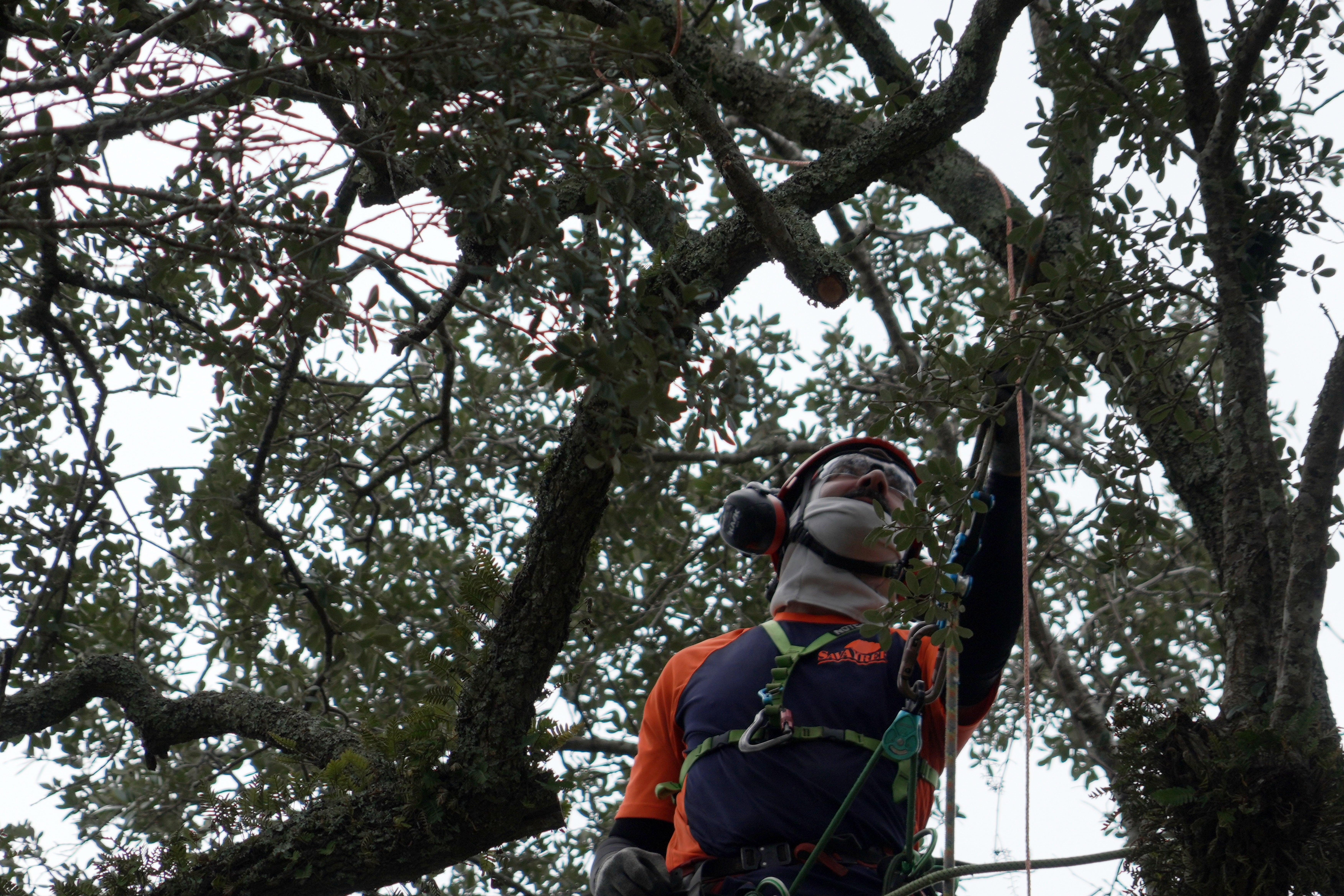
South Carolina 250 and the American Battlefield Trust brought in Maryland-based tree care company SavATree as the country prepares to commemorate the 250th anniversary of the Declaration of Independence.
Crews used a high-powered air tool to loosen compacted soil around the roots and injected a kelp mixture intended to restore nutrients.
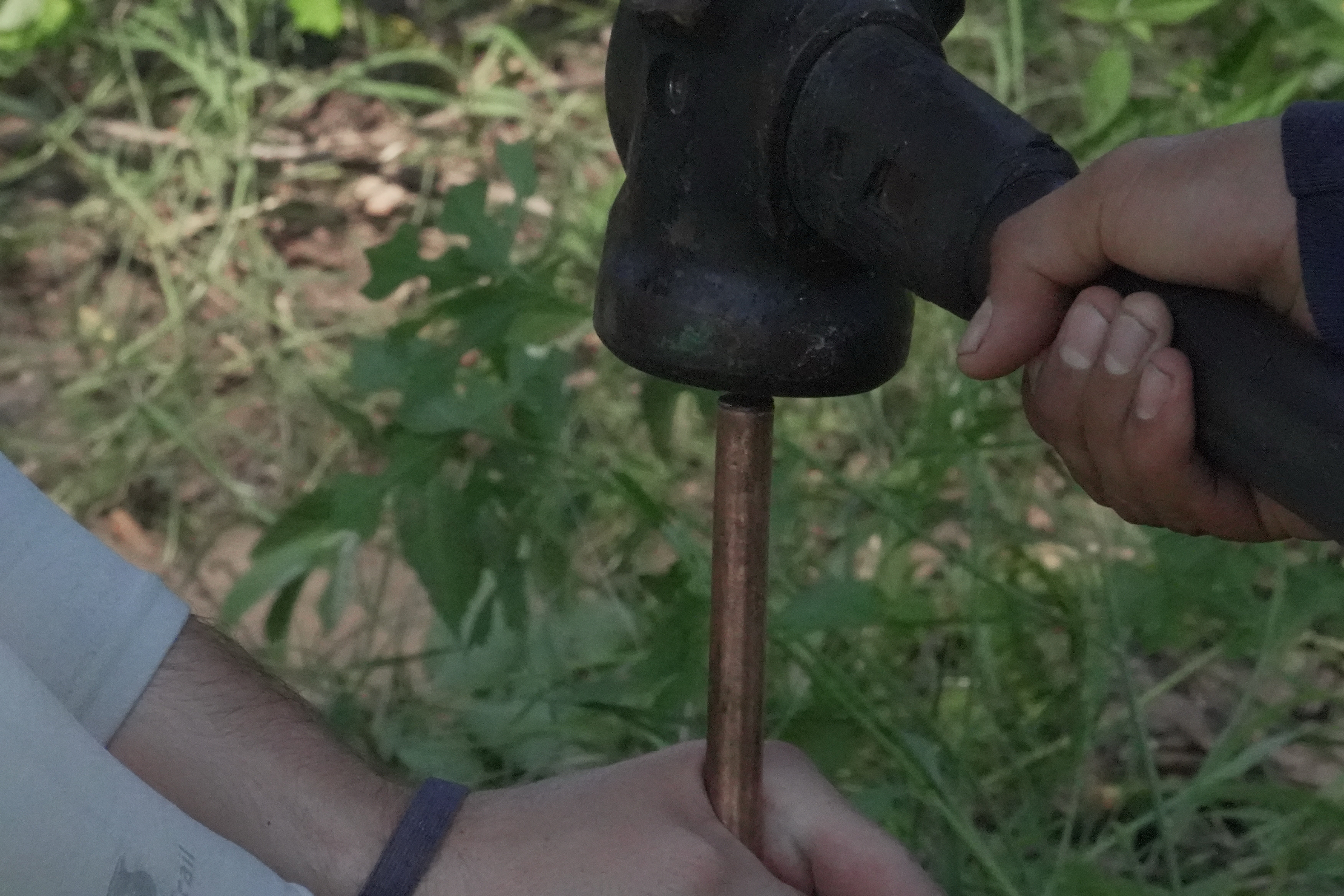
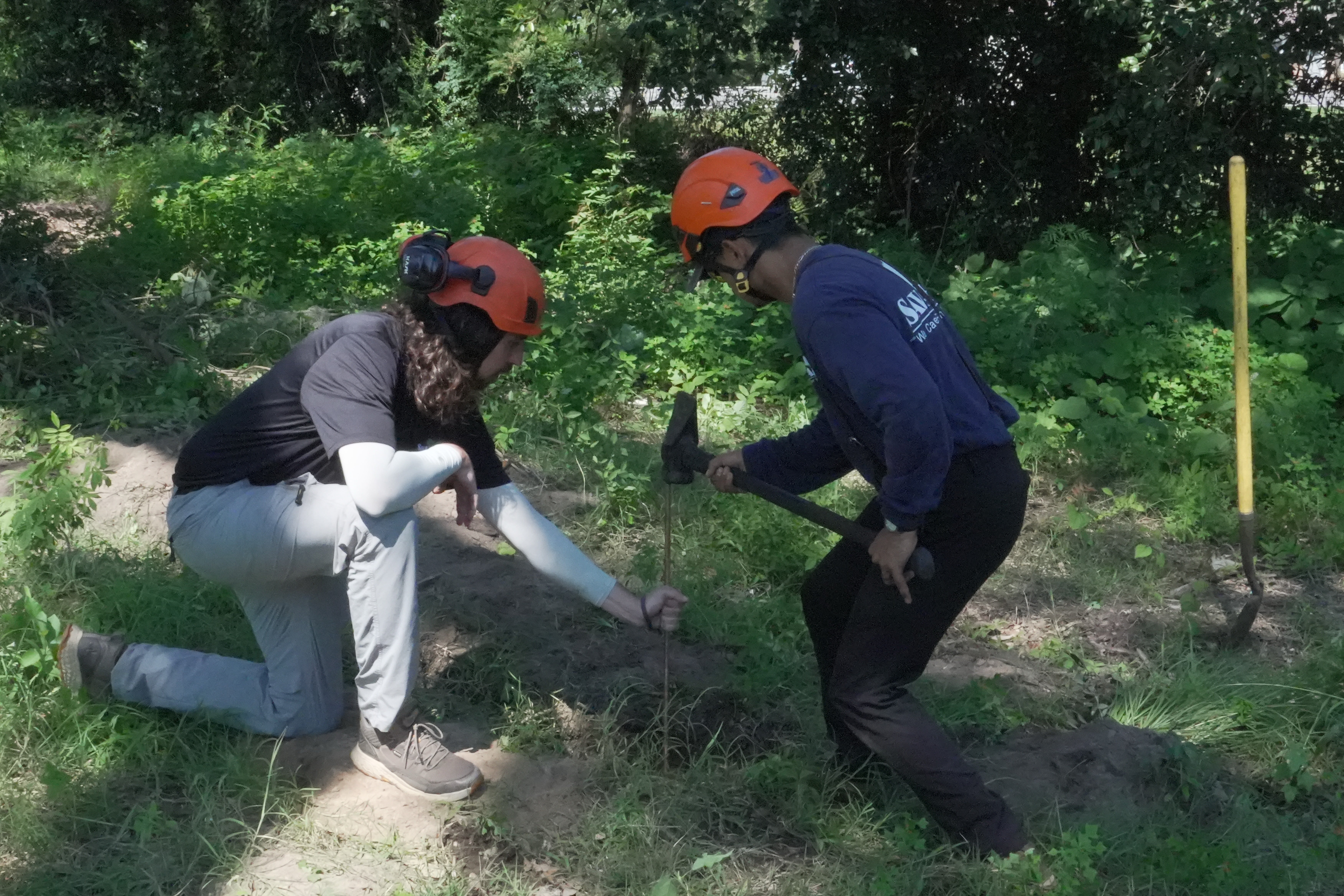
They are also trying to protect the oak from another lightning strike. Small lightning rods have been installed along its major limbs and connected to copper cables leading to a grounding rod buried about 10 feet from the tree.
“If lightning does hit it, it’ll run down the copper cables and dissipate into the ground,” Landsaw said.
Workers also plan to replace the old supports with a modern stabilization system connecting five major branches to a central hub. That should allow the tree to move naturally in the wind without putting excessive strain on its limbs.
For Marcoux, preserving the oak means protecting something more than an exceptionally old tree.
“I’m a spiritual person,” he said. “To say that a place that experienced a lot of violence and intense emotion and things like that doesn’t hold some kind of energy is probably not likely.”
Landsaw considers the effort the most significant project of his career.
Nobody can promise that the oak, which has already survived war, development, flooding and lightning, will make it another 300 years.
But the goal is considerably more achievable.
“We’re focusing on another 100 years at least,” Landsaw said. “Hopefully longer.”
