
When should fighters stop fighting?

For some, fighting is a business; make as much money from the sport as possible, and then walk away with your health intact. For others, fighting is a lifestyle; it’s a drug that you can’t just quit.
There is a tendency to disregard new-age combat sports as a clown show. Whether it’s UFC fights on the White House South Lawn, former Disney kid Jake Paul becoming one of boxing’s biggest financial draws, or whatever is going on at Misfits in a given week, the bravado, theatrics and occasional buffoonery that have always accompanied the fight game have inflated to an obscene level.
When the bell rings, however, the art of cracking fist, knee or shin against skull is as grisly as it’s always been. Fighters knowingly accept the risk of serious injury or death when they step into the ring. Often, those same fighters will say the feeling of vitality inside said ring is unmatched.
Liverpudlian Darren Till, a former UFC star turned bare-knuckle boxer for BKFC, is in this camp. “I love violence. I love fighting. I was built for fighting,” he tells The Independent. At 33, he hasn’t even started to think about when he might give this game up. But on Saturday night, he fights a specimen many struggle to fathom is still going at such an age.
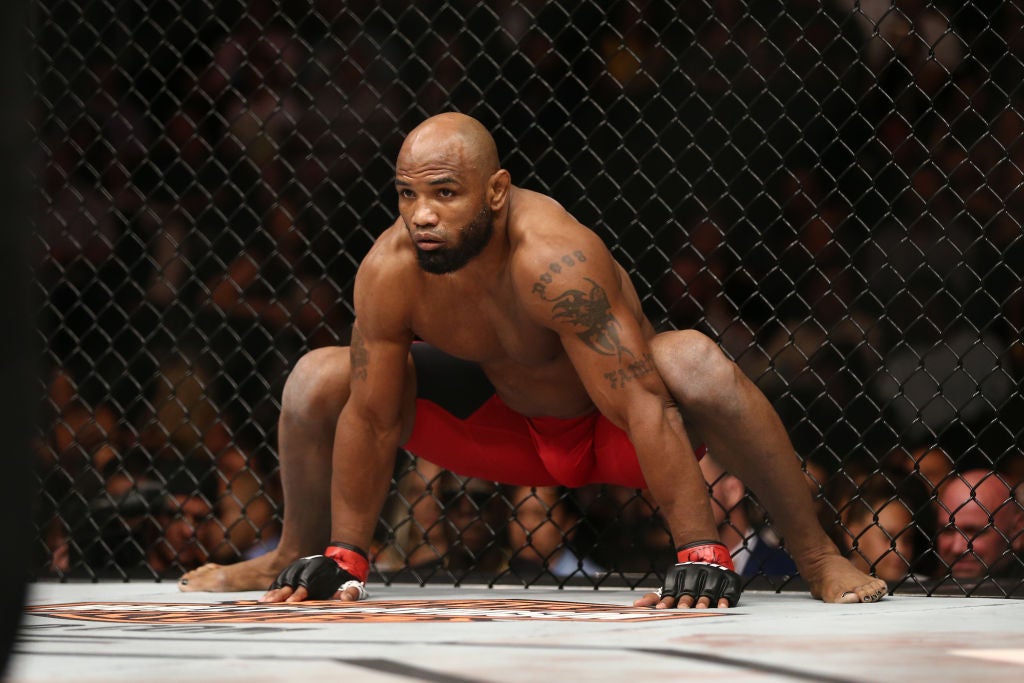
Yoel Romero is 49. An Olympic wrestling silver medallist from all the way back in 2000, Romero is most known for his truly remarkable run in the UFC, which he began aged 36 – 13 years after that triumph at the Sydney Games. Entering mixed martial arts’s premier organisation when most combatants his age begin to wind down, the Cuban boogeyman took the middleweight division by storm and went on to fight for the world title three times.
With age, he has levelled up the brutality. He too now mostly fights bare-knuckle, a discipline which offers a complete lack of protection, thus facilitating some of the most sickening knockouts you’ll see. All this, while pushing half a century. And like Till, a man 16 years his junior, retirement isn’t on his mind.
What’s his motivation, you might think? He doesn’t seem to have one; fighting is simply his purpose. “I don’t live a motivational life, motivation will leave you tomorrow,” Romero says through an interpreter. “It’s something that’s in my blood, it’s something that we do. I was born with the concept of: if you want to be a great athlete, you’ve got to be disciplined. You’re not an athlete if you’re not disciplined.”
Even this discipline comes secondary to his faith, however. He previously said that “God will decide” when he stops fighting, though he back-tracked on that in this interview: “My faith with God is something else. It doesn’t dictate my wins or losses. It is my first battle.”

Enjoy 185+ fights a year on DAZN, the Global Home of Boxing
Never miss a fight from top promoters. Watch on your devices anywhere, anytime.
ADVERTISEMENT. If you sign up to this service we will earn commission. This revenue helps to fund journalism across The Independent.
Enjoy 185+ fights a year on DAZN, the Global Home of Boxing
Never miss a fight from top promoters. Watch on your devices anywhere, anytime.
ADVERTISEMENT. If you sign up to this service we will earn commission. This revenue helps to fund journalism across The Independent.
Romero won’t be hanging up the gloves any time soon, it seems; he will almost certainly fight into his 50s. But he is far from the only fighter to be glued to the fight game. There is an obvious worry to this.
Fighter health, especially in retirement, has always been one of the great concerns of combat sports. Heartbreaking stories of ex-competitors now battling CTE (chronic traumatic encephalopathy, a brain disease linked to repeated blows to the head) and pugilistic dementia are tragically common in this world. It often feels preventable; perhaps that is the greater tragedy.
Nobody knows this more than Dave Harris of the Ringside Charitable Trust (RCT). Harris has spent his life in boxing, as a trainer, promoter and manager. He now works to improve the lives of ex-boxers and their families, chiefly striving to raise funds for a residential care home for retired boxers facing injury, illness and hardship.
Harris is on the front line as he sees former elite athletes deteriorate physically and mentally as a result of their craft. “I’ve got wives sobbing down the phones because their husbands say they’re having affairs when they’re not, because they’re suffering from pugilistic dementia,” he says.
In a desperately sad case, Harris revealed at the time of speaking that Jimmy Revie, a former British featherweight champion, had been forced to leave his care home because of aggressive behaviour stemming from his dementia. A normal care home can’t cater to the unique needs of ex-boxers, Harris believes. “Jimmy, in a Ringside rest and care home, there will be the right people around just to calm him, talk to him, show him [his old fight] films. This home he’s in, there is nothing to keep their minds active.”
Just two weeks later, Revie passed away on 13 September, aged 79.

Knowing what fighters can go through in later life, Harris cares for the wellbeing of retired boxers while also fighting for greater protection for those still active. He believes promoters and the British Boxing Board of Control (BBBofC) fail today’s crop.
“There is an epidemic out there that nobody is acknowledging, especially the hard-nosed promoters,” he says.
“The [real world] mafia kill people. Well, the boxing mafia, the ‘soft’ mafia, they don’t kill anybody. But they kill them over a long period of time because of their decisions they make. That’s an analogy that basically they let fighters go on too long. It’s my opinion that they should be doing something about it.”
BBBofC general secretary Robert Smith responded to this statement by saying: “Mr Harris’ comments are extremely disappointing bearing in mind the British Boxing Board of Control’s medical standards are some of the most stringent in the world and recognised as such. Over the years the BBBofC has supported the Ringside Charitable Trust.”
Harris is baffled how certain big names have been allowed to fight on. Derek Chisora is one, but Kell Brook is a more pressing case. The former IBF welterweight world champion announced in August that, at 40, he would come out of retirement for another fight, having previously admitted to mental-health struggles since calling time on his career.

“Is that in his interest after the career he had? No. Where’s the common sense?” Harris questions. “They’ll put him in with a class act or to build somebody up – I wouldn’t be surprised if, after this September thing with Conor Benn [his defeat to Ryan Garcia], they put Kell Brook in with him. It’s just the way the fight game goes, but it’s wrong. The Board of Control, they want to get their act together.”
He adds: “I certainly think they [the BBBofC] have a difficult job but they make it harder for themselves because they should be saying, ‘No, we will not give Kell Brook a licence.’ But money talks and that boy will fight again. I just hope he doesn’t get a brain bleed or damage later on when he’s retired.”
The BBBofC confirmed that Brook has not applied for a licence at the time of writing, but “should he do so it will be considered on its own merits”.
Harris highlights the difficulty for fighters to step away from the game on their own. “They’ve got nothing else to go on to,” he says, comparing the situation to soldiers leaving the military. But this makes it easy for promoters to “manipulate” boxers when they should be safeguarding them.
Money will naturally be a primary reason why fighters, especially journeymen, keep going. Then for the most successful, legacy points will always be there to tick off. Mike Tyson said he took his fight with Paul in 2024, aged 58, because he’s a “glory junkie” rather than because of the enormous pay packet. Conor McGregor, meanwhile, continues to ignore his body by insisting he will make a UFC triumphant comeback despite suffering two catastrophic injuries in the first round of his past two fights.

But it can go deeper than that.
Anthony Joshua shocked many by returning to action just a few months after being involved in a car crash that took the lives of two close friends last December. In this instance, grief seemed to be a powerful motivator, and fighting a coping mechanism. His swift comeback seemed to be a means to an end, with his long-awaited British super-fight with Tyson Fury finally set to happen. If ever there was a final chapter for either man, this should be it.
Joshua is a notable supporter of the RCT, wearing the charity’s logo on his ring attire for his own opinion-splitting bout with Paul. “I know that he worries about boxers,” Harris says. But in an industry where fear can be frowned upon, this issue of fighter health can be spoken about far too casually by those it directly concerns.

Till, still right in the thick of his career, seems to brush off this risk of future complications. Asked if it weighs on his mind, he replies: “A little bit but as I said, I like violence so if my brain and stuff like that is going to get hurt, then so what? I signed up for this.”
This weekend in Manchester, he’ll go to war with Romero, a man whose primal need to fight he can relate to. The bout will be a spectacle, one once imagined by UFC fantasy bookers. Both individuals continue to write their own in-ring stories but, on all fronts, greater care should be taken in considering how books like theirs are closed.
