

President Donald Trump threatened to blockade the Strait of Hormuz on Sunday after negotiations with Iran collapsed over the weekend and oil prices surged.
“We’re sweeping the strait,” he added in reference to the shipping route, and called negotiations “very deep”.
While the United States later backtracked and said it would “not impede” vessels sailing through the vital waterway, it said a blockade of Iran’s ports would continue to go ahead on Monday.
Iran’s Islamic Revolutionary Guard Corps warned that “approaching military vessels to the Strait of Hormuz is considered a violation of the ceasefire”.
Peace talks in Islamabad are said to have failed due to disagreements over the future of Hormuz and the development of Iran’s nuclear programme. But Trump told reporters he “doesn’t care” whether or not Tehran returns to negotiations.
Tehran insists it is entitled to control the waterway and will seek to impose tolls on vessels passing through.
Iran’s parliamentary speaker, Mohammad Bagher Ghalibaf, who led Tehran’s negotiators at the weekend talks with Washington, taunted Trump over rising gas prices, saying: “Enjoy the current pump figures”.
Why is the Strait of Hormuz so important?
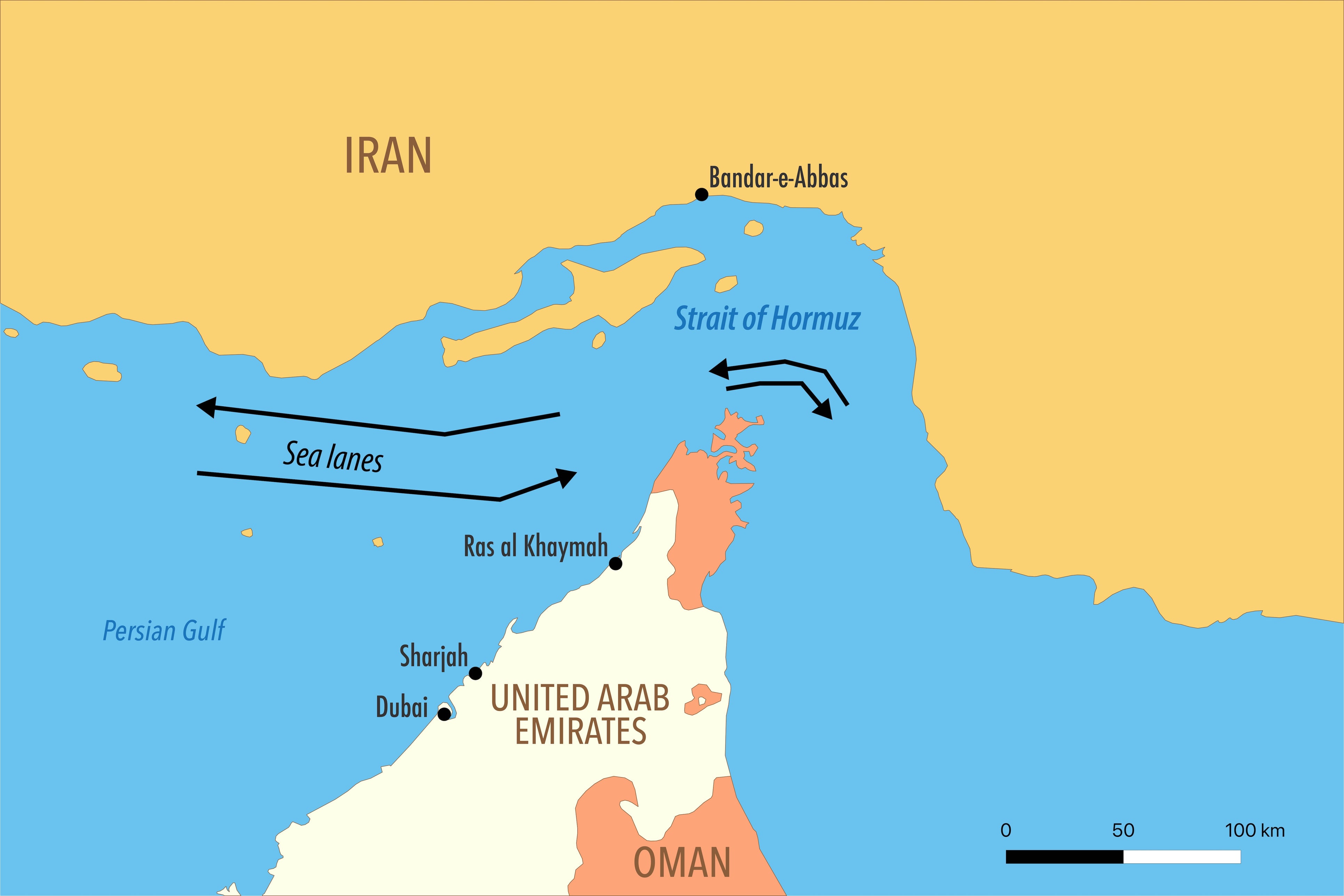
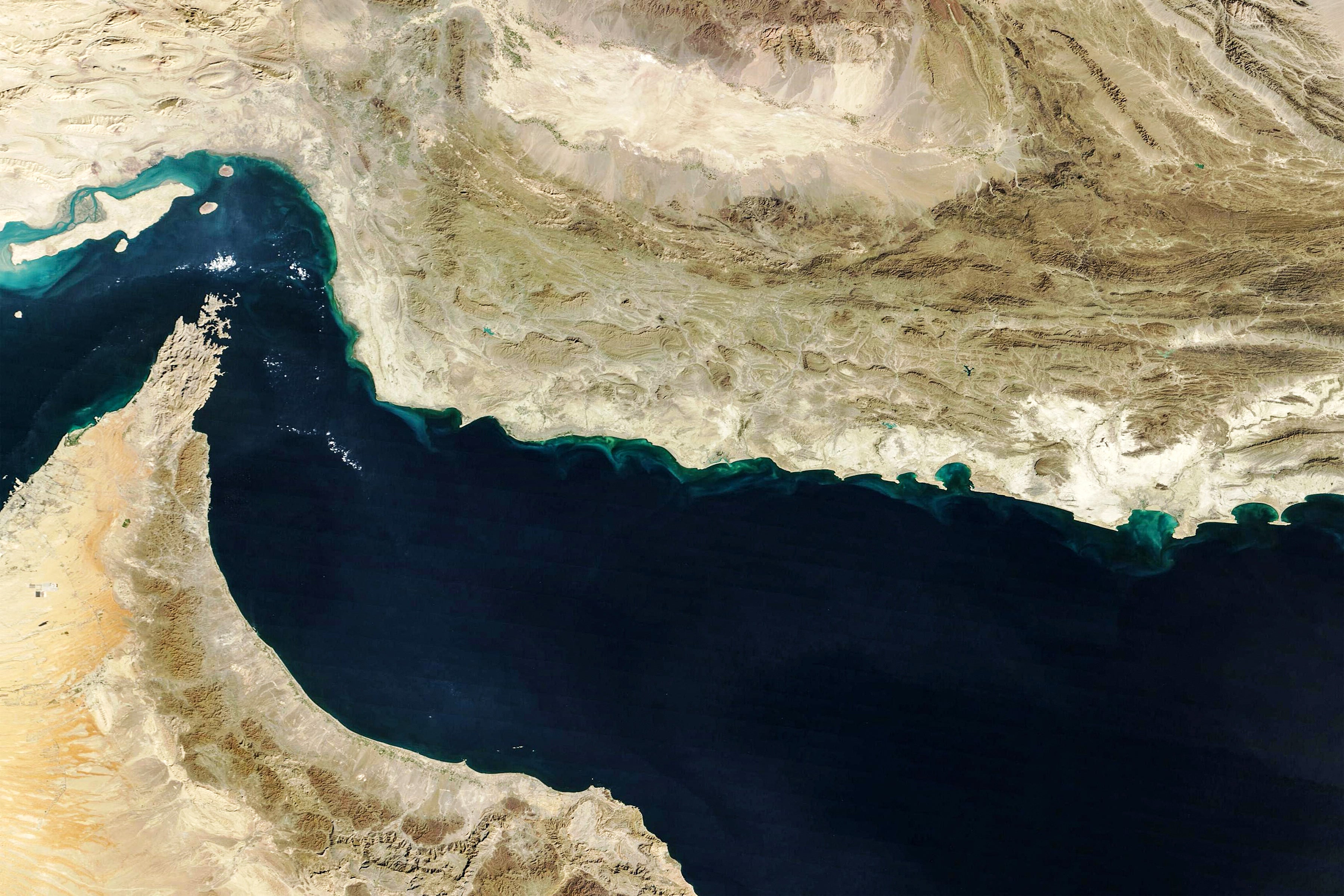
The Strait of Hormuz lies between the Persian Gulf to the north and the Gulf of Oman to the south, opening up to the Arabian Sea and beyond to the rest of the world.
It is roughly 100 miles long, but only 24 miles across at its narrowest point.
The land-flanked passage lies in Iran’s territorial waters, but is viewed as an international waterway and is normally open to all ships. It consists of two shipping lanes allowing traffic to pass in opposite directions, each two miles wide, with another two-mile lane separating them.
International law permits countries to exercise control up to 13.8 miles (12 nautical miles) from their coastline. At its narrowest point, the passage comes under both Iranian and Omani control.
Iran lies on one side of the strait, and some of the world’s biggest oil suppliers, including Kuwait, Bahrain, Qatar, the UAE, Saudi Arabia and Oman lie across the water.
It is one of the world’s most important maritime chokepoints, with 20 million barrels of oil passing through it each day – one-fifth of global oil consumption – and a similar percentage of the world’s supply of liquefied natural gas.
This amounts to over 500 million barrels of oil and 6 million tonnes of gas every month, according to Lloyd’s List. Much of this is exported to Asian markets, including China, India and Japan. It is the route used by supertankers carrying oil and gas from Saudi Arabia, Kuwait, Iraq, Qatar, Bahrain, the UAE and Iran.
Around 3,000 shipping vessels pass through the strait every month, including oil tankers, liquefied natural gas containers, and cargo vessels, according to Lloyd’s List.
On 18 February, Iran closed the Middle Eastern waterway for the first time since the 1980s as Iranian troops took part in live-fire military exercises.
Iran had not previously threatened to close the passage even during its 12-day war with Israel last June, when US-Israeli strikes took out some of the country’s key nuclear and military sites.
Are ships passing through the Strait now?
.png)
Before the outbreak of hostilities, around 138 ships were passing through the Strait of Hormuz every day, according to the Joint Maritime Information Center.
Maritime trackers report that around 40 vessels have passed through since the truce between the US and Iran was agreed.
“Despite the ceasefire agreement, shipments through the Strait of Hormuz remain constrained,” senior crude analyst at Kpler, Johannes Rauball told The Independent.
“There is still considerable uncertainty regarding a potential resumption of normal flows, as tensions between the US and Iran remain elevated. Both sides are reportedly still far from reaching a comprehensive agreement, and vessel owners are likely to remain hesitant to transit the strait as long as the risk of attacks persists. Many vessel owners will likely wait until a final agreement is reached before transiting the Strait of Hormuz.”
At last 17 vessels have been hit during hostilities, according to UK Maritime Trade Operations.
What has the US threatened to do?
Trump backtracked over threats to blockade the Strait despite hinting that several countries had agreed to be involved.
A blockade on Iranian ports will begin Monday at 10am EDT, or 3pm in the UK and 5.30pm in Iran, according to US Central Command.
It said the US would still allow ships travelling from non-Iranian ports to transit through the waterway.
On Saturday, US warships entered the Strait of Hormuz for the first time since the outbreak of the conflict, in an effort to clear Iranian mines. Iran’s state media denied the action had taken place and said that the vessels had been chased out of the area after being threatened with attack.
Admiral Brad Cooper, commander of the US Central Command, said that the US was working on a “new passage” out of the shipping route.
Will economic chaos continue despite a ceasefire?
The International Energy Agency has warned that the world is facing the worst energy crisis in history. Executive director Fatih Birol told Le Figaro on Tuesday that the oil and gas crisis triggered by the blockade is “more serious than the ones in 1973, 1979 and 2022 together.”
“The world has never experienced a disruption to energy supply of such magnitude,” he said.
He previously told the Wall Street Journal that the world lost 5 million barrels per day during the 1970s but is losing 11 million barrels per day this time, “more than two major oil shocks put together”.
But even if the Strait of Hormuz was to open tomorrow, experts have warned that the world economy could take months to recover.
“The impact will deepen and be long-lasting,” warns Neil Quilliam, an energy policy, geopolitics and foreign affairs specialist at Chatham House.
“The real shock has yet to be fully felt and will materialise when stocks run down. Even if the war were to end tomorrow and the Strait of Hormuz were reopened, world markets would still feel the shock in the months, as it will take at least six months before the Gulf states can begin to produce and export at capacity once again.”


