
Elon Musk says his trillionaire SpaceX IPO is ‘inspiring’ for humanity. It could help smash US democracy as we know it

The disconnect between the ivory rocket ship of Silicon Valley and the rest of the country has never seemed more profound.
At one end of the economy, things look historic, unprecedented, platinum-plated. Last week, Elon Musk’s SpaceX went public in the largest initial stock offering in U.S. history, raking in more than $85 billion, turning even the company’s cafeteria workers and welders into millionaires and Musk into the world’s first trillionaire.
The IPO would give Musk and his empire of linked companies the capital to “take the fiction out of science fiction and create an exciting, inspiring future for everyone,” Musk said in a speech last week. For him, that means building data centers in space, bases on the moon and on Mars, and power-generation straight from the sun – as the tech stack helps usher in a galactic, AI-powered utopia.
As Musk got wealthier, polling showed that Americans increasingly think the country is in decline and the American dream is dead. Progressive lawmakers say the IPO is a sign it’s time to hike up taxes on billionaires. Musk’s meteoric rise — and his wildly ambitious future plans — help explain why people might feel this way.
The same accumulation of power and money that will let Musk take the “fiction: out of science fiction may mark the end of U.S. democracy as we know it.
Musk seems to genuinely believe he’s working on behalf of humanity, and there’s no doubt his technologies advance core priorities for a more sustainable future. Still, at every turn, the trillionaire has vacuumed up more unilateral power, rising from a mere executive to something comparable to a sovereign leader.
Through X, he steers how hundreds of millions of people express and inform themselves. Through Starlink, SpaceX’s satellite internet service, he controls an ever deeper layer of global web infrastructure. At Tesla and xAI, he is building the autonomous vehicles and artificial intelligence that will define next-gen systems in the tech world. And through SpaceX, he is laying the blueprint for the future of human settlement.
All the more amazingly, Musk reached these heights even as his companies defied traditional economics, lifted by an in-group of investors and Musk’s online cult of personality. Tesla became the world’s most valuable carmaker, even as other companies vastly outsold it. X spent years in financial chaos after Musk took over. SpaceX had a historic IPO, even though it reportedly lost nearly $5 billion last year.
Musk’s barnstorming 2024 election campaign was the coup de grâce. He bet spent almost $300 million backing Trump and the GOP and handed out $1 million checks to voters, among the largest political donations in U.S. history. In return, Republicans temporarily gave Musk the keys to the federal budget and let him lead the effort to shrink budgets and fire employees.
The trillionaire’s defenders like to point out all the good Musk’s companies do. They argue that left-wing critics of Musk’s wealth are misguided. He isn’t some evil character who took $1 trillion from humanity, they say; he earned it, with tasks both humans really want and desperately need.

“This is a ‘Bond villain’ who’s decarbonizing the world — last time I checked, people on the left like the environment — connecting poor people in low-income country, schools, and hospitals to the internet at very low cost, and he’s helping blind people see today and interact with the world today,” SpaceX investor Gavin Baker told a podcast. “That’s a villain?”
The most vital question now is not whether Musk is a hero or a villain. History will decide that. Instead, the question becomes can U.S. democracy itself survive a single man having so much power over so much?
Critics say no. Wealth at the very top is now three times more concentrated than it was during the Gilded Age, economist Gabriel Zucman estimates. The second Trump era has seen billionaires, including the one occupying the White House, alongside the country’s wealthiest ever Cabinet, merge public office and personal business in unprecedented ways.
”There is a fundamental tension between extreme wealth and the very possibility of democracy,” Zucman wrote of SpaceX’s IPO. “Extreme wealth is always an extreme power. The power to stifle competition. The power to shape public discourse. The power to influence policymaking.”
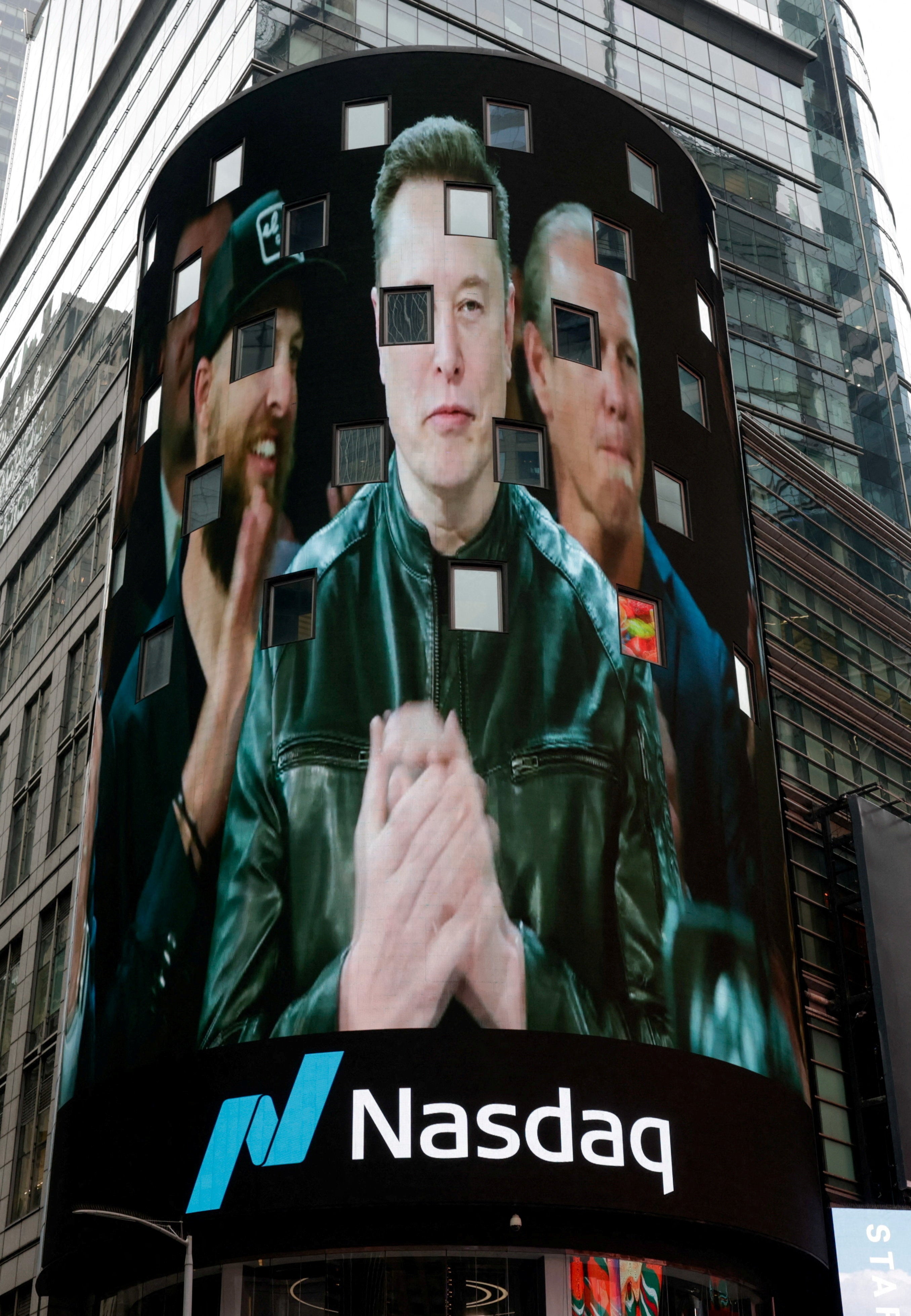
Musk has shown himself more than willing to put his thumb on the scale.
On X, he boosts the causes and anti-woke conspiracies he likes, while banning journalists and watchdogs. Starlink is an influential third party in the Ukraine war, enabling and disabling service at key moments in ways that have benefited both sides. Through his government work, Musk, himself a massive federal contractor, used his access to slash his disfavored agencies, causes, and humanitarian programs impacting millions, with next to no oversight.
As Musk himself acknowledged on Monday on X, with this kind of power and capital in hand, “The scale of what is to come has no precedent.”
And if anyone has objections to this future, there’s little they can do. It’s Elon’s stock market, country, and solar system now. The rest of us are just living in it.
