
Covid cases are rising ahead of the holidays. Here’s where it’s spreading

Want to bookmark your favourite articles and stories to read or reference later? Start your Independent Membership today.
Already a member?
Log in
Covid levels are rising around the country ahead of the winter holidays, new federal data shows.
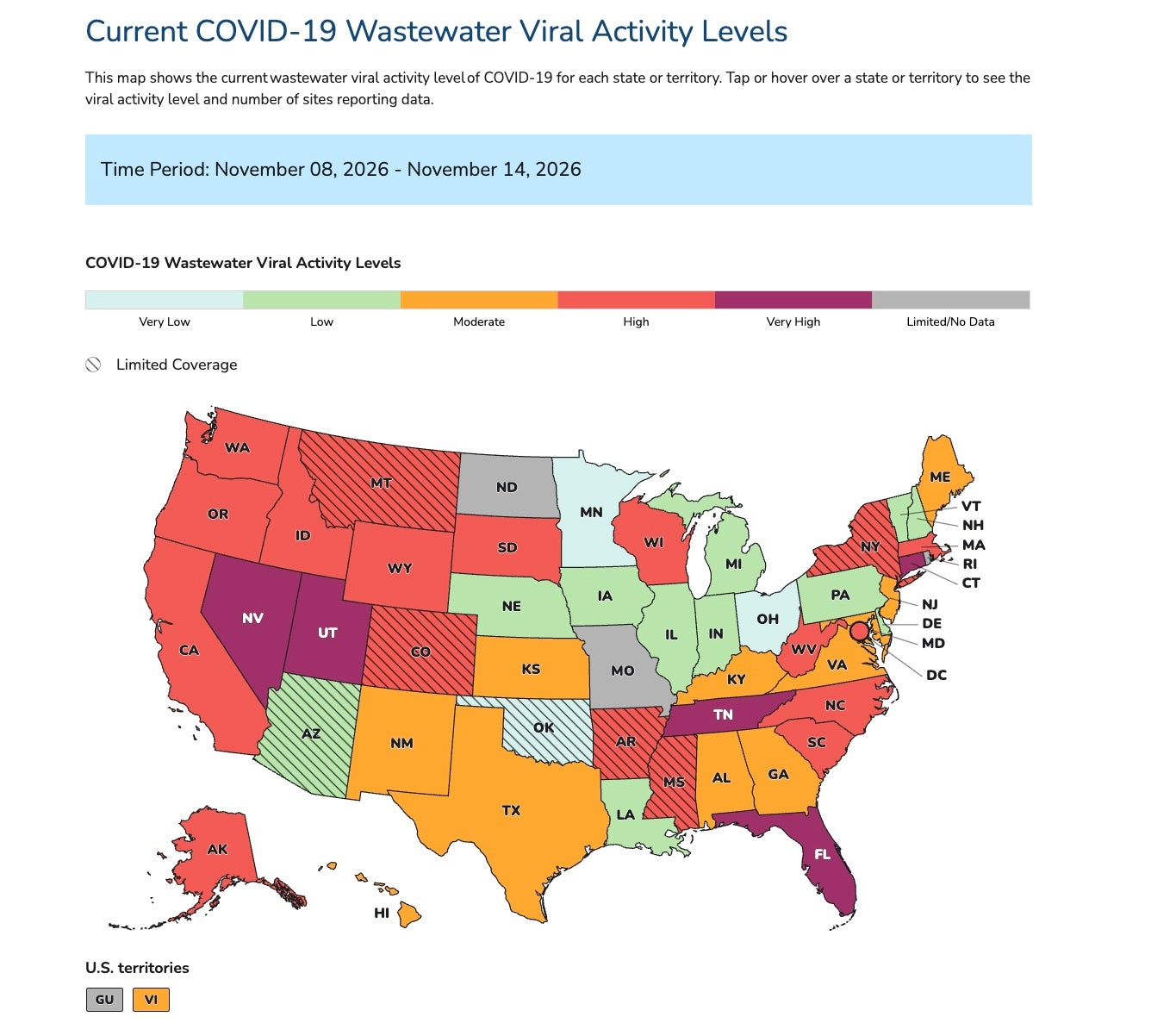
Levels are the highest in the Southeast and Southwest, according to the U.S. Centers for Disease Control the Prevention wastewater tracker from November 8-14.
That includes Nevada, Utah, Tennessee and Florida – though levels are also deemed “very high” in Connecticut. Nearly 20 other states are shown with “high” levels from coast to coast.
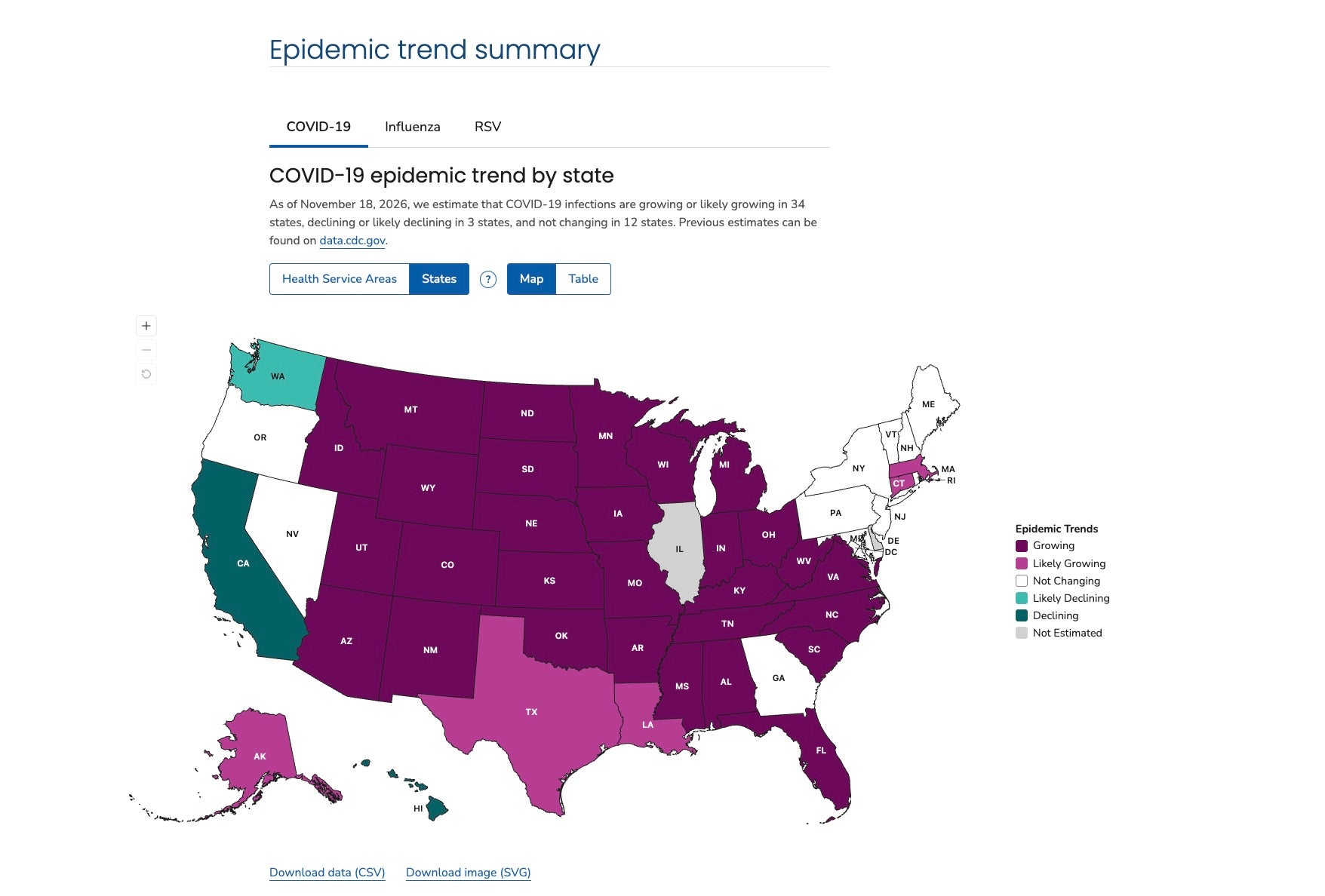
“As of November 18, 2026, we estimate that COVID-19 infections are growing or likely growing in 34 states, declining or likely declining in 3 states and not changing in 12 states,” the CDC says.
Nearly 8,000 Americans have died following Covid infections this year, and hospitalizations are on the rise.
How many Covid cases the U.S. has seen this year is unknown because the CDC no longer records that data. But the percentage of positive tests for Covid was at 3.66 percent November 14 – up from 3.55 percent the week prior.
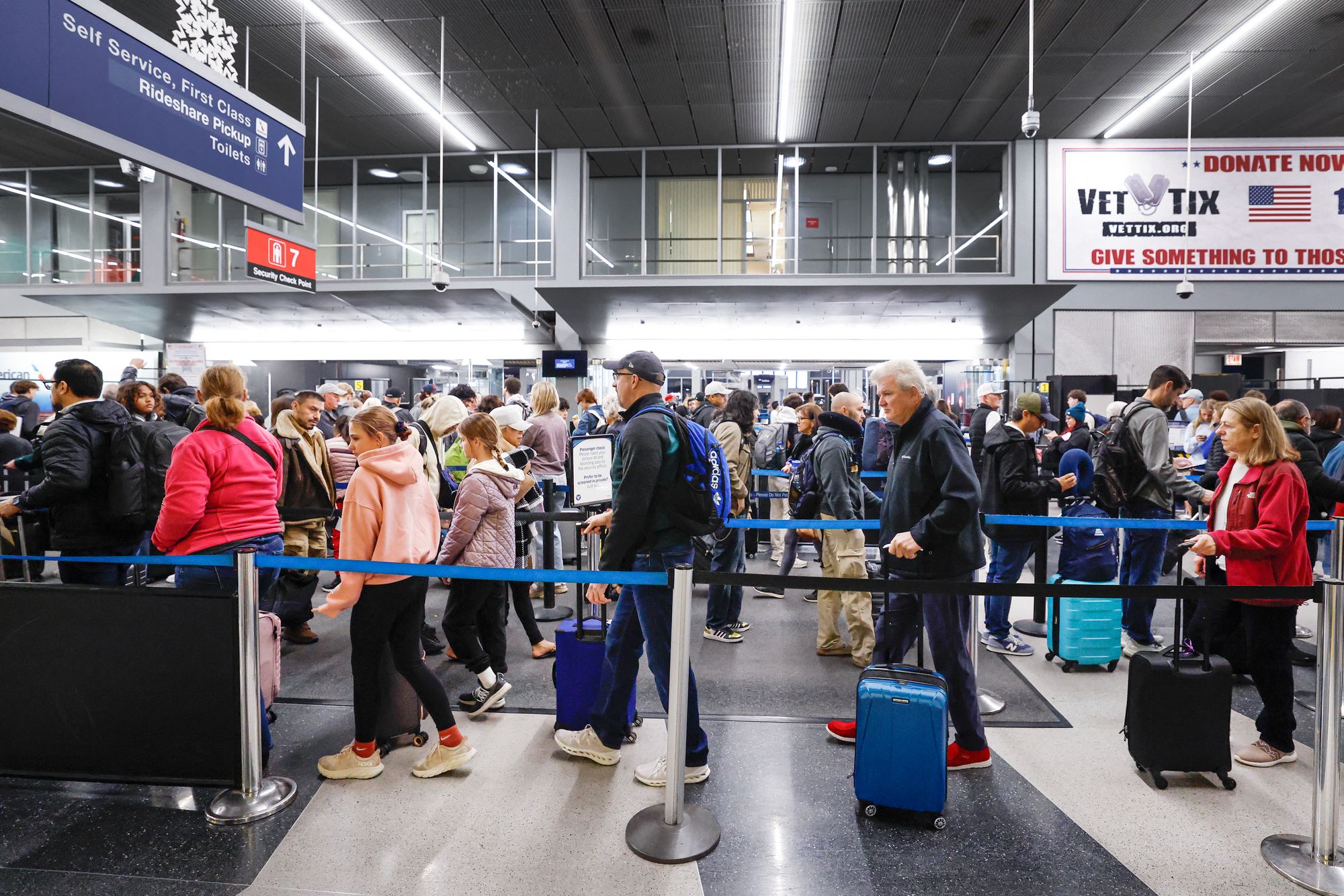
The surge comes as more than 81 million Americans are expected to travel for Thanksgiving, per data from the American Automobile Association.
There is a heightened risk of spread at airports and on public transportation because Covid travels via respiratory droplets in the air and on surfaces.
Getting an updated Covid shot that targets the latest strains of the virus can help to prevent severe infection. The most common strains are offshoots of Omicron, which started spreading widely in winter 2021-2022.
Just 14 percent of U.S. adults reported having received the 2026 vaccine by October 31, according to the CDC. This year’s shot is offered for free at pharmacies and doctors’ offices with most health insurance plans. Otherwise, it may cost a couple hundred dollars out of pocket.
Doctors say everyone six months and older should get the vaccine. People over the age of 65 “should receive a shot every six months,” the Association of American Medical Colleges says.
This group is at higher risk of severe outcomes, including pneumonia, organ failure and death.
