

Around 1.3 million more UK households are facing a jump in their mortgage costs following the economic “shock” caused by the conflict in the Middle East, the Bank of England has warned.
The Bank’s latest financial stability report (FSR) said the UK economic outlook has “deteriorated”, increasing pressure on UK households and businesses.
It came as Sir Keir Starmer warned the coming weeks “will not be easy”, adding that “how we emerge from this crisis will define us for a generation”.
Oil and gas prices have increased sharply since the conflict began between US-Israeli forces and Iran at the end of February, with equity markets also shaken by the significant volatility.
“The shock will weigh on growth, increase inflation and tighten financial conditions,” according to the report.
Nevertheless, the central Bank’s financial policy committee said the UK financial system has been “resilient so far”.
It added, however, that the global macroeconomic backdrop is more unpredictable following the conflict, with this coming at a time when global risks were “already elevated”.
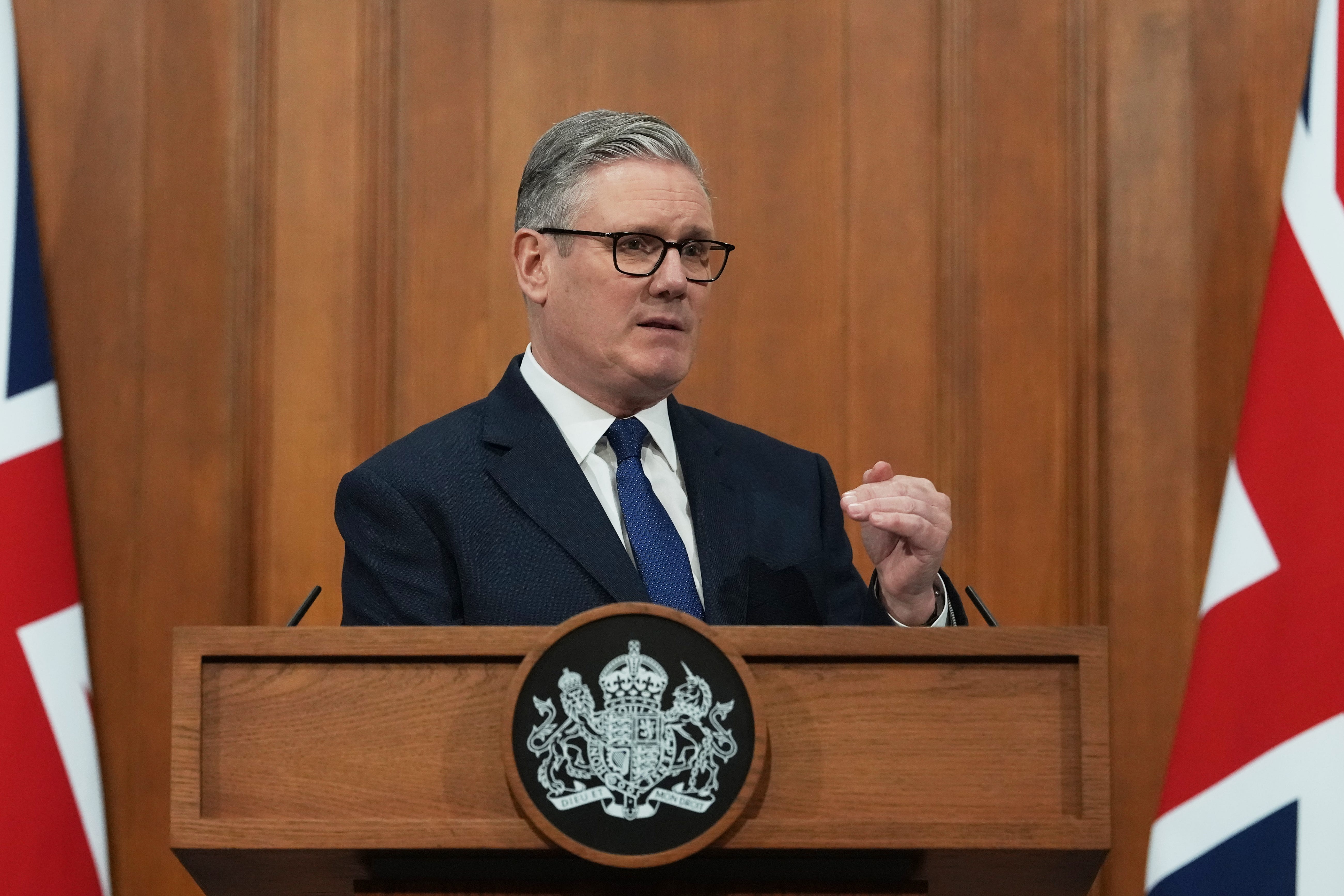
Giving a Downing Street press conference to address the cost of living spike caused by the war, the prime minister signalled the government would seek stronger ties with the EU as part of an attempt to mitigate the conflict’s impacts.
Sir Keir said the “volatile” international situation caused by the US-Israeli conflict with Tehran meant Britain’s “long-term national interest requires closer partnership with our allies in Europe and with the European Union”.
He added: “As the chancellor has rightly pointed out, Brexit did deep damage to our economy, and the opportunities to strengthen our security and cut the cost of living are simply too big to ignore.”
Meanwhile, Rachel Reeves has insisted that any cost of living support offered by the government will be based on household income and refused to commit to immediate support for drivers amid rising fuel costs.
“I want to learn the lessons of the past because when Russia invaded Ukraine, the richest, the best-off third of households got more than a third of the support. That makes no sense at all”, the chancellor told the BBC on Tuesday.
The Bank of England’s report said: “This increases the possibility of large, frequent and potentially overlapping shocks, and periods of intense volatility.”
Experts at the Bank indicated there is a risk that pressure on the global economy could result in “multiple vulnerabilities” crystallising at the same time.
This would have an increased impact on financial stability and “the provision of vital financial services to UK households and businesses”.
The report highlighted that UK households are set to face greater financial pressure following the conflict, due to increased energy prices and elevated mortgage rates.
Last month, the Bank’s monetary policy committee held the UK interest rate – which heavily influences mortgage rates offered by lenders – at 3.75 per cent but hinted they could lift this in future due to inflationary pressures.
Banks have therefore significantly increased the mortgage rates they offer and pulled a number of products from the market.

The FSR said average rates for two-year fixed-rate mortgages have increased by around 0.8 percentage points, while five-year fixed-rate mortgages have seen a roughly 0.7 percentage point rise.
Current rates indicate that about 5.2 million UK mortgage holders could face an increase in their repayments by the final quarter of 2028.
This compares with a prediction of 3.9 million from the Bank’s previous report before the start of the conflict in the Middle East.
Typical increases in mortgage payments would “remain modest” compared to many rises seen in recent years, it added.
The Bank also reported that the total number of mortgage products available in the UK had fallen from 8,500 to 7,000.
This is nevertheless still higher than following the initial Covid-19 period and during the gilt market stress amid the 2022 mini-budget by Liz Truss’s government.


