
‘It’s a tool of mass control’: Inside France’s free party crackdown

RIPOST protest free party, Paris, 2026
Gallery / 6 images
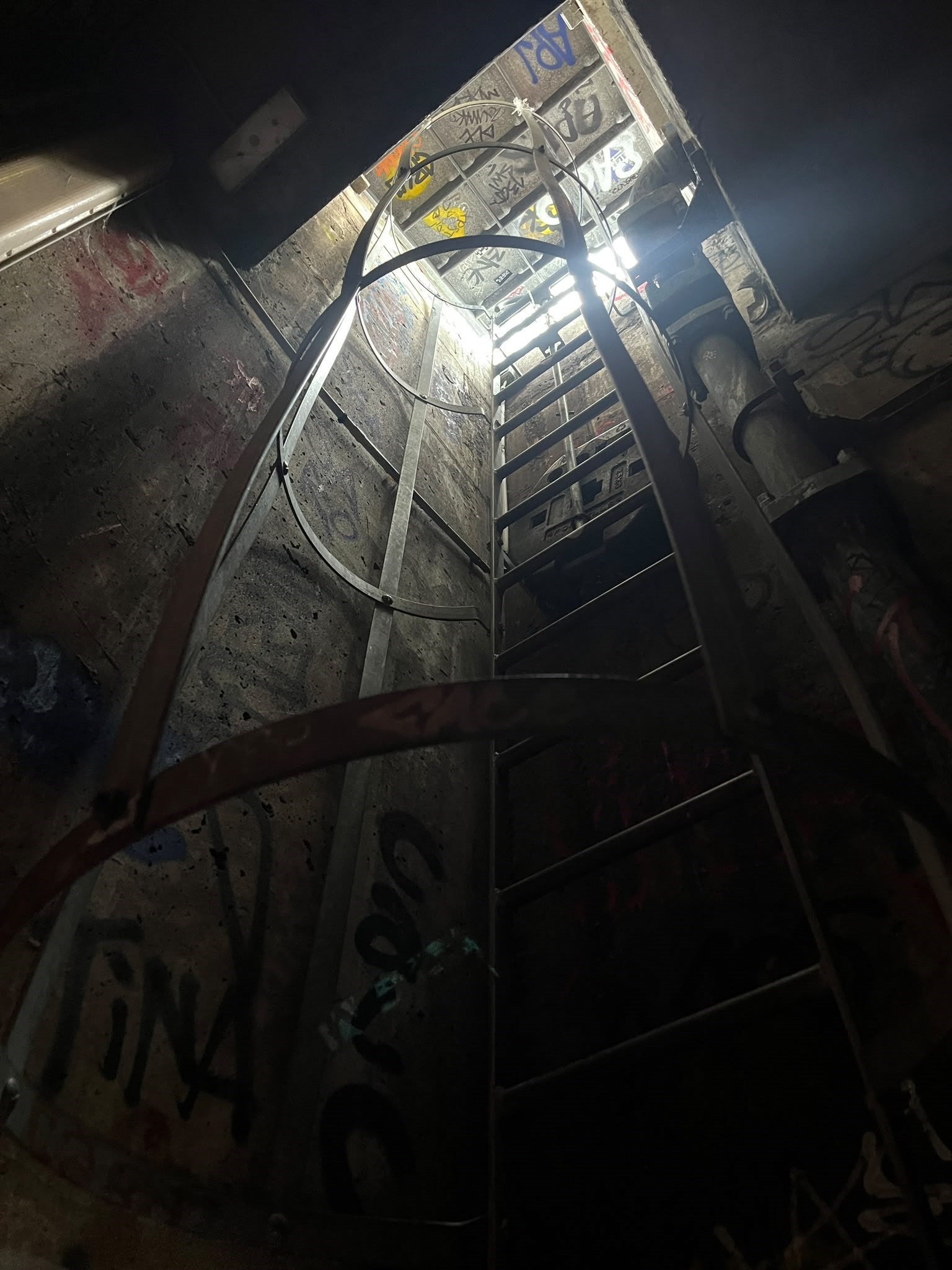
I’m in a technical corridor deep beneath central Paris. None of the lights are working, and the space is pitch black except for the glow of our iPhones and the odd crack of natural light filtering in from overhead. These subterranean tunnels are officially used by engineers and city maintenance workers, but unofficially they serve as a haven for graffiti taggers, Urbex enthusiasts and free party ravers like IRL, who has guided me down here.
“It’s like a small space in time away from a whole other life, where everyone is open-minded, willing to share and help others,” says IRL as we slip down two caged ladders from an unlocked metal grate on a sidewalk just south of the Seine. “This space is important as we can fit in it: free to be ourselves, proud, useful.”
IRL is an artist and event organiser behind Hise, a collective and label that gives space to artists from marginalised backgrounds – including those who are neurodivergent, queer or financially vulnerable. She’s been operating in the shadows for years – she’s had to run from police, dodged court appearances and had equipment confiscated – but a new law in France threatens to crack down on free party organisers like IRL with far harsher penalties. “I’m devastated,” she says. “If you add up all the parties I’ve ever thrown, I would face 40 years in jail.”
The RIPOST law, introduced by Interior Minister Laurent Nuñez, groups free parties with a broader set of activities deemed disruptive to public order, including motorised rallies, squatting and the misuse of nitrous oxide. An acronym for “Immediate Responses to Phenomena Disturbing Public Order, Security and Tranquillity”, RIPOST takes a hardline approach to unauthorised public activity, promising what Nuñez has called “a shock of authority and a shock of effectiveness”. For free parties specifically, the threshold for mandatory declaration has been lowered from 500 to 250 people, while organising an undeclared event can now carry up to two years in prison and a €30,000 fine, alongside possible equipment confiscation.
The free party movement is typically associated with events much larger than the small raves IRL is involved in: massive, multi-day countryside parties rooted in the English rave scene of the late 1980s and early 1990s. After free parties were criminalised under the UK’s 1994 Criminal Justice and Public Order Act, rave collectives like Spiral Tribe decamped to France, helping to nurture a thriving scene across the Channel. The French government was slower to respond, introducing the Mariani Amendment in 2001, which gave police powers to confiscate equipment and sanction organisers, before expanding those powers further with RIPOST.
In the tunnel, IRL points to where her crew would usually secure the entryway, lower the sound system into place and plug in the generators, explaining that many of Paris’ small-scale raves – which range from 100 to 600 people – are organised by trans girls like herself. “We have the strength to run these parties. It demands a lot of motivation and will to deal with problems along the way,” she says.
Even in Parisian clubs that label themselves queer, IRL says her community still encounters discrimination in booking practices and at the door. “Some spaces that are queer friendly are in the end not as queer friendly as they say they are. It’s a lot about appearances,” she explains. “A week ago I went to a club that was supposedly open and I got misgendered at the entrance. They were very harsh with their words when I told them. In the end, it’s a business: a guy running spaces to make money out of it. They are still discriminatory to queer people.”
She is already planning unauthorised raves – kept below RIPOST’s 250-person declaration threshold – but remains wary of the implications for her community. “Even as someone willing to continue to do free parties, as I will, a lot of the ecosystem is scared and will not be willing to take the risk.”
Human rights lawyer Sophie Mazas, who works with the League of Human Rights (LDH), argues that the law risks framing party-goers as a public-order threat and legitimising a more aggressive police response. “It is just a big party, not a revolution,” she questions. “So what is really the reason that justifies the legitimate use of flash balls [rubber bullets] on young people?” The LDH argues that the RIPOST law is unconstitutional and infringes upon civil liberties by extending measures originally intended for terrorist offences to forms of public gathering. That concern sits within a wider debate over police powers in France. In September, thousands marched across the country against a separate bill that would create a presumption of self-defence for officers who use their weapons – a proposal critics have dubbed a “licence to kill”. “The government uses the police for political oppression,” Mazas warns.
Hardstyle DJ Paul Seul, who co-founded the Parisian collective Casual Gabberz, frequently plays large-scale free parties across France, including Teknival in May, which drew tens of thousands of people to a former military site. “I felt safer there than in the clubs,” he recalls. “The sound systems were better, people cared about each other and about nature. No one was throwing plastic bottles on the floor, compared to other [regular] festivals, or even using drugs. It’s very impressive to gather 20,000 to 30,000 people and see no incidents.”
Seul originally came up through the Parisian club scene, but became immersed in free party culture through the hardstyle community, where he found a sense of liberation. “This city is a museum, owned by rich people, foreigners… gentrification,” he says, sipping a black coffee at a café next to Gare du Nord. “It’s not a good city for clubs.”
Echoing Mazas, he stresses the wider consequences of RIPOST on civil liberties and cultural life. “It’s very serious. It’s a political topic. They start with techno and free parties, cause it’s easy to say ‘they do drugs’, ‘they damage nature’, but it’s also going to affect the small neighbourhood traditions, events like Fete de la Musique. It’s just a new tool of mass control.”
He is critical of the lack of response from the wider Francophone pop and electronic scene to RIPOST, which was passed in August. “[Belgian pop star] Angèle’s last video is [set] at a free party. She did it for the aesthetic, but didn’t speak about this law. They’re ripping off a culture, yet when we need a voice no one is there. Even Daft Punk were playing at free parties in their early days. There’s so many people that could speak [up] about this.”
“They’re ripping off a culture, yet when we need a voice no one is there. There’s so many people that could speak up about this”
The impact is already being felt beyond the free party scene, extending to artistic and cultural communities, including diasporic and queer groups in the city’s banlieues. Boukan Records founder and artist Bamao Yendé came up as a teenager in squats and warehouse parties around Cergy in the mid-2010s. “We didn’t start in Paris, but in the suburbs,” he says of scenes that have contributed to the richness of Parisian electronic music today. “There was a lot of diaspora, a lot of artists who weren’t in formal education – people who were supposed to be at school but who went into painting, doing music, experimentation, trying to be dedicated to their art.” We’re speaking at Le Station, a venue that has become a home for diasporic and queer communities, but is itself facing a three-year closure for redevelopment – another reminder of how precarious these cultural spaces have become.
Back in the literal underground of the city, IRL attempts to switch on the lights using an open fuse box. She knows all the switches, plugs and routes down here, and shows me a saved map of the Catacombs – another subterranean space where she parties – on her phone. We’ve been walking for five minutes through the tunnelled darkness and still haven’t reached the chamber where the sound systems are usually set up. “No one is judging me here,” IRL remarks softly.
Now, she plans to keep events below RIPOST’s 250-person declaration threshold and film each attendee entering, creating a record of the numbers in case the register is confiscated by police – measures intended to protect both her and her community from potential prosecution. “The project was born from necessity, for the community, to build our careers,” she says. “It’s a big part of my life to see artists struggling, queer voices, people with terrible situations but a lot of talent not having the possibility to have a scene, just to give them a place to play their first live. To decide repression is going to stop us is accepting that we won’t have a place anymore, when we just have a tiny space in this city anyway. It’s about giving hope, that we can make something out of it.”
Check the gallery above for a look inside a recent Hise free party organised in protest of RIPOST.
