
Yemen’s doctors warn health system could collapse as war escalates

Want to bookmark your favourite articles and stories to read or reference later? Start your Independent Membership today.
Already a member?
Log in
Yemen’s health system is on the brink of collapse, according to doctors and health professionals, as renewed fighting sends hundreds of casualties a day to hospitals that were already crippled by years of war and cuts to international aid.
Running short of staff, medicines and basic supplies, hospitals are struggling to cope with a huge influx of patients since fighting escalated between the Iran-backed Houthis and forces loyal to the internationally recognised government, backed by a Saudi-led coalition.
More than 800 people have been killed and 3,000 injured, the World Health Organisation said on Monday, while almost 130,000 people have been displaced across seven governorates. Thousands of others have fled over the Red Sea to Djibouti.
It has increased pressure on an already fragile health system, with the wounded arriving at hospitals that are already beyond capacity. One doctor in Aden, where the internationally recognised government is based, described the situation as “miserable”.
“The healthcare system is going from bad to worse,” Mohamed Mahyoup, head of the Yemeni Pharmacists Syndicate, told The Independent, adding that the largest hospital in the capital Sana’a has a capacity of 800 but is now receiving over 300 patients a day.
After years of degradation, less than half of Yemen’s health facilities are operating at full capacity, according to Dr Mahyoup, who is based in Sana’a, which is under Houthi control. There is also a shortage of health workers as those in the public sector have barely been paid for years, with some leaving the country for more lucrative work in the Gulf.
The ongoing hostilities have caused damage to major roads, hindering supplies of medicine, while there is also a shortage of fuel to run electric generators and preserve medicines and vaccines.
“In short, the health system has already completely collapsed,” Dr Mahyoup said.
Among the wounded are civilians, children and combatants, many of whom are teenagers, according to one source. Yemeni human rights groups have also warned of a new wave of child recruitment, which is prohibited under international law.
Common injuries include gunshot wounds, blast injuries, bone fractures, shrapnel injuries, major bleeds, burns and multiple-trauma patients.
Dr Elan Abdu Alhaqu, a health official in Taiz – one of the regions most affected by displacement, along with Lahij and Aden – said there have been almost 550 conflict injuries there alone since the latest escalation in the fighting began two weeks ago.
“If the conflict continues without a soilution, we could have full collapse,” said Dr Alhaqu. “It’s very difficult because hospitals are receiving increasing numbers of injured people and displaced families, while operating with very limited resources.”
“The combination of prolonged war, displacement, economic deterioration, shortages of medicines and fuel, and reductions in humanitarian assistance is putting extraordinary pressure on the remaining functioning hospitals,” she added.
Health facilities are facing shortages of anaesthesia and other basic medical supplies, from oxygen to sterile surgical gloves. Medical staff are scrambling to clear additional space to treat patients.
“After decades of hostilities, Yemen’s already overwhelmed health system has been weakened by successive shocks, but the latest escalation is pushing the system to a breaking point,” said Hachem Osseiran, ICRC spokesperson for the Middle East.
“We fear that it would struggle to absorb any further intensification of fighting … In hospitals close to active frontlines, maternity wards are being converted into emergency rooms to accommodate the influx of patients,” he added.
Clashes broke out in Yemen in early August after four years of relative peace, escalting further this month when the Houthis launched a major offensive towards the Red Sea coast and the strategic Bab al-Mandeb Strait. It has prompted counterattacks by government forces and Saudi airstrikes.
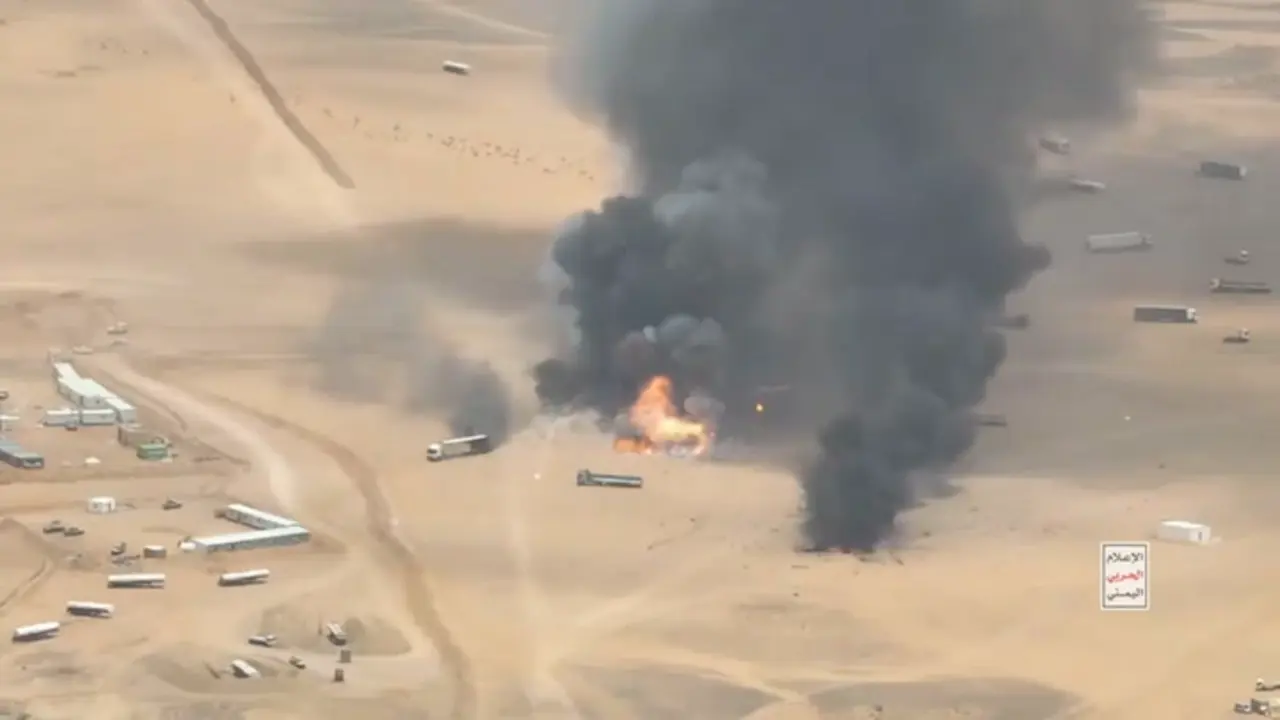
Civil war broke out when Houthi rebels seized Yemen’s capital, Sana’a, in 2014, prompting a Saudi-led military intervention the following year, but a UN-brokered truce in 2022 had brought relative calm.
The country’s health system, already been devastated by more than a decade of war, has also been heavily impacted by cuts to international aid by the US, UK and other donors. This year’s humanitarian response was also badly underfunded it received less than 20 per cent of the $2.16 billion (£1.63bn) the United Nations had requested.
It has forced aid agencies to scale back health services, leaving hospitals with fewer resources just as Washington and Israel launched a war in Iran in February that has since spiralled into a wider regional conflict.
Officials have warned that displacement, malnutrition and low vaccination coverage are coinciding with outbreaks of cholera, measles and polio, and now with renewed war.
Aid agencies have highlighted a growing hunger emergency as hundreds of children displaced by the violence are suffering from the most deadly form of malnutrition.
“We are seeing huge pressure on a health system that is already collapsing and has faced many challenges for years,” says Sara Ghanim, a health activity manager for Médecins Sans Frontières in Aden.
This article has been produced as part of The Independent’s Rethinking Global Aid project
