
Remembering WET: the magazine that made a splash in 70s LA

WET: The Magazine of Gourmet Bathing
Gallery / 12 images
In 1976, architecture graduate Leonard Koren threw a party in LA. Since completing his masters, he’d lost interest in architecture and began experimenting with bath art. This consisted mostly of asking volunteers to strip off and bathe in water, mud or steam while he photographed them. To thank his subjects, he decided to host a party at the Pico-Burnside Baths, a Russian-Jewish bathhouse between downtown LA and the beach.
The owners of the bathhouse at first objected to mixed-gender bathing, but eventually gave in when Koren paid them $450 and promised to be out by midnight. Attendees didn’t know what to expect. Some people were completely nude, some remained fully dressed, while others found a happy medium. “The party was a huge success,” Koren tells me. The 78-year-old is calling from his Rome apartment, where he lives with his wife and son. “If there’s something new and fresh, creative people gravitate towards it. There was something transgressive about having a bathhouse as a social venue in Los Angeles.”
The party caused such a stir that it was featured in the local newspaper. Meanwhile, Koren’s creative juices were flowing. He wanted to make the most of this unexpected triumph, and within two weeks, he’d hatched a plan to launch WET, a magazine dedicated to ‘gourmet bathing’. The magazine’s inaugural edition was the May/June 1976 issue, consisting of just eight pages, designed and edited entirely by Koren.
While he had never aspired to be a magazine editor, he‘d always had an appreciation for Vogue, Andy Warhol’s Interview, and several arty, independent publications. His girlfriend at the time subscribed to Gourmet magazine, a Condé Nast title known for its “luscious meats and sauces”, as Koren remembers. His favourite thing about it was its absurdity. The ridiculousness, when put into perspective, of taking luxury so seriously was also what appealed to him about Diana Vreeland’s Vogue.
Paired with Koren’s interest in bath art, Gourmet magazine served as inspiration for WET’s concept and tagline: ‘The Magazine of Gourmet Bathing’. But not everyone understood it – Koren himself included. “I didn’t know what the term meant, but I thought it had a lot of resonance,” he admits. “There were some people who would say: ‘Gourmet bathing, what’s that? That’s a stupid idea’. But the people who ended up subscribing to it got it.”
It was a concept that could be taken as literally or as abstractly as the reader wanted. “Gourmet bathing is a very flexible metaphor,” he says. “You could say it had something to do with bathing and all its silly and sacred forms, but it could also be a metaphor for a way of going through life. Gourmet bathing is a sort of faux-luxurious way of navigating life. There was an inversion of conventional values – it was anti-establishment, but in a gentle way. It wasn’t a raised fist; it was a tub of warm water.”
It was anti-establishment, but in a gentle way. It wasn’t a raised fist; it was a tub of warm water
Born in New York City and raised in Los Angeles, Koren’s interest in bathing bloomed while he was studying at UCLA. He began to explore the architecture of spaces that were intimate and unselfconscious – rooms where we cannot be perceived. This led him to bathrooms. As he points out in his 2012 book, Making WET: The Magazine of Gourmet Bathing, almost everyone has a bathroom, and every bathroom comes equipped with ‘all the elements of a primal poetry: Water and/or steam. Hot, cold and in between. Nakedness. Quietude. Illumination.’
I ask him to expand on this. “Bathing is a very unique activity,” he says. “It gives us immense pleasure and it has a hygienic benefit. It’s an activity that requires us to do nothing, and in my pantheon of values, doing nothing in a cheerful way is about the best thing a human being can do.”
The magazine had no clear goal beyond being a vehicle for Koren to channel his energy and ideas, but after a year of putting it together alone, eventually he needed help. He met graphic designer Tom Ingalls at a party, who took over the design and helped develop WET’s aesthetic. Koren hired his high school friends to help with the business logistics and sell advertising space, and as the team grew, they needed somewhere to work that wasn’t Koren’s living room.

They moved into an office space above a health food store, half a block from Venice beach. They decorated it with abandoned furniture they’d found on the street. There were no set working hours; the WET team could come and go as they pleased, though they got used to pulling all-nighters in the days before the issue went to press. “It was a very loose, tight ship,” says Koren.
There was a sense that anything was possible at the office. He remembers arriving at work one morning to discover a dishevelled couple having sex on the doorstep. “We didn’t want to interrupt them, but we needed to get into our office,” he laughs.
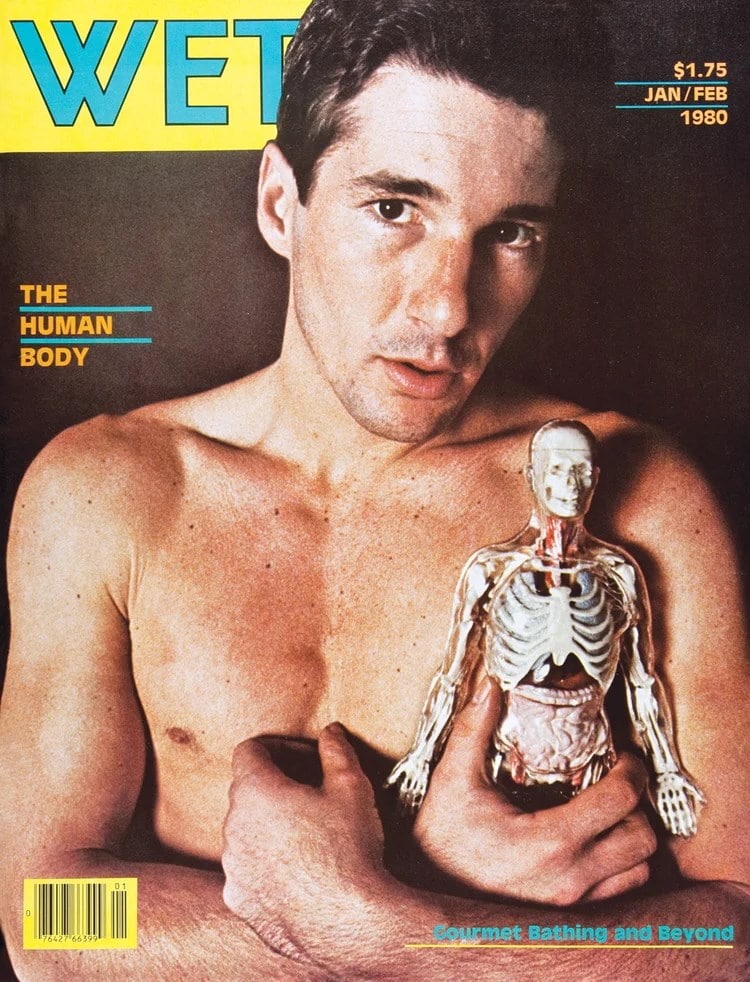
One member of staff was dating Talking Heads frontman David Byrne, who would often loiter around the building, accompanied by Brian Eno. Young photographer Herb Ritts was another frequent visitor – coincidentally, he bought his first camera the same year that WET launched. During one particular visit, Ritts was incredibly excited about an emerging actor, Richard Gere, and pitched that they put him on the cover.
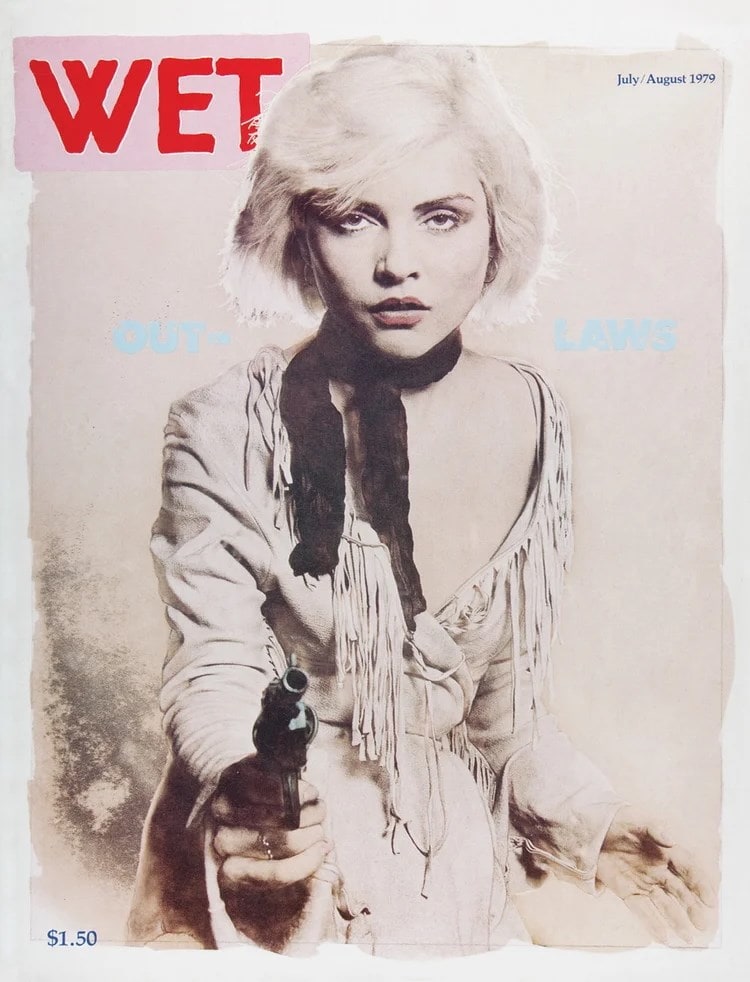
After initially saying no, Koren eventually agreed to put Gere on the cover after bumping into the actor on multiple occasions in New York and Miami. Over time, WET published a range of celebrity covers and inside interviews, with names including David Lynch, Debbie Harry, Mick Jagger, Iggy Pop and Priscilla Presley.
Despite a handful of examples, it was largely against the WET ethos to feature celebrities on the cover. “A celebrity cover is something you do to boost sales and recognisability,” Koren explains. “But it also represented, in many instances, a failure of imagination. Ultimately, if that’s what you’re reliant on, it isn’t that interesting to me.”
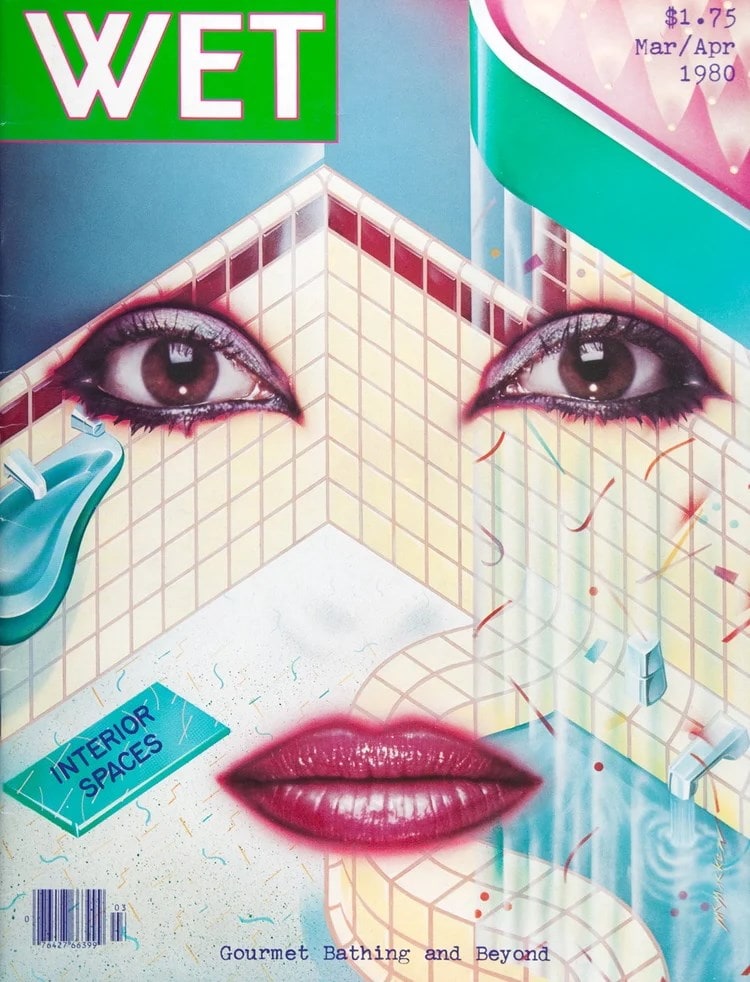
Over a frenzied five and half year stint, WET published 34 issues, each unique and completely different from the last. It helped launch the careers of artists and photographers, from Herb Ritts to Matt Groening – who started out writing copy to accompany WET’s fashion shoots, before going on to create The Simpsons. In 2026, it remains a permanent fixture on graphic design mood boards. One of WET’s covers was even used as the poster for the V&A’s 2012 exhibition, Postmodernism: Style and Subversion 1970 –1990.
With a theme as niche as gourmet bathing, WET could easily have failed to amass any kind of readership. And yet, its specificity was exactly what made it so beloved. “In retrospect, it was like being out on the crest of a wave,” says Koren. “We didn’t adhere to a formula. WET was glorious. But if it had continued on, it would have lost that glorious lustre and become a typical magazine that should be buried.”
WET was so good that Koren knew the only way to maintain its reputation was to quit while he was ahead. “It was my best self,” he says. “Sometimes things enter the culture that are truly inspirational and of a higher order. The commercial imperative is not what drives them, so as soon as that became important, they cease exist. I think that sense of purity is what people respond to and find affectionate about WET.” Soon enough, the magazine ran out of money. But rather than sell it or be swayed by investors, Koren decided to let WET run dry.
When the magazine shuttered, Koren wanted a fresh start, leaving LA behind for San Francisco. A few years later he moved to Japan, where he continued to study and write about aesthetics. Today, he has almost 20 books in his catalogue – with another, Lost in Thought, due for release this September.
Ironically, 50 years after launching a magazine dedicated to gourmet bathing, Koren finds himself at a point in his life where he doesn’t own a bath. His apartment in Rome has two showers instead. Now, whenever he travels for work, he has one request: the hotel has to have a tub.
- For more: Elrisala website and for social networking, you can follow us on Facebook
- Source of information and images “dazeddigital”“
