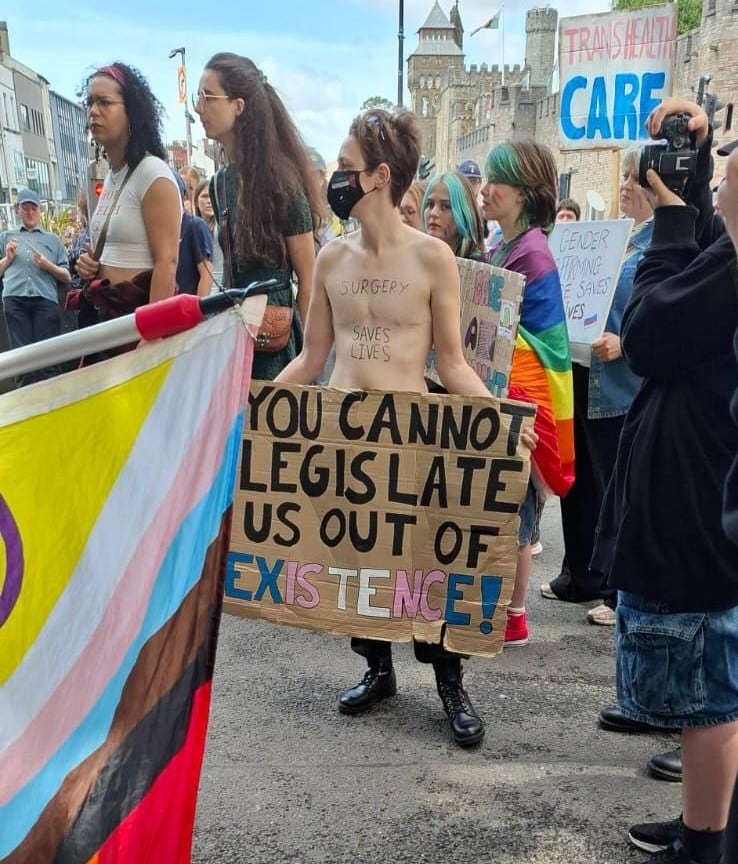
The deadly implications of Wales’ trans healthcare ‘pause’

Sion Jewell was packing the car to drive to their top surgery when they got a call from Welsh Gender Services with news so shocking their partner thought it was a joke. The surgery they had waited five years for was cancelled. “I was devastated. I was heartbroken. It felt like a breakup. No, worse than a breakup. It felt like grieving a family member who’s died,” says Jewell.
“I did everything that was asked of me,” continues the 29-year-old, referring to five years of personalised mental health treatment, handling previous postponements, and getting a formal diagnosis of ‘non-binary and transgenderism’. “I did it, and then to be cancelled 24 hours before I was supposed to be in surgery. Right now, I’m angry more than anything. Had enough crying. I’ve cried enough in the last five days.”
Jewell is one of hundreds of patients and their loved ones left blindsided when the Welsh Gender Service (WGS) was told to pause all gender-affirming surgery referrals for people aged 18 and over and all scheduled surgeries set to take place on or after August 28. While the phrasing used by the WGS and the NHS Wales Joint Commissioning Committee (NWJCC) is that referrals and surgeries are “paused”, Jewell tells Dazed that the language used for their surgery was “cancelled. Not postponed, straight up cancelled.”
This “pause” order was given by the NWJCC which is pursuing an independent clinical review of gender affirming care surgeries in Wales. Trans and non-binary people who spoke to Dazed said they do not believe that the Welsh Gender Service or any people directly impacted were consulted prior to its enforcement. There is no information at this time on how long this “pause” will last. And, what the landscape of gender affirming care for adults will look like when it is lifted. The NWJCC has been contacted for comment.
This review was initiated due to the work of one investigative journalist, Nick Wallis, whose review of FOI data from the Welsh Gender Service reportedly shows that the clinic had referred adult patients at “three to four times other UK clinics,” according to his publication, Gender Blog. “The numbers were evidently way out of whack with the number of referrals that were happening in Northern Ireland, Scotland and England,” Wallis told BBC Wales.
Shash, a trans activist and co-founder of Trans Aid Cymru, tells Dazed that the reason why these numbers are “out of whack” is because “Wales just seems to be better at doing their job than the English gender service.” The average wait time from referral to gender-affirming surgery in Wales is two years compared to five years and seven months in England. “[Even in Wales] these surgeries happen at such a snail’s pace,” says Shash. “The process is, you get referred to the Welsh Gender Service, and then after months of being on HRT, you finally go back and they say, ‘OK, you can be approved for surgery’, and they give you your first sign-off.
“Then you have to see another psychiatrist outside the Welsh Gender Service… which could be months because that is also a waiting list, and then after that sign off, only then do you get referred to a surgeon [in England]. And then once you reach that surgeon’s waiting list you get the pre-assessment, then you wait for the next time they can actually book the [surgery]. It’s years of waiting, years of assessments for it to then suddenly be paused.”
Jewell does not mince their words when it comes to what getting this surgery means to them. “At the minute, I’m living in somebody else’s body. I’m living in somebody else’s skin, and if I don’t have the surgery, I’ll be very blunt with you. I won’t be living.”
Jewell, who is a full-time carer for their grandmother, is now launching a GoFundMe to cover the cost of private treatment which will cost them nearly £10,000. Speaking to the wider culture in the UK around trans rights, Jewell says they feel like they’ve been treated like shit. “I’m not treated like a human here. I’m treated like an animal.” Shash concurs, telling Dazed that her community is terrified about the future of trans and non-binary lives in the UK. “I’m scared now that once these surgeries are paused, what’s next?” she says. “Are they going to say like ‘Oh too many people [have] been referred on hormones’, and it’s like ‘stop them immediately?’”


Per Suicide Prevention UK, 48 per cent of trans people in the UK have attempted suicide at least once in thier lives, and 84 per cent of trans people have considered it. Gender affirming surgery is linked to marked improvements in mental health among trans and non-binary patients, per the Gender Confirmation Center. “This [pause] is against the Hippocratic Oath,” says Shash.
In response to a request for comment from Dazed, Wallis said: “This is a massive failure of both governance and safeguarding. Although they had the data, no one in the NHS appears to have been asking why WGS was such an outlier… I can see why some people might be upset with me, but all I did was draw attention to the data and the concerns of people who had been trying to raise the alarm about the WGS for two years.
“I did not take the decision to stop the surgeries. The NHS did, after taking a look at the data. If there had been proper governance and monitoring in place of what was going on at WGS then we would not be in this situation.”
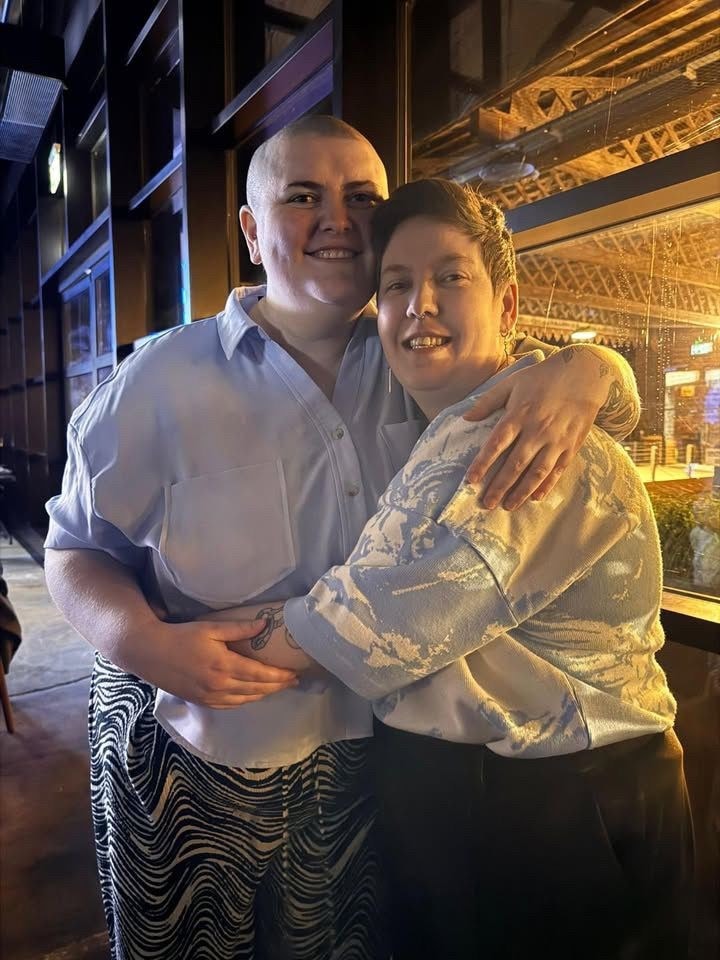
According to Wallis, “believing that having parts of your body removed will cure your mental health problems is a contested theory.” Trans and non-binary people who spoke to Dazed said they know this surgery saves lives. Jewell’s partner, Ocean, is one person who credits their life to top surgery. Prior to surgery they tell Dazed they were severely depressed and “didn’t have any kind of life.”
After gender affirming care, they went back to university, built a full social life including getting engaged to Jewell last year. They even started to swim again; something that felt impossible to them for years prior. “[This surgery] would be life changing,” says Jewell. “I have no proper words to describe the absolute euphoria that would give me. Not just the gender euphoria, but the euphoria for life to be able to live in the body I was supposed to have in the first place.”
The Samaritans helpline is available for free support 24 hours a day on 116 123. To find out more about local mental health support, contact Mind on 0300 123 3393.