
These photos capture Philadelphia’s ‘raw, unfiltered’ ballroom scene

Let’s Get Spoookyyy Kiki Ball Part II
Gallery / 25 images
The first ball 22-year-old photographer Kareem Bah went to was a pop-up event in May 2023. Bah, who was born and raised in Philadelphia, had seen clips of ballroom videos online – where battles and runway walks garner hundreds of thousands of views – but had never performed. “When you vogue, when you are on the floor, all eyes are on you. It’s a very sporadic in-the-moment thing because people will know if you’re in your head,” he says. “Ballroom is Black gay Hollywood; you have to command the crowd and bring your A-game because somebody’s watching.”
What followed Bah’s first ballroom experience was years of what he describes as “dissecting every part” of ballroom. For the next year, he scoured through old ballroom tapes on YouTube, analysing not only the dancing but also stage presence, interactions with the crowd and how his favourite performers would “drip feed” their moves. He tracked people’s ballroom careers from the early 2000s until they became legendary. “Documentation has been a big part of my story in ballroom because, if it wasn’t for those tapes, I probably wouldn’t be here right now,” he says. So, to keep the important act of documentation alive, Bah turned his camera on the Philadelphia ballroom scene.
For State of Youth, our new editorial series giving young Americans their first byline, Bah captured the “Let’s Get Spoookyyy Kiki Ball Part II” ball in late October. While New York, the birthplace of ballroom culture, often gets all the attention, Bah says Philly’s scene is “raw and unfiltered”. “You have the uncut version of ballroom here,” he says. “New York is about technique and technicality, but Philly has essence and attitude.” Bah is in the kiki scene at the legendary House of Versace, which won the high grand prize award at the latest ball. “We’re all a unit, and my house encouraged us to be the baddest bitches we could, because that’s what Philly is about,” he adds.
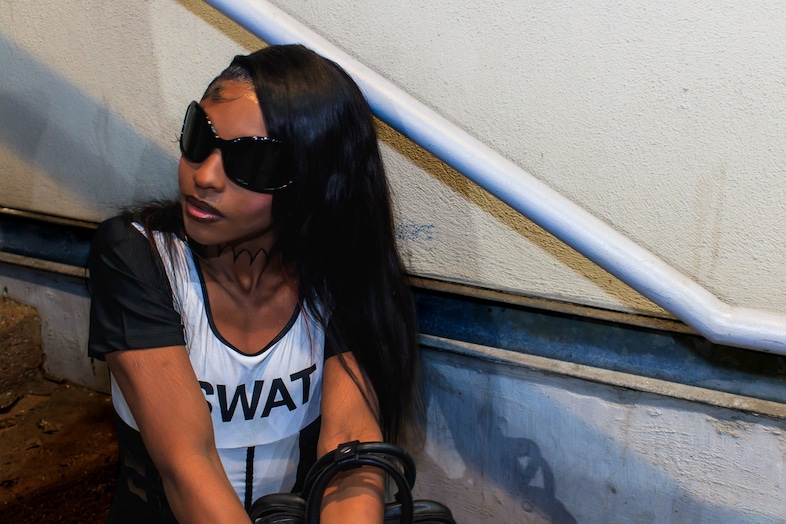
Rylee Locker, a co-host of the ball also known as “Legendary Rylee 007” in the kiki scene, says “Let’s Get Spoookyyy Kiki Ball Part II” is an annual tradition that started in 2024. Philadelphia, she says, has birthed some of the most notable and impactful Femme Queen performers, including Niambi, Mercedes, Amina, Erica Kane, Allison, Tiffany, Lexy and Shadera. “Philly’s ballroom scene has been around for nearly 40 years,” she says. “At one point in history, Philly became the city for people [in the scene] to travel to.” Locker credits ballroom with giving her a “purpose”, and teaching her about family, loyalty, politics, respect and fame (the list goes on).
In recent years, ballroom slang and culture have extended far beyond the scene online. On social media, it’s not uncommon to hear people outside of ballroom use terms like “death drop” or even “mother”, often without crediting ballroom culture at all. By disconnecting the phrases from the scenes they originate in, Bah says the mainstream has changed their definitions. “As Black people, we do breed a lot of culture in the internet space, outside world, everywhere,” he says. “With ballroom, everything is underground and builds over time, so by the time it’s in the mainstream, we are onto something else.”

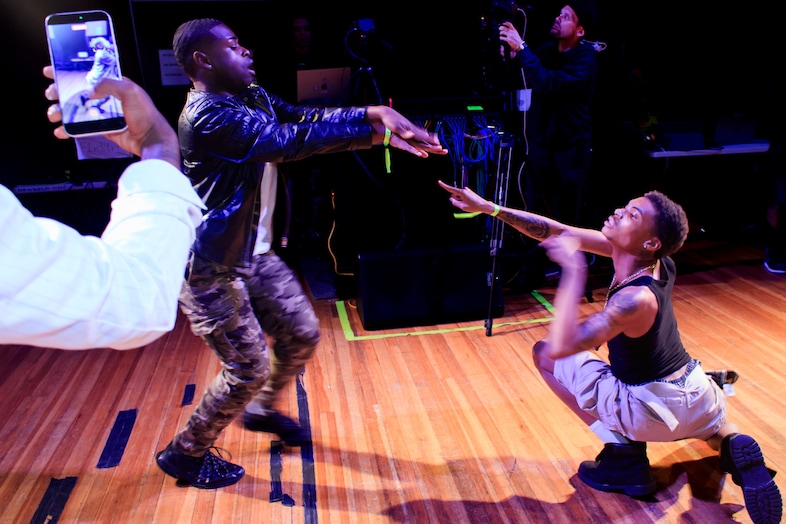
Even aside from ballroom language and gestures (like “clock it”), Locker says ballroom has had many moments of mainstream popularisation, like Madonna’s 1990 hit “Vogue” or Beyoncé’s 2022 Renaissance album. The political climate, she says, also steers interest. “Politics relates to where society is in creating and consuming art, and that can influence when ballroom could be trending more or less,” she says. “The administration coming into power in 2017 and the people growing heightened political awareness with the BLM movement in 2020 created a strong response of art as protest, and that’s why and how ballroom was created in the first place.”
Despite being in ballroom for three years, Bah says it still feels like it’s his first. He wants to keep learning, and hopes to one day become a legend. Along the way, he wants to keep his old-school camcorder in hand – the older format, he says, has become a “lost art” in ballroom media. “Who knows what could happen in the next ten years? Somebody could be recording me as one of the up-and-comers and my house father as one of the big legends, so the cycle can keep repeating,” he says. “I want people to understand the language and history of ballroom because people have gone through so much for and died for this.”
This year, Bah captured the “Death Do Us Part” ball. Also, the “Antarctica is Burning Ball”. When I spoke to him, he was preparing for the “Blonde Ball” in New York. Still, the Philly scene has a special place in his heart. “It made me into a performer, and unlocked a lot in me,” says Bah. “I always try to remember that a ball is like a bus – there’s always one coming next.”
