
Trump showed up to the Supreme Court ready to fight against birthright citizenship. It was dead on arrival

President Donald Trump’s attempt to unilaterally redefine who gets to be an American citizen through his narrow, historically revisionist lens was not likely to stand a chance in court.
Trump marched to the Supreme Court Wednesday to hear his administration’s defense of his attempts to strike down the country’s long-standing principle of birthright citizenship, jolting the United States back to the virulent nativism that fueled the Civil War and a tide of anti-immigrant views in its aftermath.
He abruptly left the building in the middle of oral arguments after the government’s top lawyer, his own former personal attorney, struggled under questioning from skeptical justices, including three Trump appointees.
No sitting president has ever watched oral arguments at the nation’s high court, but Trump wants to prove he’s fighting a government he believes is unfairly aligned against him while he flails against history and the Constitution. After he left, he wrote a one-sentence post on his Truth Social calling the country “stupid.”
Trump has spent months publicly raging against federal judges who dare rule against him and a Supreme Court he believes is insufficiently deferential to his administration. Justices appeared to signal on Wednesday they will hand him another defeat.
The president, whose attempts to rule by fiat have largely been rejected in court, wants to impeach the judges who strike against him while he labels his own nominees to the nation’s conservative-majority high court “lap dogs” who are “bad for the country.”
Justices are now tasked with deciding what to do with his administration’s revisionist defense of his executive order, which, if allowed to stand, could allow the president with the stroke of a pen to tailor a constitutional amendment to their political goals.
Here, ending citizenship at birth could open the door to chaos. Tens of thousands of newborns would be denied citizenship every year, potentially rendering newborns stateless with mixed status families and uneven constitutional rights, according to the plaintiffs.
Trump’s order, which elevates once-fringe right-wing legal arguments to the presidency, was immediately challenged in courts across the country, where federal judges uniformly blocked it.

The 14th Amendment, among civil rights protections ratified in the Civil War’s aftermath, reversed the Supreme Court’s notorious decision in Dred Scott v Sandford, which denied citizenship to Black Americans.
The amendment’s citizenship clause, among the simplest in the Constitution’s text, states that “all persons born or naturalized in the United States, and subject to the jurisdiction thereof, are citizens of the United States and of the state wherein they reside.”
At the turn of the 20th century, alongside a rising tide of anti-Black and anti-immigrant racism, lawyers advanced the argument that the 14th Amendment’s phrase “subject to the jurisdiction thereof” excluded the children of Chinese immigrants.
The Supreme Court was unpersuaded. A landmark decision in the case of United States v Wong Kim Ark in 1898 held that the 14th Amendment grants citizenship to virtually everyone born in the country.
For more than 100 years, the Supreme Court has upheld the definition to apply to all children born within the United States, and Congress codified that language into law in 1952.
But the Trump administration asked the Supreme Court to determine whether the 14th Amendment “provides that those ‘born in the United States, and subject to the jurisdiction thereof,’ are U.S. citizens.”
Under Trump’s order, babies born on U.S. soil would be denied citizenship at birth if their mother was “unlawfully present” or had “lawful but temporary” status, and if the father “was not a United States citizen or lawful permanent resident at the time of said person’s birth.”
U.S. solicitor general D. John Sauer told the Supreme Court that the Constitution “does not extend citizenship to temporary visa holders and illegal aliens,” arguing that the “new world” of illegal immigration is out of step with the historical record.
“It’s a new world,” said Chief Justice John Roberts, “but it’s the same Constitution.”
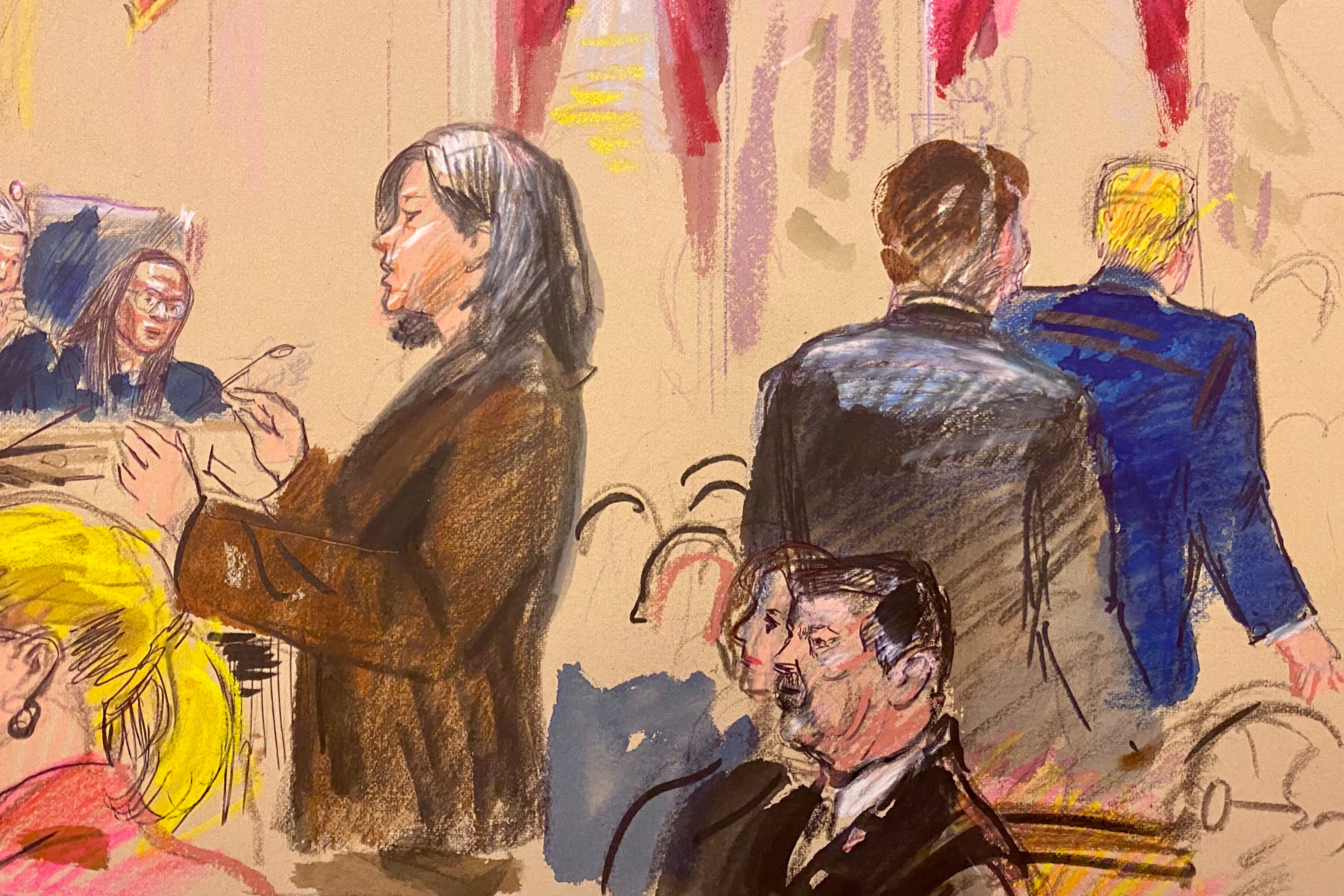
Justice Amy Coney Barrett, one of three Trump appointees on the high court, also argued the administration’s reading of the 14th Amendment introduces “a new kind of citizenship” that she suggests is unworkable. She cut off Sauer’s answer at one point, saying “yeah, yeah, yeah, yeah, but what about the Constitution?”
Justice Brett Kavanaugh, another Trump appointee, noted that Congress codified the 14th Amendment’s citizenship language in 1940 and 1952 understanding the long-standing consensus of who gets to be a citizen.
And Justice Neil Gorsuch, the first of Trump’s three nominees to the court, pointed out that none of the debates around the drafting of the 14th Amendment referenced a parent’s legal status or their intention to permanently stay inside the U.S. as a basis for determining citizenship.
“The absence is striking,” Gorsuch said.

He also stumped Sauer when he asked whether the 14th Amendment grants birthright citizenship to Native Americans under the terms laid out by the administration.
“I think so?” said Sauer, sounding unsure. “I’d have to think that through.”
Because Sauer’s constitutional test relies on the “domicile” of the parents, why wouldn’t those children also be considered citizens, asked Gorsuch. Native Americans are granted citizenship under a 1924 law, not the 14th Amendment, which Gorsuch suggested undercuts the administration’s argument.
“The text of the clause, I think, does not support you,” liberal Justice Elena Kagan told Sauer. “I think you’re sort of looking for some more technical, esoteric meaning.”
A decision is still weeks or months away, but it won’t be the final word on the president’s vast anti-immigration agenda.
The Supreme Court, which has already radically expanded executive authority and delivered Trump significant victories in his efforts to reshape the federal government around him, will hear another major immigration case later this month.
A ruling in that case could determine whether his administration can strip temporary humanitarian protections for tens of thousands of immigrants, among the president’s government-wide efforts to remove millions of people while cutting off new arrivals, and their families.


