
Trump’s ICE deportation push leaves Minnesota teachers all saying the same thing

Want to bookmark your favourite articles and stories to read or reference later? Start your Independent Premium subscription today.
Subscribe
`;
document.body.appendChild(modal);
modal.addEventListener(‘click’, () => {
document.cookie=”mos-plan-select=; Max-Age=0; path=/; expires=Thu, 01 Jan 1970 00:00:00 UTC;”;
});
modal.querySelector(‘.subscribe-link’)?.addEventListener(‘click’, (e) => {
e.preventDefault();
document.cookie=”mos-plan-select=; Max-Age=0; path=/; expires=Thu, 01 Jan 1970 00:00:00 UTC;”;
setTimeout(() => {
window.location.href=”
}, 500);
});
});
“Operation Metro Surge” — the Trump administration’s deployment of thousands of immigration agents to Minnesota last winter — left two citizens dead, more than 4,000 people arrested and communities roiled with protests. The city’s education system, one teacher said, became “hunting grounds” which saw agents “follow brown children home.”
The resulting climate of fear from the three-month operation disrupted the critical window when students prepare for state standardized tests, educators said. The Minnesota Comprehensive Assessments measure academic proficiency across grades 3 through 8 and high school.
The test results will come out later this month and school communities are bracing for a significant decline in student performance. Meanwhile, educators are still navigating the fallout from Metro Surge, and what Mandi Jung, a St. Paul middle school science teacher, described in a video clip circulated widely online as a “mass psychosis” among students.
“We started this school year with thousands of students that we had in our schools last year just gone,” Jung said in the video, addressing Minnesota teachers. “There was no ‘how to heal from an occupation by the federal government’ where schools were directly targeted.”
She added: “Legislators couldn’t even get an ICE ban in schools passed last year when we knew that the feds were using schools as stakeouts, as hunting grounds, as places to follow brown children home.”
For many families, that fear became an immediate reality. Children looked on as parents were dragged from homes, workplaces and vehicles, while federal enforcement routinely used school perimeters and neighborhood drop-off zones as surveillance stakeouts.
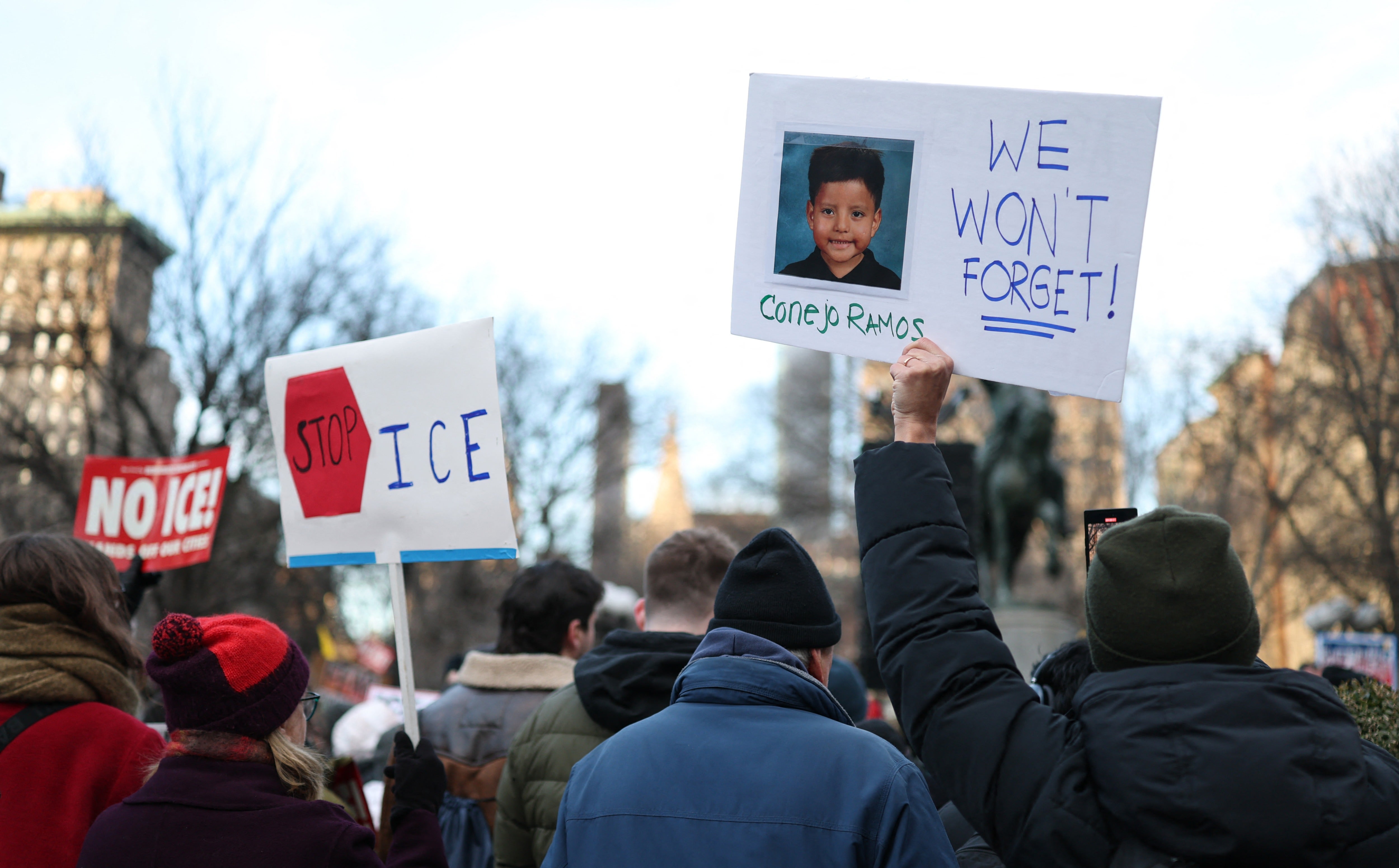
The crisis drew national attention on January 20, 2026, when masked ICE agents in Columbia Heights detained five-year-old Valley View Elementary pre-kindergarten student Liam Conejo Ramos and his father in their driveway as they arrived home from school. A widely-circulated photo of Liam in his rabbit beanie and Spiderman backpack became the heartbreaking symbol of a campaign that swept up young children and families.
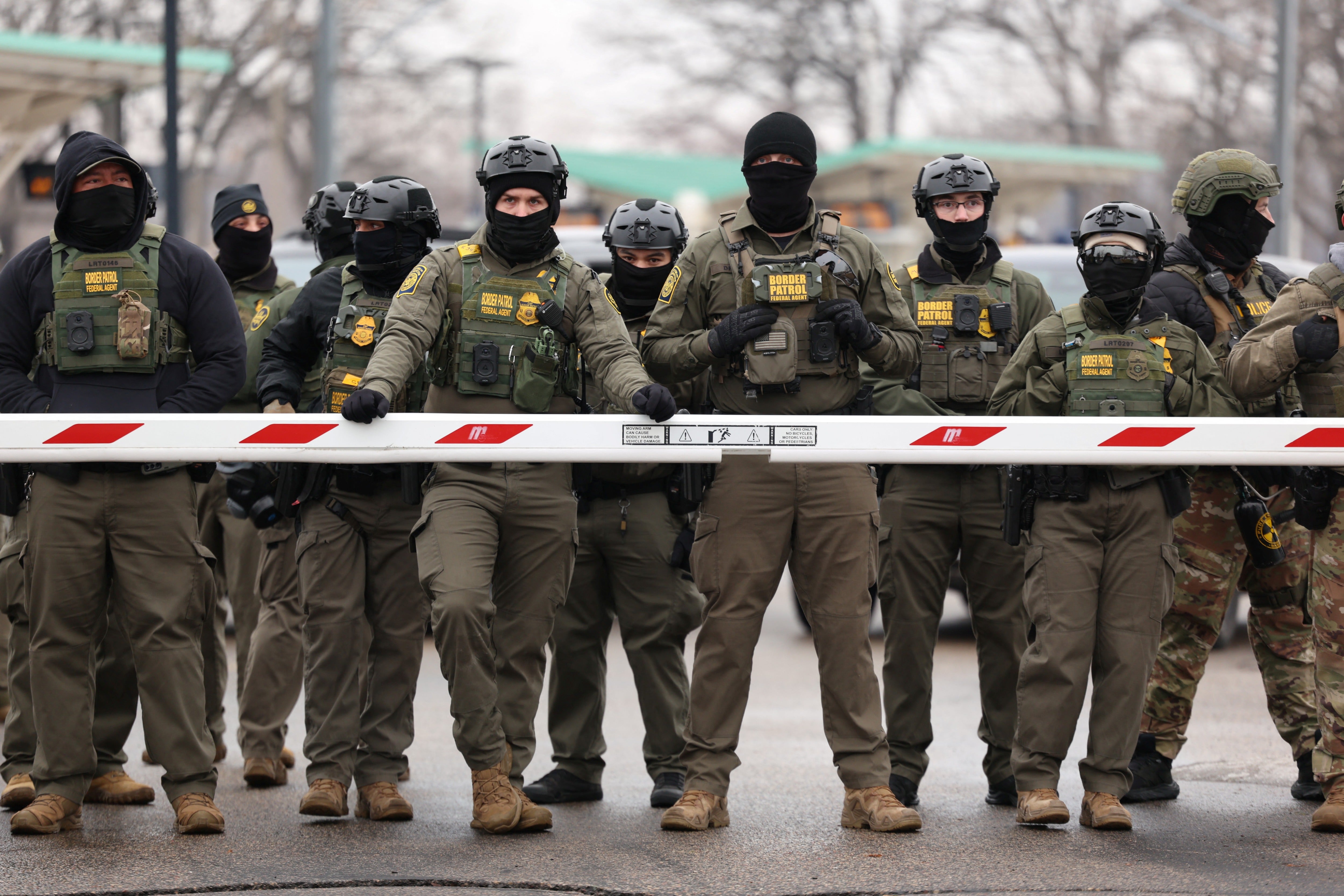
Last December, thousands of Department of Homeland Security agents, including Immigration and Customs Enforcement and Customs and Border Protection officers, were deployed to the Twin Cities area and surrounding communities.
According to a June report by Human Rights Watch, the operation was marked by “racial profiling, harassment, and surveillance” that left communities deeply fractured. During the operation, two U.S. citizens, Renee Good and Alex Pretti, were killed by agents.

Despite official claims to be targeting violent offenders, Human Rights Watch found that nearly two out of three immigrants arrested by ICE during the operation had no prior U.S. criminal history.
The report also noted that federal agents “spread terror and fear” and “terrorized” Minnesotans, “chilling their rights to freedom of expression and assembly, and impacting their rights to education and health.”
Despite intense pushback from local school boards, superintendents and public protests demanding no enforcement near schools, the Department of Homeland Security defended the tactics.
“Those who are here legally and are not breaking other laws have nothing to fear,” a DHS spokesperson told The Independent. “ICE does not target schools. This is just another false narrative to try and demonize our brave ICE law enforcement who are facing a 1,300% increase in assaults against them and an 8,000% increase in death threats.
“ICE is not going to schools to arrest children — we are protecting children. Criminals are no longer able to hide in America’s schools to avoid arrest. The Trump Administration will not tie the hands of our brave law enforcement and instead trusts them to use common sense. If a dangerous illegal alien felon were to flee into a school, or a child sex offender is working as an employee, there may be a situation where an arrest is made to protect public safety.”

Months later, educators expect to see further impacts from Operation Metro Surge on their students. Union leaders shared Jung’s concerns, warning that standard testing measures would inevitably reflect the collective trauma of the federal raids.
“We don’t expect the state government to pause in the accountability system as it did during the COVID-19 pandemic,” Education Minnesota President Monica Byron told The Independent.
“But we hope state officials and journalists will present education data from the 2025-26 school year into the proper context after the massive disruption to learning caused by the federal government’s actions.”
Anticipating pushback that attributes lower scores strictly to school quality, Byron also cautioned against oversimplified metrics.
“It’s normal for parents to want honest feedback, but political actors with little understanding of standardized tests make all sorts of wild claims about what the scores mean,” Byron said. “Our message to parents is what it has always been: Talk to your child’s educators, who always know more about the student’s strengths and challenges than any bubble test.”
Other local teachers also shared the psychological toll and widespread disruption caused by federal immigration enforcement on the children in their care.
“I had students that would say, ‘I just need to go in your back room and cry,’ and they did during class,” Stacy Bartlett, a veteran biology teacher from Stillwater, told KSTP-TV.
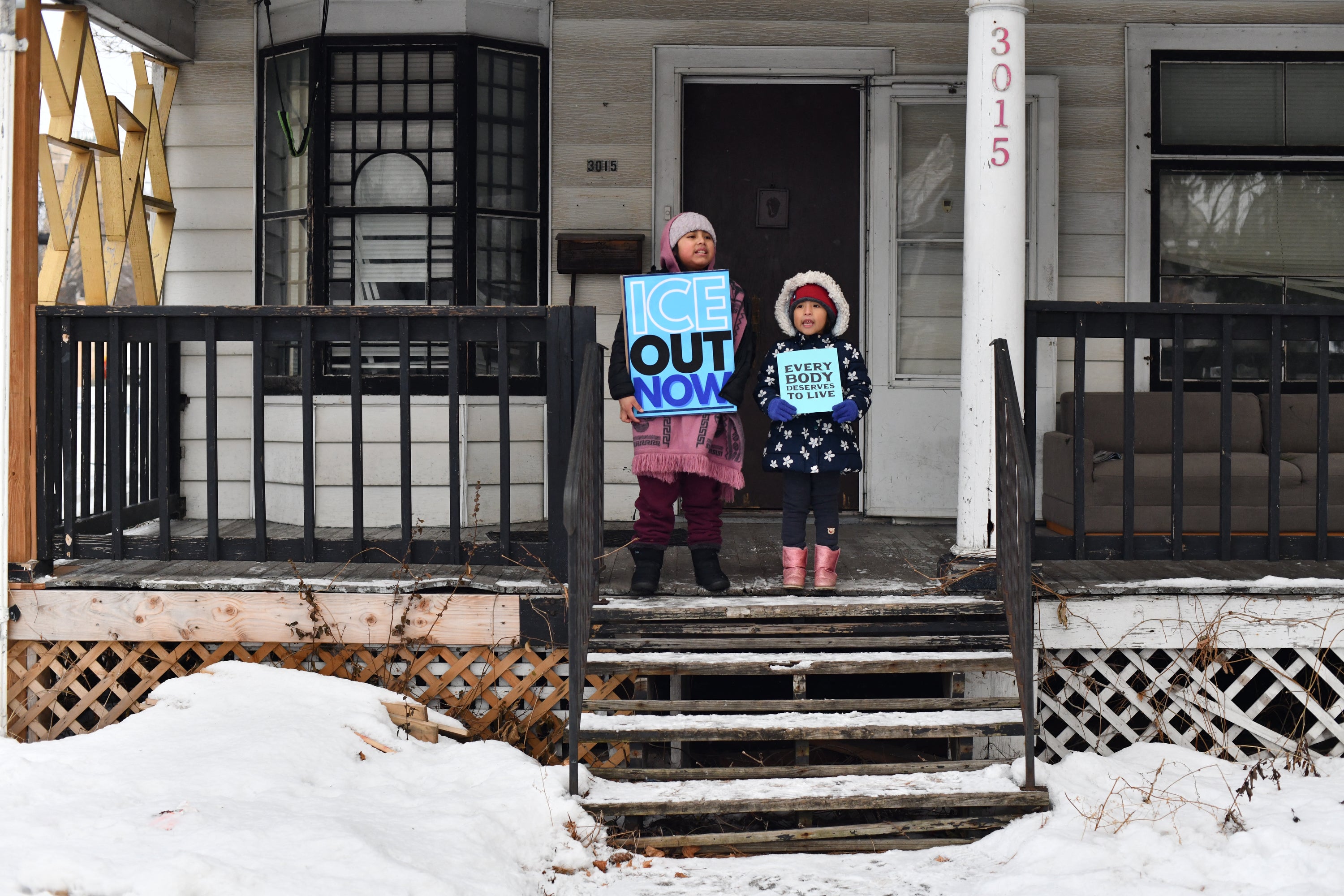
Bartlett, who helps write the MCA biology exam, said she noticed a clear shift in classroom dynamics during Operation Metro Surge, with diminished student focus and falling attendance.
“In January, there was a quiet. It’s hard to describe, but they were quiet, and I knew that it was bothering them, and I knew they didn’t have the words to talk about it, and so I would say every single student was affected in one way or another,” she said.
Across 29 Minnesota school districts and charter schools with high populations of English language learners, midyear enrollment fell by approximately 1,700 students between October 2025 and March 2026.
That compared to a decline of fewer than 80 students during the same period the previous year, according to data from Sahan Journal and MPR News.
Minneapolis and St. Paul public school districts each lost nearly 500 students midyear. In suburban districts like Fridley, which serves a significant immigrant and refugee population, the number of students dropped from rosters due to 15 consecutive unexcused absences tripled compared to the previous year.
“Kids literally disappeared,” Fridley Public Schools Superintendent Brenda Lewis told Sahan Journal and MPR News. “Literally in an unprecedented manner. Overnight.”
Bartlett recounted that the immense distress led some students to give up during tests, either shutting down their digital exam software mid-test or rapidly clicking through questions without reading them.
A survey of 4,460 educators conducted online this spring on behalf of Education Minnesota, the state teachers’ union, revealed the extent of the upheaval.
Some 72 percent of polled members reported being directly or indirectly impacted by Operation Metro Surge — a figure that rose to 93 percent among Twin Cities educators, where enforcement was most heavily concentrated.
According to the survey, roughly two-thirds of teachers observed increased absenteeism along with heightened student fear and anxiety, while nearly half reported students becoming noticeably withdrawn. In the Twin Cities metro area, nearly 90 percent of educators reported elevated fear and attendance drops.
The long-term toll on those displaced students remains a critical concern for teachers.
“It’s hard to quantify the lasting damage to students so early in the school year, but we know there was a mental health crisis among young people before Operation Metro Surge,” Byron said. “We assume the violent tactics used by ICE agents in January and February worsened it. There are simply not enough mental health resources for children in Minnesota during normal times, much less now.
“Of course, there’s another question about whether the 1,700 students who left Minnesota public schools and didn’t return are receiving any care at all. I hope they are.”
At St. Paul’s Battle Creek Middle School, social studies teacher Alli Kildahl recalled the moment students returned to in-person classes following a temporary shift to remote learning during the peak of Operation Metro Surge.
“When that initial burst of joy faded, we looked around and realized we’re still missing a lot of kids,” Kildahl told Sahan Journal and MPR News. “A lot of them slowly trickled back over the next month or two. And some of them are still not anywhere to be found.”
To address the secondary trauma that educators faced, Education Minnesota partnered with the National Education Association and the American Federation of Teachers to provide counseling and mental health training.
“We’re rarely asked about the mental health of educators even though workplaces that are burning out good people are among the very top challenges facing public education in Minnesota,” Byron told The Independent. “Is all of that enough? I worry that it is not.”
As the Minnesota Department of Education prepares to publish the 2025-2026 assessment data, Byron confirmed Education Minnesota will issue an official response.
