
Trump’s plan to make the midterms all about him is backfiring spectacularly, new poll finds

Want to bookmark your favourite articles and stories to read or reference later? Start your Independent Membership today.
Already a member?
Log in
President Donald Trump’s midterms strategy of telling his supporters to vote as though he is on the ballot appears to be backfiring, according to a new poll.
Democratic voters are more motivated to vote against the president in the Nov. 3 elections than Republicans are to turn out in support of him, the latest poll from Politico found.
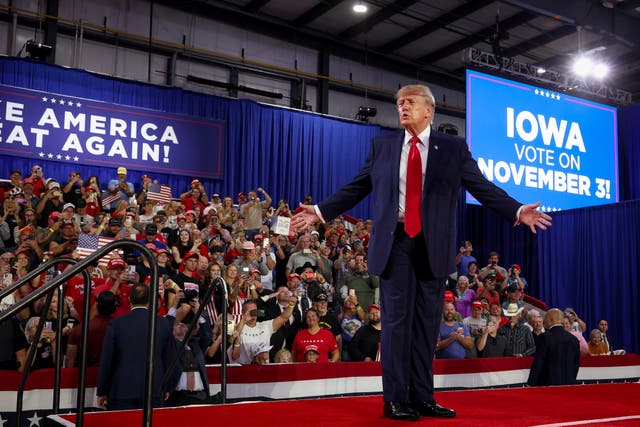
Trump has embarked upon a midterms blitz across the country, galvanizing his supporters in an effort to boost the Republicans’ prospects in the midterms amid his deeply unpopular war in Iran and as Americans continue to struggle with the cost of living.
“You have to pretend I’m on the ballot,” Trump said at a Georgia rally last week. “OK, the story is this: We get 49 percent more votes when I’m on the ballot.”
But the poll found that almost half (48 percent) of Democratic midterm voters said they are voting “mainly to oppose” Trump, compared to 38 percent of Republican voters who said they are voting mainly to show support for the president.
Trump is “100 percent motivating Democrats more than Republicans,” longtime Republican strategist Doug Heye told Politico. “That may have been the case regardless, but it’s even more true with words like ‘diesel’ and ‘Iran’ now a part of everyday political discussion.”
Almost half of Republican voters (48 percent), instead, said their main motivation at the polls was to support a local candidate, compared to 37 percent of Democratic voters.
Republican National Committee spokesperson Natalie Baldassarre hit out at Politico and said the outlet “didn’t need to conduct a poll to know that Democrats are motivated by their hatred for President Trump and Republicans.”
She said the party is “running on actual accomplishments like cutting taxes and securing the border” and accused Democrats of running on a campaign platform of “investigations, obstruction, and impeachment.”
The White House repeated its assertion that Trump is “the unequivocal leader, best messenger, and unmatched motivator for the Republican Party.”
Some Republican candidates have publicly split with Trump on key issues in their districts, while others have stayed loyal to the president.

Florida Rep. Maria Elvira Salazar, for example, said that Trump’s immigration efforts have gone “too far” in an ad that aired in Miami last month. Elsewhere, Michigan Senate candidate Mike Rogers, who faces Democrat Abdul El-Sayed, called for an end to the “tariff war” with Canada, and Iowa Rep. Ashley Hinson urged an end to the Iran war as gas prices remain high.
Half of Republican voters polled by Politico believe that candidates have a better chance of winning if they align themselves with the president, compared to 30 percent who think they are better off going against him.
But half also accepted that their candidate should speak out against Trump if that’s what it took to win.
A national GOP operative had a bleak assessment of the choice facing Republican voters next month. “I think Republicans … are stuck choosing which finger to cut off,” the strategist said. “There is no good answer.”
