Yves Saint Laurent was a man addicted to sex appeal. “Nothing is more beautiful than a naked body,” he said in the late 60s after debuting his first nearly nude designs, sheathing his female clients in translucent chiffon dresses and suggestive ostrich feathers. Bursting free from the confines of conservative French style, Saint Laurent was a pioneer for sexual freedom, reimaging dress not just as a pastime but a tool for liberation. On August 1, 2026, the legendary designer would have turned 90 years old, so to celebrate, we’re looking back at his most important acts of sexual liberation throughout the 60s and 70s. From his first-ever sheer designs and an outrageous bridal bikini to the scandalous collection that shocked an entire nation, these are the times Yves Saint Laurent reinvented sex appeal.
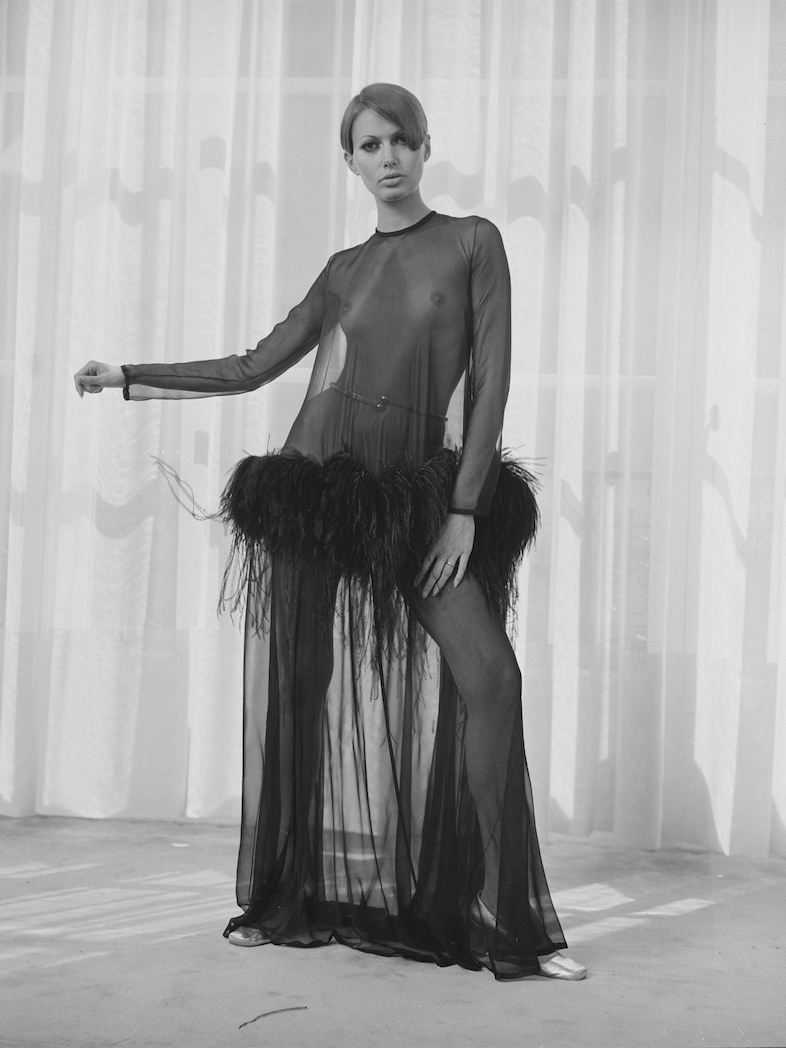
Yves Saint Laurent AW68 couturePhotography Reg Lancaster/Daily Express via Getty Images
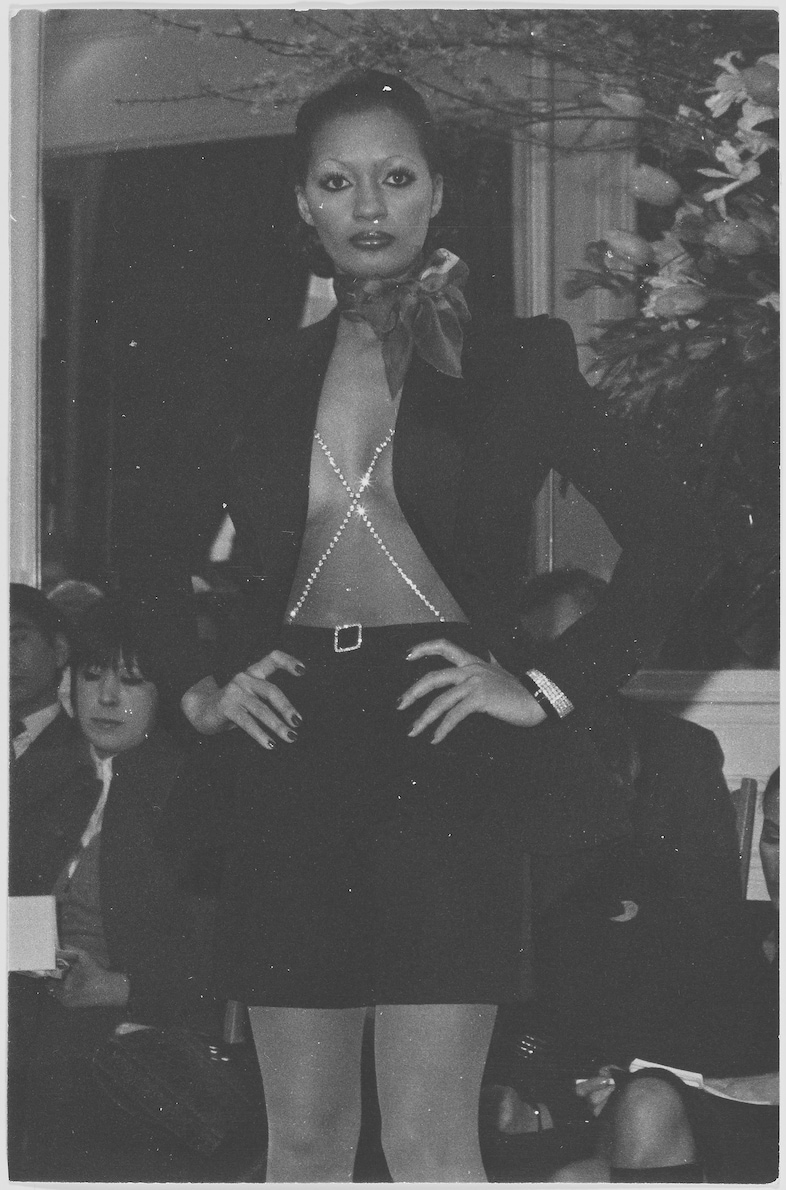
Though there are many contenders to the crown, one of the most potent symbols of sexual freedom at YSL are the sheer blouses and gowns. Saint Laurent liberated the female form in 1966, when he debuted his first see-through designs at his SS66 haute couture show, which included a long-sleeve cigaline shift dress with strategically-placed beaded panels. More sheer dresses arrived in 1968, and the most famous example was born: a floor-length, transparent chiffon dress belted by a ruff of ostrich feathers around the hips. Though the late 60s were an era of sexual revolution, YSL’s daring designs went against the status quo of conservative Parisian style, and pioneered naked dressing in the mainstream.
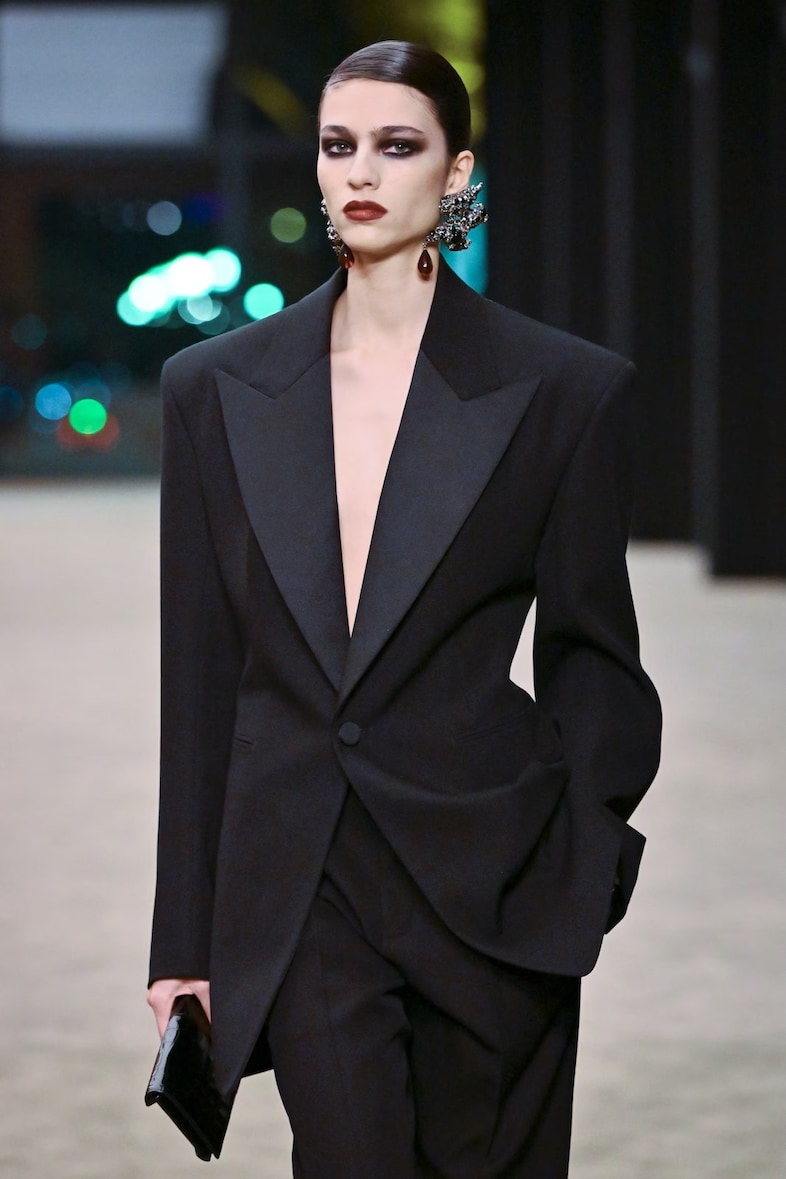
Saint Laurent AW26 – the 60th anniversary celebration of the original Le Smoking jacketPhotography Victor Virgile/Gamma-Rapho via Getty Images
Despite his knack for it, Saint Laurent didn’t always have to undress women to reinvent sex appeal. At his AW66 couture show, the designer shocked the world when he debuted Le Smoking, AKA a sleek, black, traditional tuxedo jacket. That might sound pretty ordinary, but the jacket – one that men traditionally wore to protect from cigar smoke – caused a stir when Saint Laurent made a version for women. “For a woman, the tuxedo is an indispensable garment in which she will always feel in style, for it is a stylish garment and not a fashionable garment,” he said at the time. “Fashions fade, style is eternal.”
Though his haute couture clients initially rejected the design (only one jacket was sold after its release), Saint Laurent launched his ‘Rive Gauche’ ready-to-wear line in September 1966, and its younger clientele made the jacket a success. Le Smoking revolutionised the way women dress, reinterpreting female sex appeal through an androgynous, masculine lens.
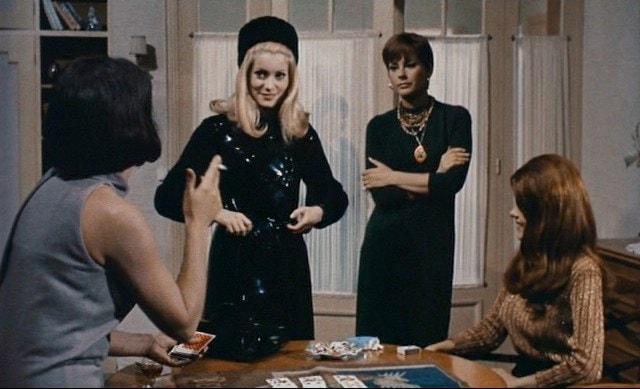
Catherine Deneuve in Belle de Jour wearing Yves Saint Laurent’s black vinyl trench coatFilm still (1967)
In 1967, Saint Laurent was invited to create the costumes for Catherine Deneuve’s character Séverine Serizy in Belle de Jour, a film by director Luis Buñuel. The erotic novel adaptation follows a young housewife who leads a double life as a high-class sex worker, and Saint Laurent’s wardrobe had to reflect that duality. A-line dresses and knee length peacoats were mixed in with suggestive silks, tactile furs and a black vinyl trench coat, the latter of which became a defining garment of the character’s transgressive style. “The character’s style really owes a lot to the image Saint Laurent created,” said Deneuve of the collaboration.
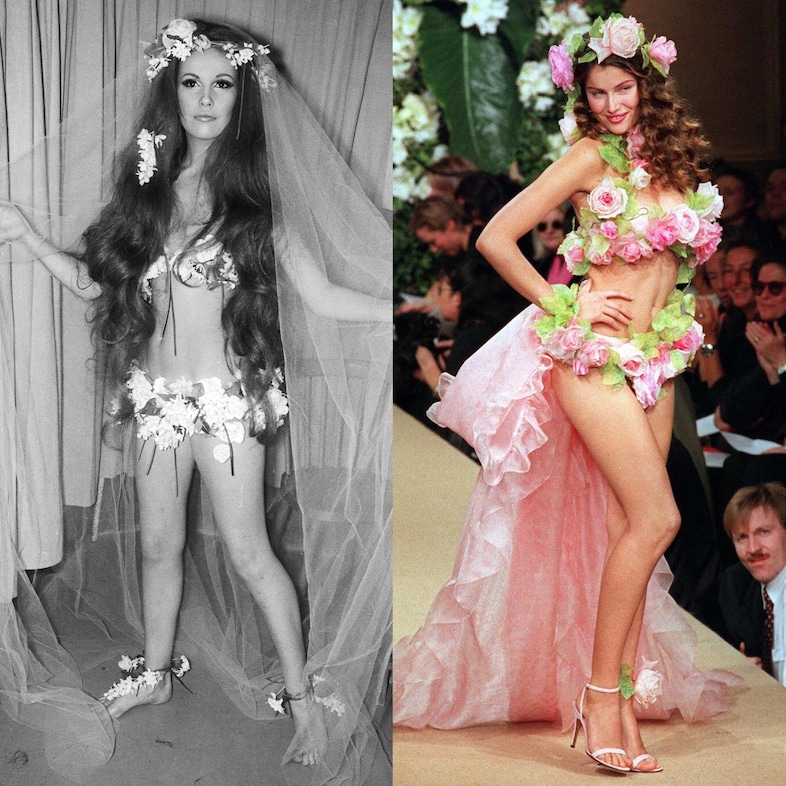
The 1968 bridal bikini and its 1999 recreationPhotography Getty Images
Traditionally, the final look of a haute couture collection is a showstopping wedding gown, demonstrating the highest form of craftsmanship that the house has to offer. For his SS68 show, Saint Laurent threw this tradition out the window and replaced the wedding dress with a bridal bikini. The model, with her long veil and strategically placed floral arrangements, shocked the fashion press at the time, but once again tapped into the sexually liberated mood of the 60s. Over three decades later, Saint Laurent would recreate the look on his muse , and images of her at the SS99 couture show are some of the most enduring of his career.
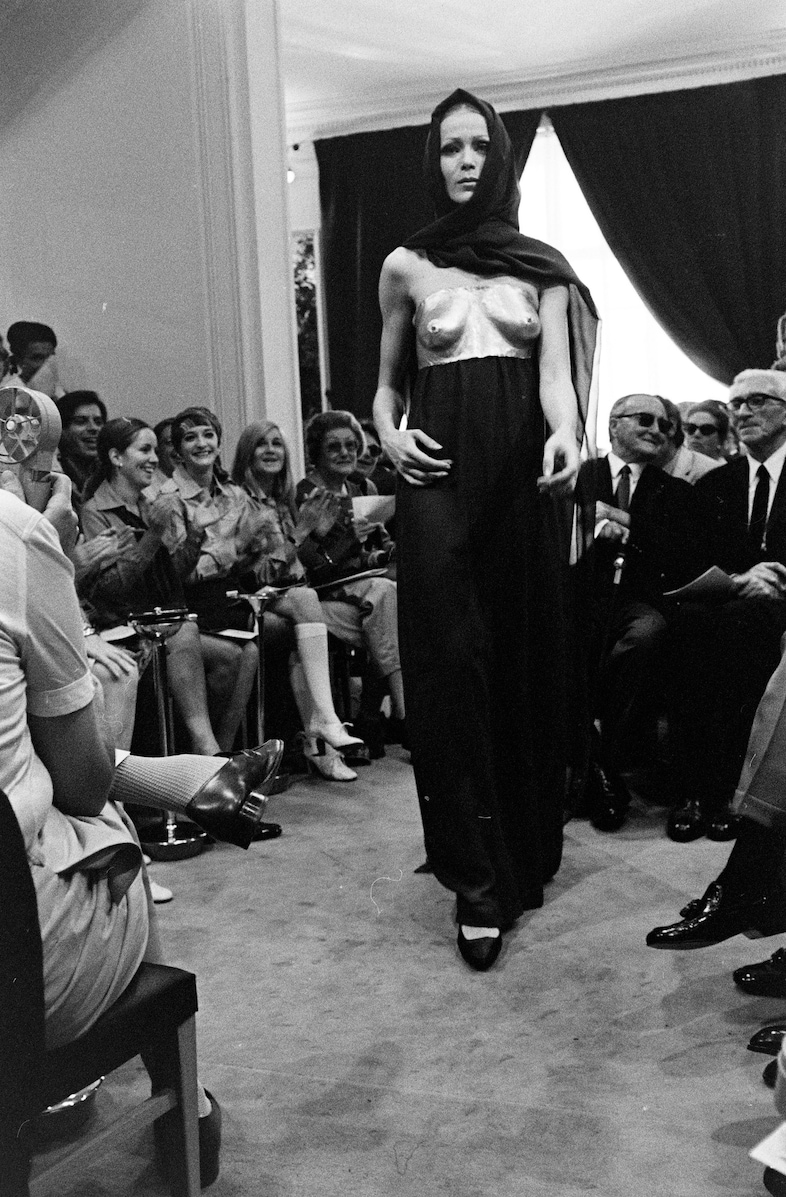
The Claude Lalanne breastplates at Yves Saint Laurent AW69Photography Fairchild Archive/WWD/Penske Media via Getty Images
During the 2020s, breastplates have reached peak popularity, popping up on catwalks and red carpets more times than we can count. But back in 1969, Yves Saint Laurent was the first designer to present one on a catwalk, in collaboration with the sculptor Claude Lalanne. Saint Laurent asked Lalanne to cast a plaster mold of the supermodel Veruschka, using her breasts and torso for the golden plates that would appear on the AW69 catwalk.
Did you know that Yves Saint Laurent released a collection so scandalous it was retroactively renamed ‘The Scandal Collection’? On January 19, 1971, the designer presented his SS71 Libération ready-to-wear show, also referred to as “Quarante” due to its 1940s inspirations. Today, the clothes wouldn’t really shock – the collection was a mish-mash of oversized lapels, polka dot dresses, green fox fur, sequins, diamonds and brash prints. Models also walked through the salon at 30 bis Rue Spontini in tailored suits, pussybow blouses, colourful turbans and Grecian print maxidresses.
Though it might not sound too controversial, this was huge departure from conservative French fashion and the press were scandalised. Up until this point, the main designers of the day – Pierre Cardin and Paco Rabanne – were purposefully producing futuristic collections, but Saint Laurent was the first couturier to mine the past. The press felt that his retro rendering of wartime fashion was offensive, especially as France was still reeling from the trauma of that decade. The collection was sexually scandalous, too – its short dresses and platform heels were inspired by Paloma Picasso, the then-22-year-old daughter of Pablo, who filled her wardrobe with old flea market finds. One dress, covered in appliquéd sequin lips, was particularly controversial for its suggestiveness; models also walked the salon in bright red lipstick and nail varnish, which was seen as a reference to Parisian sex workers of the time.
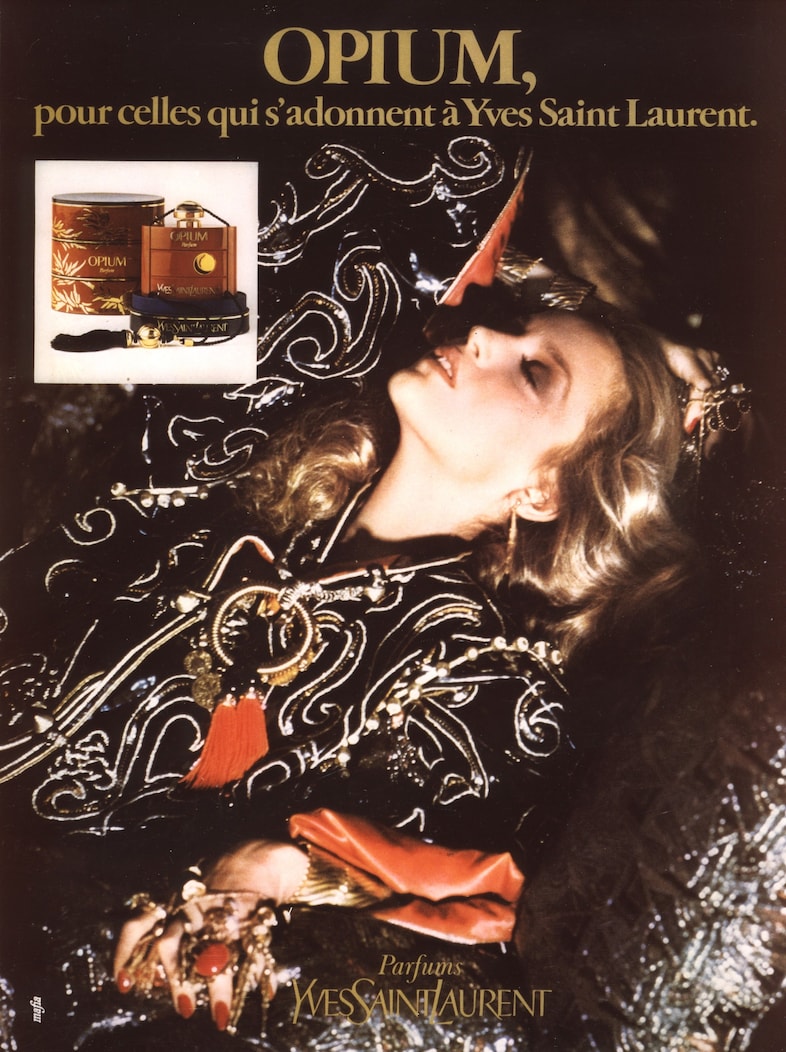
It’s clear by now that Saint Laurent was never a man to shy away from scandal, and in 1977 he pushed this ethos to the max. To coincide with his AW77 China-inspired collection, the designer launched the fragrance Opium, an intoxicating mix of vanilla, patchouli and myrrh. While the name of the perfume attracted controversy for its orientalist themes and reference to the opium drug trade, the accompanying campaign was seen as overtly sexual too. Shot by fashion provocateur Helmut Newton, the moody photograph sees a young Jerry Hall reclined in apparent ecstasy, her eyes closed and lips parted with the tagline “Opium, for those addicted to Yves Saint Laurent” in gold lettering above. Despite the controversy, the fragrance launch was a colossal success, earning $30,000,000 in its first year of sales – equivalent to $165,000,00 today.
For more: Elrisala website and for social networking, you can follow us on Facebook