
As Lindsay Clancy’s trial grips America, one mother reveals how postpartum psychosis stole her reality

About two weeks after giving birth, Bridget María Chesterton was found curled up on her bathroom floor, confused and saying things that made little sense.
Hours later, in an emergency room, she repeatedly asked, “What’s going on?” At one point, her family said she did not even remember having a baby.
Chesterton was eventually diagnosed with postpartum psychosis, a rare but serious psychiatric emergency that has received renewed attention during the murder trial of Massachusetts mother Lindsay Clancy. A central issue in that case is whether Clancy was experiencing the condition when she killed her three children.
Researchers estimate postpartum psychosis affects about 1 to 2 people per 1,000 births. Most people who develop it do not harm their children, but severe cases can carry risks of harm to the mother or baby.
Chesterton, now 52 and a history professor living outside Buffalo, New York, said medication and extraordinary family support helped her recover.
She is sharing her experience because she is troubled by claims online that postpartum psychosis is not real.

“It’s something that we do not talk about as a society,” Chesterton said. “I’m not embarrassed about what happened. I want people to know about it.”
Chesterton and her husband, James Fitzsimmons, had undergone years of fertility treatment before she became pregnant in her mid-40s. After a difficult pregnancy complicated by severe asthma, she delivered her daughter by C-section in January 2019, about two months prematurely.
The baby was taken to a neonatal intensive care unit, where she remained for weeks.

Chesterton initially appeared well after returning home. Then her behavior abruptly changed.
Her husband found her on the bathroom floor struggling to remember basic details and making unusual comments. At the hospital, her mother, Maria Chesterton, realized how severely her daughter’s condition had deteriorated.
“She didn’t even remember having a baby,” she said. “She knew us vaguely.”
It can happen to anyone after giving birth, but the chances are higher for people with certain mental health conditions.

In a journal article on the subject in 2023, researchers at the Medical University of Lublin in Poland said about half of people with postpartum psychosis have a previous history of psychiatric problems and the most common risk factor associated with the condition is bipolar affective disorder, which causes extreme mood swings.
Though most people with postpartum psychosis don’t harm their children, mothers with severe cases may try to do so, and also may try to harm themselves.
Experts say it’s important to seek immediate help if you or your partner or family member show signs of postpartum psychosis.

Chesterton was admitted to BryLin Hospital in Buffalo for about two weeks. After being discharged, her condition deteriorated again within days.
“She was in bad shape,” her mother said.
Chesterton returned to the hospital involuntarily for another two weeks, remaining separated from her newborn.
She credits antipsychotic medication with helping bring her back to reality. But she said her family was equally important to her recovery.
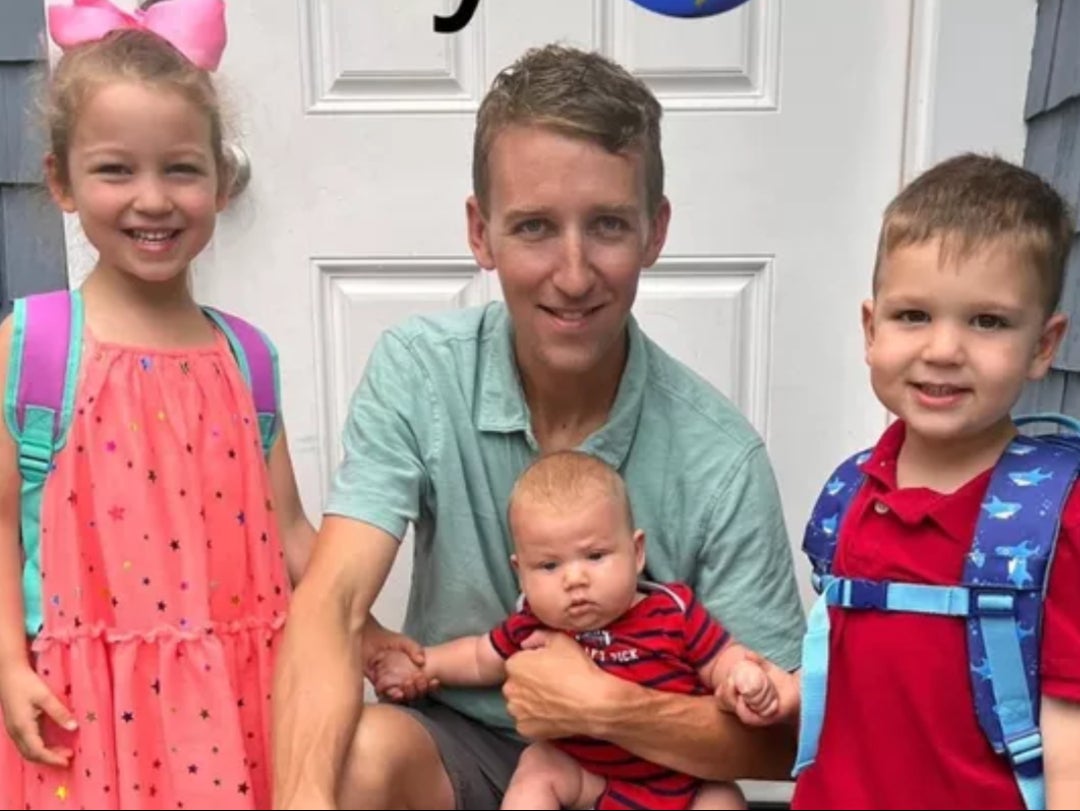
When her daughter finally came home after nearly two months in the hospital, Chesterton’s husband, parents and a postpartum doula helped care for both mother and baby.
The doula helped Chesterton relearn the routines of caring for her daughter and, as she put it, “become a parent again.”
Dr. Emily Williams of Buffalo OB/GYN, one of Chesterton’s doctors, said strong family support can be critical after childbirth.
Over the following months, Chesterton’s family watched her gradually return to herself.

“We could see improvement in her,” her mother said. “It was a little bit at a time.”
Chesterton remained on antipsychotic medication for about a year. By her daughter’s first birthday, she said she had recovered.
Williams said the family’s quick response when Chesterton first began showing symptoms was important. Warning signs can sometimes be dismissed as exhaustion or the normal pressures of caring for a newborn.
Chesterton’s mother now urges other families to take sudden and severe behavioral changes after childbirth seriously and seek medical attention.
“If my daughter would not have had the support system,” she said, “I don’t know how this would have turned out.”
What is postpartum psychosis?
Postpartum psychosis usually happens within several days of giving birth but can occur up to six weeks afterward.
Symptoms may include hallucinations, delusions, paranoia, or other behavior changes.
A woman may also have mood changes, such as mania or depression, disorganized thinking or behavior, insomnia, irritability or agitation.
If you are experiencing feelings of distress, or are struggling to cope, you can speak to the Samaritans, in confidence, on 116 123 (UK and ROI) or visit the Samaritans website to find details of your nearest branch.
If you are based in the USA, and you or someone you know needs mental health assistance right now, call or text 988, or visit 988lifeline.org to access online chat from the 988 Suicide and Crisis Lifeline. This free, confidential crisis hotline is available to everyone 24 hours a day, seven days a week. If you are in another country, you can go to www.befrienders.org to find a helpline near you
