
Advisers set to vote on Grail’s cancer blood test during high-stakes FDA review

Want to bookmark your favourite articles and stories to read or reference later? Start your Independent Membership today.
Already a member?
Log in
Advisers to the U.S. government are gathering Wednesday to evaluate a novel blood test that aims to identify signs of multiple cancers in healthy individuals, marking the technology’s initial major regulatory hurdle.
Developed by Grail Inc., the screening checks for fragments of DNA released by tumor cells, an emerging approach that seeks to identify various forms of malignancy through a single routine blood draw.
Traditional screening routines focus on individual conditions through targeted procedures like mammograms or colonoscopies.
Conversely, multi-cancer detection attempts to uncover tumors during their initial phases, when therapeutic interventions prove most effective.
A panel convened by the Food and Drug Administration will vote Wednesday on whether the expected advantages of Grail’s Galleri screening, intended for individuals aged 50 and above, outweigh potential hazards, including overlooked tumors or false alarms.
While preliminary briefing files published before the meeting indicate FDA staff found no critical safety issues, regulators want the advisory panel to deliberate on whether the tool identifies a sufficient proportion of early-stage malignancies to justify claims of “early detection.”
The agency will consider the panel’s final conclusions, though it is under no formal obligation to implement their suggestions.
Consumers across the U.S. can already purchase the screening out of pocket, frequently paying $700 or more, owing to regulatory pathways that permit restricted use of certain laboratory-developed tests.
Formal approval by the FDA, however, would likely broaden adoption by clearing a path toward reimbursement from Medicare and private health insurers.
Medical specialists remain divided over whether the technology is currently suitable for widespread application.
Dr. Badrinath Konety of the Allina Health Cancer Institute in Minneapolis notes that while the science holds “a lot of promise,” he remains deliberate when advising curious patients.
“The benefit is it may give you a signal,” he said. “The flip side now is you’ve got to chase that signal,” an endeavor that can trigger a battery of expensive follow-up examinations that fail to offer definitive conclusions.
Members of the FDA panel must weigh these potential drawbacks alongside several unorthodox technical aspects regarding the technology from the Sunnyvale, California-based developer.
Crucially, regulators consider the version of the test Grail is currently marketing to be fundamentally distinct from the iteration utilized in two foundational clinical trials.
To bridge this divide, the developer ran retrospective analyses using preserved frozen blood samples drawn from participants in those original trials.
Furthermore, Grail’s submission to the agency relies on just a single year of results from its primary trial.
Conducted in the U.K. across 140,000 subjects, that trial failed to meet its primary target of demonstrating a statistically significant reduction in advanced-stage diagnoses, a drawback omitted from the FDA’s summary report that is nevertheless expected to feature in Wednesday’s debate.
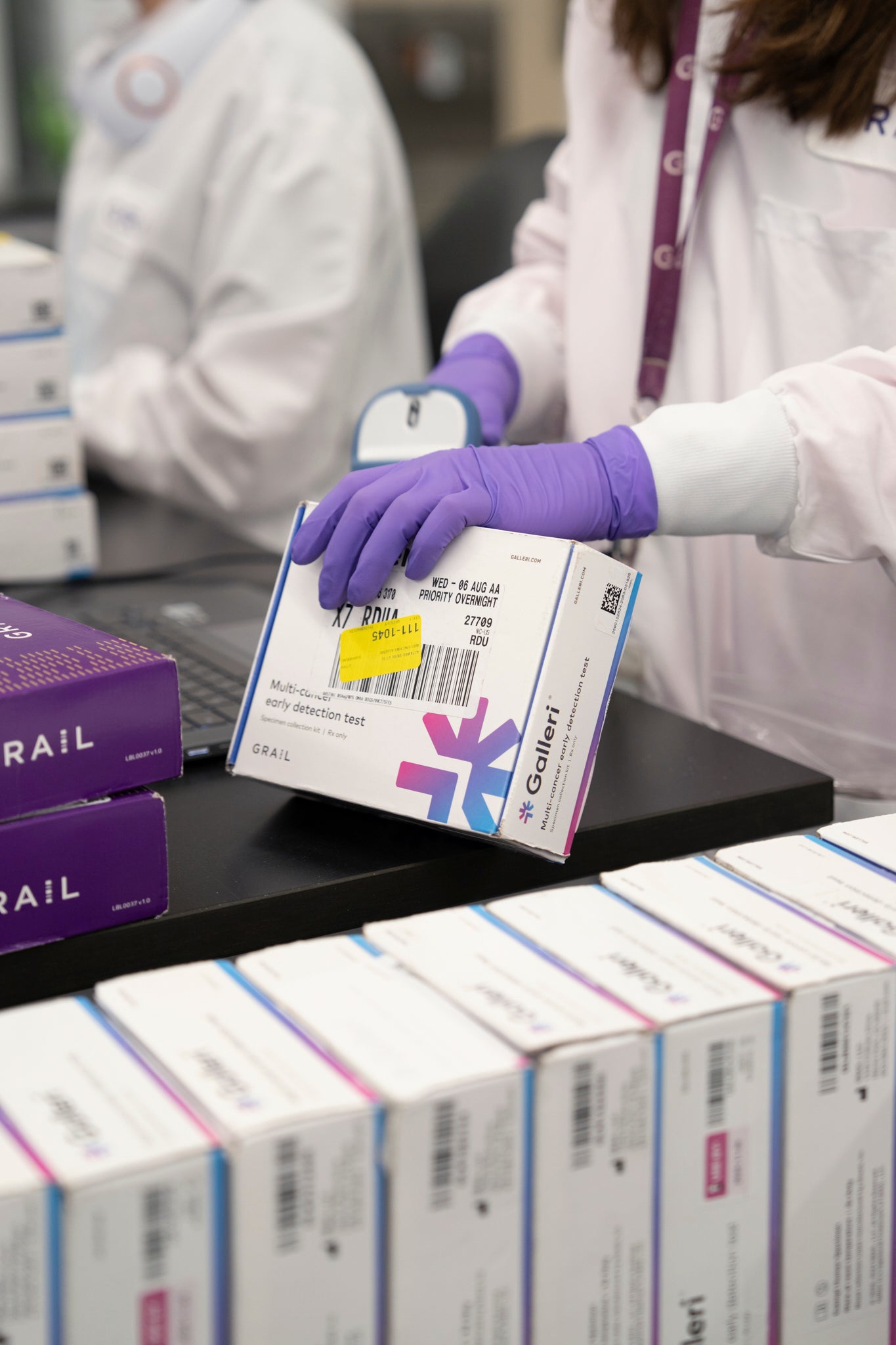
In trial data published this week by the regulator, Grail’s technology correctly identified malignancies in over 66% of patients who received a “cancer signal detected” result. Across that initial 12-month period, the tool successfully uncovered roughly 30% of cancers that were ultimately diagnosed by physicians.
Organized in partnership with the U.K.’s National Health Service, the study was not structured to prove that Galleri screenings lowered overall cancer mortality—a metric that would necessitate many additional years of continuous observation.
Meanwhile, newly released data from a separate American study revealed that the blood test produced a positive cancer signal in 287 individuals, with medical staff later confirming diagnoses in 173 of those patients.
The tool demonstrated greater efficacy in spotting less common conditions, including liver and ovarian malignancies, compared to more prevalent variants like prostate cancer. This variance creates uncertainty regarding the overall clinical impact of introducing the test to millions of Americans.
A key concern among healthcare professionals is that patients receiving reassuring results from DNA blood testing might erroneously bypass standard recommended procedures, such as colonoscopies or mammograms.
Nickolas Papadopoulos, a researcher at Johns Hopkins, views Grail’s work as “pretty promising” but stressed that if regulatory clearance is granted, medical practitioners must fully comprehend its limitations and ensure patients are thoroughly informed.
Pointing to the fundamental clinical questions that remain unresolved, he noted: “If we do this test once a year, once every three years, is that good enough to eventually catch the cancer early? We’re still learning.”
