

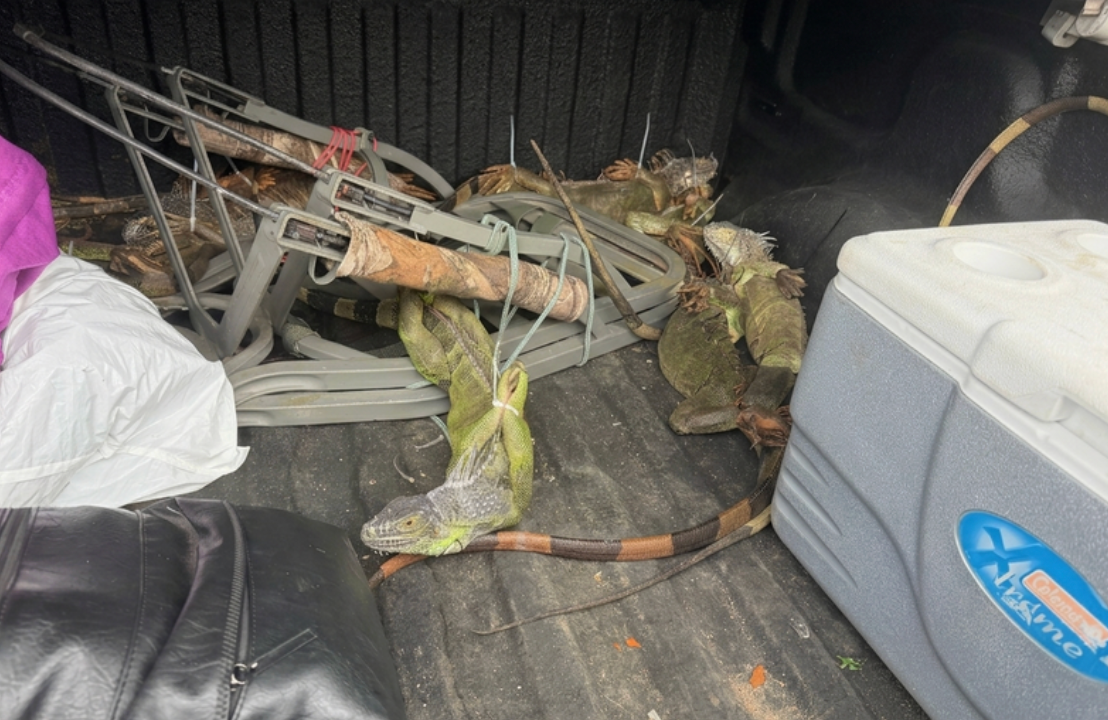
Thirteen live, zip-tied iguanas were found in the back of a man’s truck during a traffic stop in central Florida, according to reports.
The reptiles were discovered after Florida Highway Patrol troopers pulled over 32-year-old Rendon Casildo-Acdiel in Winter Haven, Florida, early Thursday morning, according to FOX 13 News. Winter Haven is located about 50 miles east of Tampa.
Casildo-Acdiel was stopped because he didn’t have a light for the license plate on his trailer, the state highway patrol told FOX 13. But after searching his truck and trailer, troopers said they found 13 live iguanas, along with five containers of iced tilapia.
Pictures from the scene show a haphazard pile of iguanas with their feet zip-tied in the back of a truck. The iguanas were reportedly taken to a local shelter afterward.
Casildo-Acdiel was arrested and now faces a charge of driving with a suspended license, according to FOX 13. It remains unclear if he’ll be charged in connection with the reptiles.
Casildo-Acdiel told troopers he was visiting Florida to get coconuts from Miami and fish from Polk County before heading back to North Carolina, according to Fox 13.
It’s unclear if Casildo-Acdiel has obtained an attorney. The Independent was unable to identify his attorney for comment.
Iguanas aren’t native to the state and are considered an invasive species, according to the Florida Fish and Wildlife Conservation Commission. It’s illegal to introduce nonnative species into Florida.
Iguanas are often spotted falling from trees during cold spells in the Florida because low temperatures can temporarily paralyze them.
The reptiles can also bite both people and pets. Their bite wounds often require stitches, and bacteria found in iguanas’ mouths can sometimes cause severe infections, according to Critter Control.
A permit is required to “possess live captured green iguanas for eradication and control purposes,” the Florida Fish and Wildlife Conservation Commission’s website states. Those who want to keep iguanas as pets are also required to obtain a permit through the state.
The Independent has contacted the Florida Highway Patrol and Florida Fish and Wildlife Conservation Commission for comment.


