
The major problems with the Man City appeal and the ‘magic bullet’ they need

Want to bookmark your favourite articles and stories to read or reference later? Start your Independent Membership today.
Already a member?
Log in
To think that the dominant topics when the Premier League broke for the international window were over Michael Carrick’s future and whether Alexander Isak can rediscover his form.
Within a mere three weeks we’re now in another era, having passed a genuine historic landmark. It is an era shaking with uncertainty, despite finally having that concrete development of the Manchester City decision.
That is because much of that uncertainty is over what next; how long the league is going to live with this; when the next development will even be; whether sanctions will come before the outcome of the appeal…
And the answer is: the process is still so private that it’s difficult to say. From speaking to various legal figures and those who work in football regulation, though, one aggregation of expectations is the following:
The sanctions with full decision – including the revelatory appendices – could actually come next, possibly by the end of November and even within four weeks.
The current appeal decision is expected at some point between January and March, but it could then go to arbitration.
The sanctions themselves can be appealed, and potentially decided by mid-May.
The consensus is nevertheless that it is imperative this is concluded before the end of the season to finally bring clarity to English football. Much of that, however, is dependent on the appeal itself.

While the prospect has weighed over the process almost as much as the initial investigation itself, it is nowhere near the same.
An appeal isn’t, as one source says, “a silver bullet”. It almost has to be a magic bullet, working around the potential gaps.
An appeal can only assess whether the initial panel made any procedural or legal errors. Legal experts already see this as difficult given that the decision was built on the strength of the evidence rather than points of law, and is already viewed as being “bullet-proof” on all sides.
This isn’t a new hearing, either, and new evidence cannot be presented outside exceptional circumstances.
It’s known that City intend to pursue a number of avenues, including matters of fact, law and procedure, that they believe make the decision “unsafe”.
There have already been heavy implications that they will challenge the independence of the panel, most notably in CEO Ferran Soriano’s comment that they are looking for “a proper adjudication in an independent and impartial body”.
This would be in-keeping with a pattern.
- In 2020, City accused the initial Uefa case of a “prejudicial” process
- In 2021, it was revealed City had argued of the Premier League case that there was “a real possibility that the arbitrators were biased”
- In 2023, the Times reported that City are understood to have challenged the involvement of Murray Rosen KC as head of the independent judicial panel. Rosen’s chambers’ profile listed him as “a member of the MCC and Arsenal FC”
- In 2024, City claimed “discrimination against Gulf ownership” in the APT case
These were all dismissed.

Soriano’s internal video, however, further emphasised that one of City’s most significant issues is the Independent Commission refuting what they describe as “irrefutable evidence”.
Through various reports and portrayals of the form the appeal will take, it appears likely the evidence will be intended to show that, although City’s Abu Dhabi sponsors did require that funding to meet commitments, they argue this came from central government – known as the Crown Prince Court (CPC) – and not from City’s legal owner, which was then under a company called Abu Dhabi United Group (ADUG).
This defence was labelled the “CPC Explanation” by the Commission, who determined it to be false and concocted after the fact.
The aim for City, then, would be to convince the appeal board to believe what the Commission would not; that the latter acted unfairly or unreasonably when arriving at this decision.

From the publicly available details, though, there are considerable challenges. Or, as one legal figure puts, it, “they will have to convince the appeal board to ignore significant volumes of conflicting evidence”.
One challenge is from the hundreds of emails exchanged between City’s CFO, Head of Finance, CEO, COO, board directors – some of whom were also senior leaders in the UAE government – and UAE government employees of the Executive Affairs Authority at the time, clearly asserting the funds were being transferred from ADUG to sponsors. These emails spanned the eight years in question, even forming the subject of presentations named “Summary of Owner Investment”.
The appeal board would also need to believe that none of these individuals were ever corrected of this “false assumption” over eight years, and even that key City and UAE individuals like Simon Pearce were somehow mistaken about the source of the funding when they confirmed they had actually transferred them personally.
A second challenge comes from the fact City did not present this defence to Uefa or the Court of Arbitration for Sport back in 2019-20.
Key City witnesses at the CAS hearing, such as Pearce and former Etihad CEO David Hogan, similarly failed to raise it at any point in their witness testimony when explaining where the funds were sourced from.
Third is that City themselves previously confirmed that their owner, ADUG, had provided liquidity to the sponsors.
This matter was “time-barred” at CAS, meaning the panel did not decide whether it breached the rules and it could not affect their decision-making.
It pertained to two payments of £15m each, recorded as Etisalat sponsor income by City in 2011-12 and 2012-13, and – crucially – it was said that ADUG “caused” the sponsorship fees of £30m to be paid by an individual called Jaber Mohamed. Etisalat was purported to have had liquidity issues at the time, and could not afford to pay its sponsorship commitments. They confirmed the lender in question was fully repaid in 2015 by Etisalat. That lender was ADUG. It begs the question of why not Jaber Mohamed?
City could well say Jaber Mohamed was acting in a CPC capacity, not as an individual, but this would be inconsistent with evidence given to Uefa and does not get around their evidence that “ADUG caused to be paid” or Etisalat paid ADUG. They cannot say ADUG were not involved, unless Uefa were misled or a mistake was made.
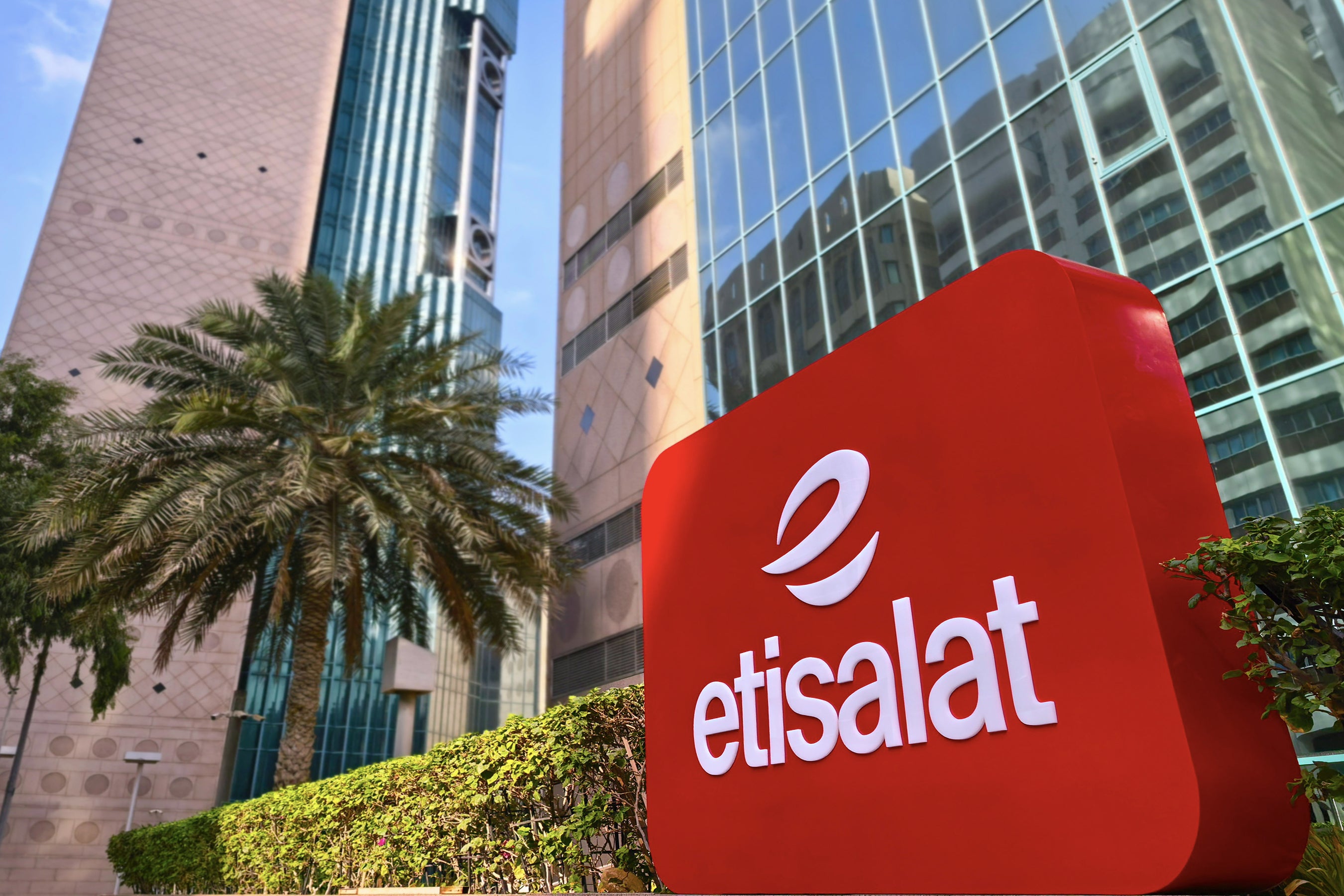
A question the panel may consequently have to consider is that if Abu Dhabi sponsors could obtain liquidity from the CPC to fund the City sponsor contracts, why was ADUG paying City’s Etisalat sponsorships for two years running?
Even if City are able to convince the appeal board to ignore all of that evidence and determine the Commission acted unreasonably in reaching their conclusion, that would not be sufficient. The Commission also found that City and its Abu Dhabi-owned sponsors constituted “related parties”. So, even if they received the additional funds from the CPC, that would still be a rule breach.
City would have to convince the appeal board that this finding of fact was unreasonable, too, although the details of that are dependent on the as-yet unseen appendices.
However, the CPC explanation necessitates all City’s executives and board directors who requested funds to be paid by ADUG to the sponsors (or stated they had made payments from ADUG themselves) to have actually made “false assumption” and would mean that “instead, they were requesting of instructing that the money be paid from the CPC without knowing it”.

If so, then these individuals had sufficient authority or influence to ensure the CPC made payments of tens of millions of pounds at their request to settle the financial affairs of the sponsors. In which case, that level of influence might automatically make the parties “related”.
The higher stakes are illustrated by how the appeal board will likely have forthright jurists rather than KCs, as the Commission did.
It is, in many ways, a new world.
