
Could bats be an ally in the fight against cancer? New study uncovers secrets of their unique genetics

What if bats could help us to fight cancer?
Endangered little brown bats adapt to cancer-causing cell damage in a unique way that could inform efforts to curb the disease that kills over 600,000 Americans each year, researchers said Wednesday.
An experiment using tissue samples from the creatures revealed that when the bats’ cells were tested against lethal chemicals, the interaction triggered genes that promoted cell death instead of DNA repair.
“We found the literal opposite of what we expected if you treat the bats with a lethal dose of this chemical,” biologist Juan Manuel “Manny” Vazquez, an assistant professor at Penn State University and co-lead author of the related study, said in a news release from the University of California, Berkeley.
“The longest-lived bat in North America decides ‘I can’t save this ship’ and immediately switches gears to prioritize killing off the cells that are damaged. The elephant, another cancer-resistant species that is long-lived, has the exact same strategy — if you can’t save the cell, kill the cell,” he continued.
And analysis of the bats’ DNA revealed another secret to their longevity and good immune function, the University of Vermont said.
The scientists discovered the animals had multiple copies of an immune gene found in every mammal, known as “protein kinase r,” or PRK. Mammals typically only have one copy of the gene, suggesting to Vazquez it could be responsible for protective effects.
The findings could be applied to human research on longevity and disease, the study’s authors assert.
“We can look at these bats and try to understand how, in the same way you can improve your immune system to fight off viruses, maybe you can improve your immune system so it doesn’t decline in old age,” Vazquez said. “Or maybe bats can help us find ways to fight off tumors so our immune system doesn’t get tired, and that can also help us deal with other stresses of life and not exhaust our immunity.”
They suggest that aging and infectious diseases don’t need to be studied as separate fields, too.

“Pathogen adaption, longevity and cancer resistance — they are fundamentally linked,” Elise Lauterbur, an assistant professor of evolutionary biology at the University of Vermont and co-lead author of the study, explained.
Although, it’s a long way off before these adaptations could be used solve human disease cases.
So, why bats? Well, they’re the longest-lived mammals for their size, period, with some species living for decades. (Little brown bats are primarily endangered because of the deadly fungal disease white-nose syndrome.)
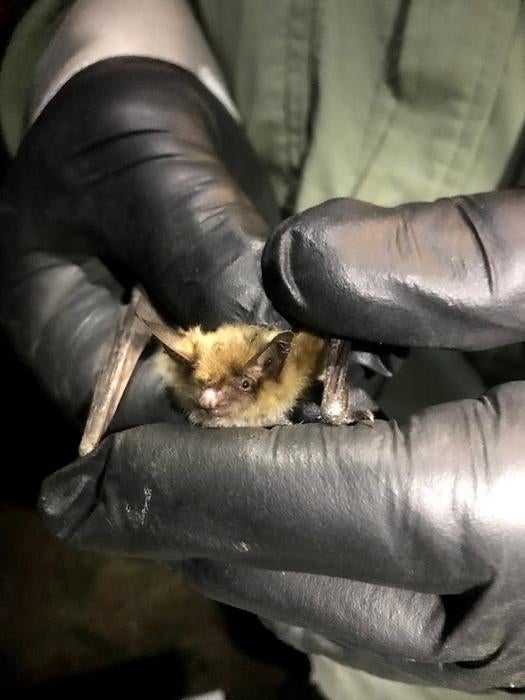
They also have very active lifestyles, flying around to hunt insects at night.
Researchers say bats’ fitness levels may play a role in boosting their immune system and lifespan, something also observed in humans.
“Bats have evolved this incredible fitness capacity, this incredible ability to deal with disease and this incredible ability to be able to prevent cancer,” Vazquez said. “That means that, by understanding how bats have evolved to do all these things that other mammals haven’t, we can find completely new and unexpected ways of dealing with the normal things that cause human diseases.”
