
In pictures: The glamour of Nigerian American femmes

Marc Baptiste, OMOGE
Gallery / 10 images
As a child, Nollywood films frightened me. My mum would watch Nigerian movies while she braided my hair, and I’d often dread hearing the screechy, unstable audio and references to witches and juju that would keep me up at night. But even as I feared these films, I also struggled to look away. My eyes were especially glued to the large, melodramatic performances of the women actors; these Black women, old and young, who defied white supremacist and patriarchal notions of womanhood, as they plotted revenge on their cheating husbands, backstabbing friends and evil mothers-in-law. And in the early 00s, I was particularly struck by how beautiful and stylish they were and how much they looked like the women in my life. Their thin eyebrows, overlined lips, eccentric hairstyles, short skirts, and high heels. They were magnetic, mischievous and sharp-tongued.
Old Nollywood, which still has a nostalgic grip on many Nigerians in the diaspora, is the inspiration behind photographer Marc Baptiste and creative director Angel Oduko’s latest photo series, OMOGE. Named after an affectionate Yoruba term for a beautiful and stylish woman, the project follows a group of Lagos-born, Brooklyn-based friends on a night out. Styled by Lola Amu and Oyinkan Akin, their outfits and beauty are influenced by the maximalism and flamboyance of Old Nollywood films. “The cast is made up of myself, friends, acquaintances, and mutuals who fit into the visual world I was building,” Oduko tells Dazed. “There is something exhilarating about being in a group of beautiful, confident women who are immaculately dressed. The night unfolded with true chaos as people slowed down their cars to compliment us.”
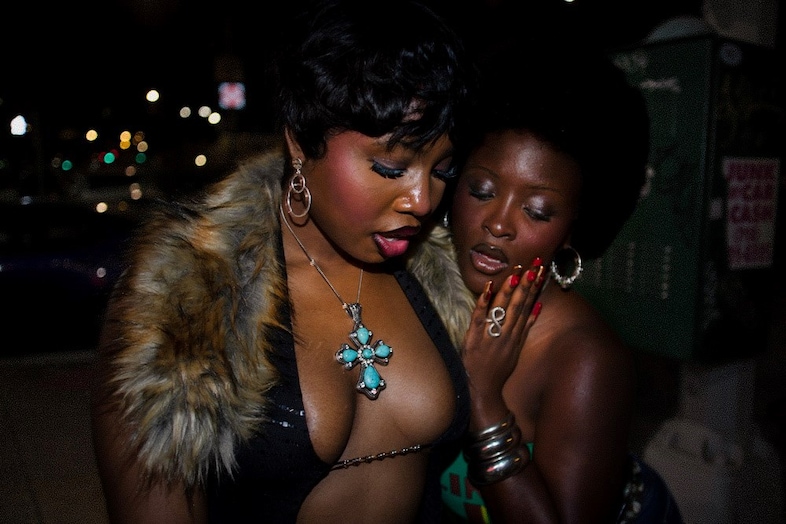
Oduko was inspired by Old Nollywood movies like Girls Cot (2006) by Afam Okereke, Blood Sisters (2003) by Tchidi Chikere and End of the Wicked (1999) by Teco Benson. These movies, particularly Girls Cot, have been reintroduced to Gen Z through social media accounts like @nolly.babes and @yungnollywood on Instagram, which not only preserve Nigerian cinema but also showcase Nigerian style, music and beauty. “I think people love Old Nollywood because of its rawness and authenticity,” Oduko explains. “Those films told more pedestrian stories, and I mean that as a compliment. They were about everyday people, everyday desires, and everyday betrayals, while still managing to be surreal and experimental.”
It was the women in these Old Nollywood films that particularly caught Oduko’s eye, and this is the reason the photo series is focused on how Nigerian femininity is performed and witnessed today. “My favourite women in Classic Nollywood completely abandon what society would deem as ‘respectable’ femininity, and that abandonment grants them a disruptive power,” she explains. “That is something I wanted to bring into OMOGE. Their defiant stares and self-assured poses – these women know they are being watched, but there is a lack of regard for male opinion, even while being fully aware of its presence.” Like a fly on the wall, we watch this group of friends as they gallivant around Brooklyn on what feels like a hot summer evening. All eyes are on them, and while some don’t care, others relish it.

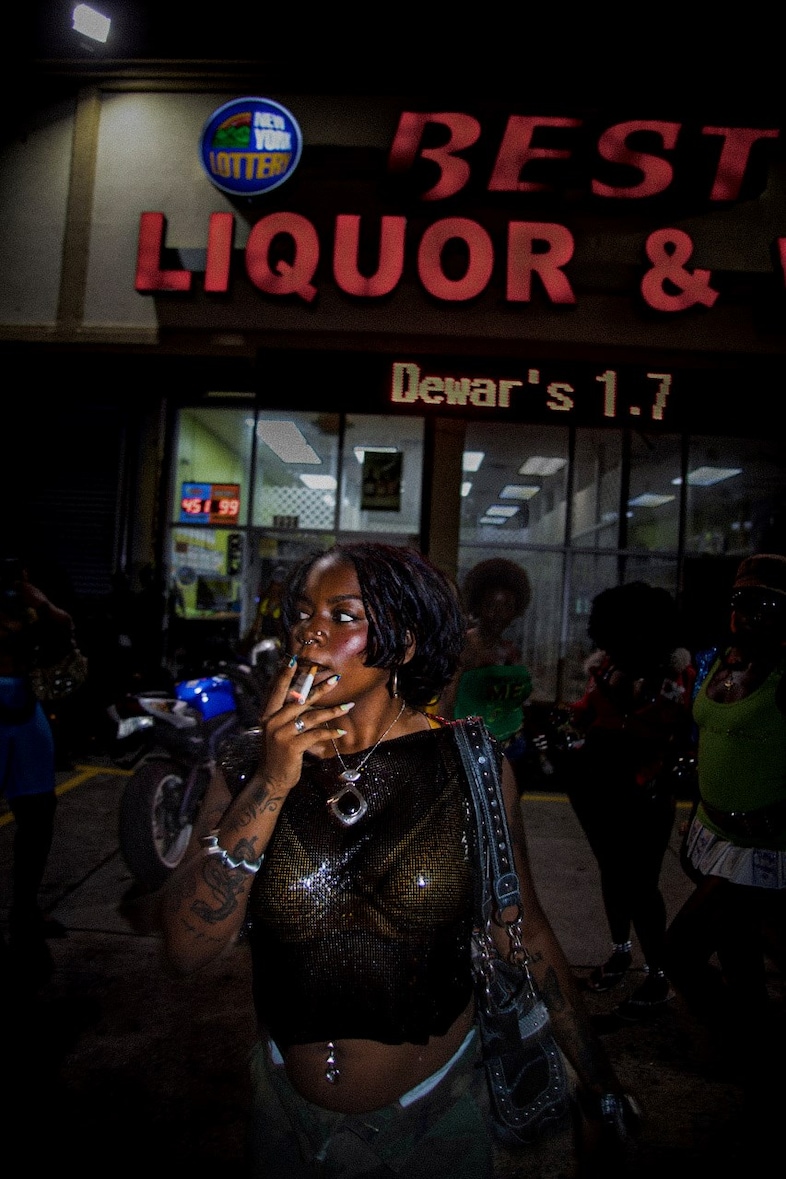
“The thing about wielding sensuality as a tool is that it can become a source of both desire and discomfort,” she reflects. “The confidence that comes with the armour of hyperfemininity also comes with the objectification of the male gaze, which can feel uncomfortable. I think that contradiction lives inside the images.”
While OMOGE currently exists as a photo series, Oduko views it as a building block towards a short film of the same name. “I think contemporary Nollywood has made incredible strides, but there has also been some overcorrection. A lot of films now feel very polished, but sometimes that polish comes at the expense of texture,” she explains. “I want that texture in my film; a combination of the grit, flamboyance, and the emotional volatility of Classic Nollywood. This photo series became a way to explore what already lives in my eye with more intention and precision.”
