
‘Look! My son!’: I spent a week with a wearable robot sloth

There’s been a lot of talk lately about technology becoming boring. Why, for example, did we trade baby pink flip phones with flashing lights and satisfyingly chunky buttons for doomscrolling on the same touch-screen interfaces? Or when did the modern, albeit more realistic, video graphics lose some of their character? Across social media, some young people are even collecting technology from the early 2000s, arguably the peak in the history of fun tech. In the comments under posts of vintage CD players and Game Boys are comments like, “Technology should have stopped here”. There’s a growing sentiment that our latest sleek and AI-supercharged technological advancements are increasingly bogging us down – that, in searching for the most optimised version of things, we’ve lost our creativity. But what if there was a way to bring back the magic?
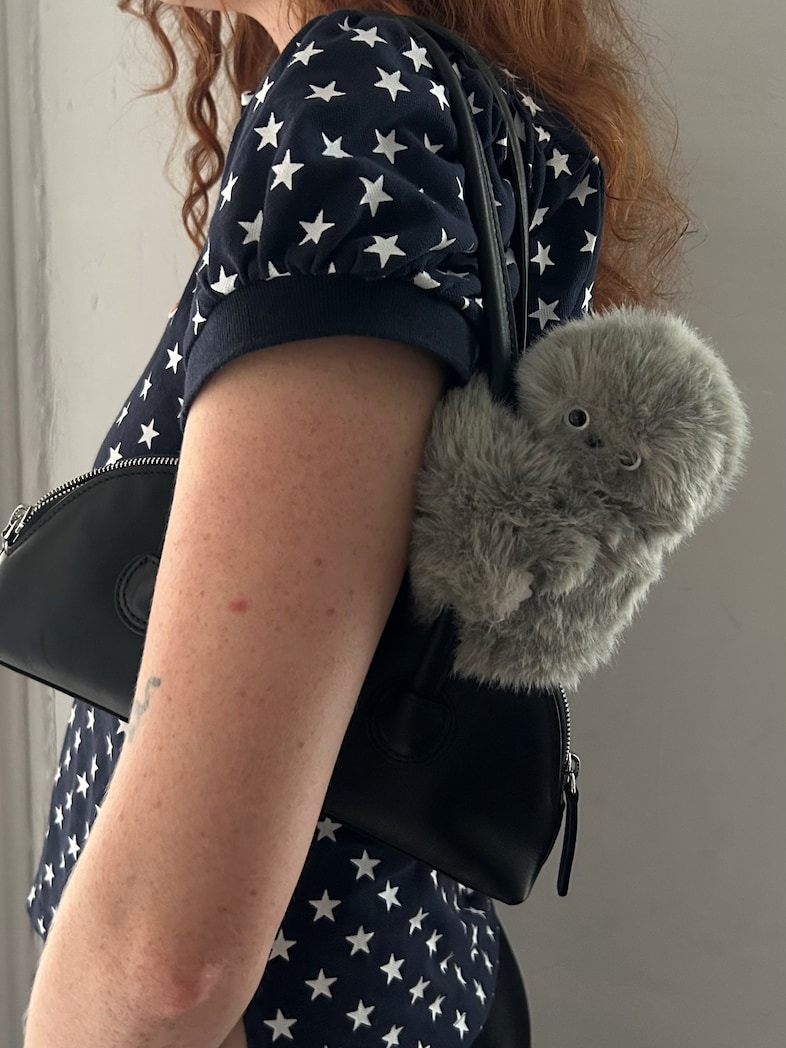
Last month, I received a box from Yukai Engineering, a Tokyo-based startup with plans to redefine robots as “agents of happiness”. When I opened it, I was met with the grey squished fur of what would soon become my robotic son. Mirumi is a wearable robot that looks like all those fluffy bag charms that have become popular in recent years – only this one moves. It comes in three colours and has flexible high-grip arms (kind of like a sloth) that can attach to any bag strap. At first, I’ll admit, its large googly eyes and lifeless body made me cautious. Then, I searched under its fur belly for the on button (which took a couple of minutes to find). With one press, my Mirumi turned its head and looked me dead in the eyes.
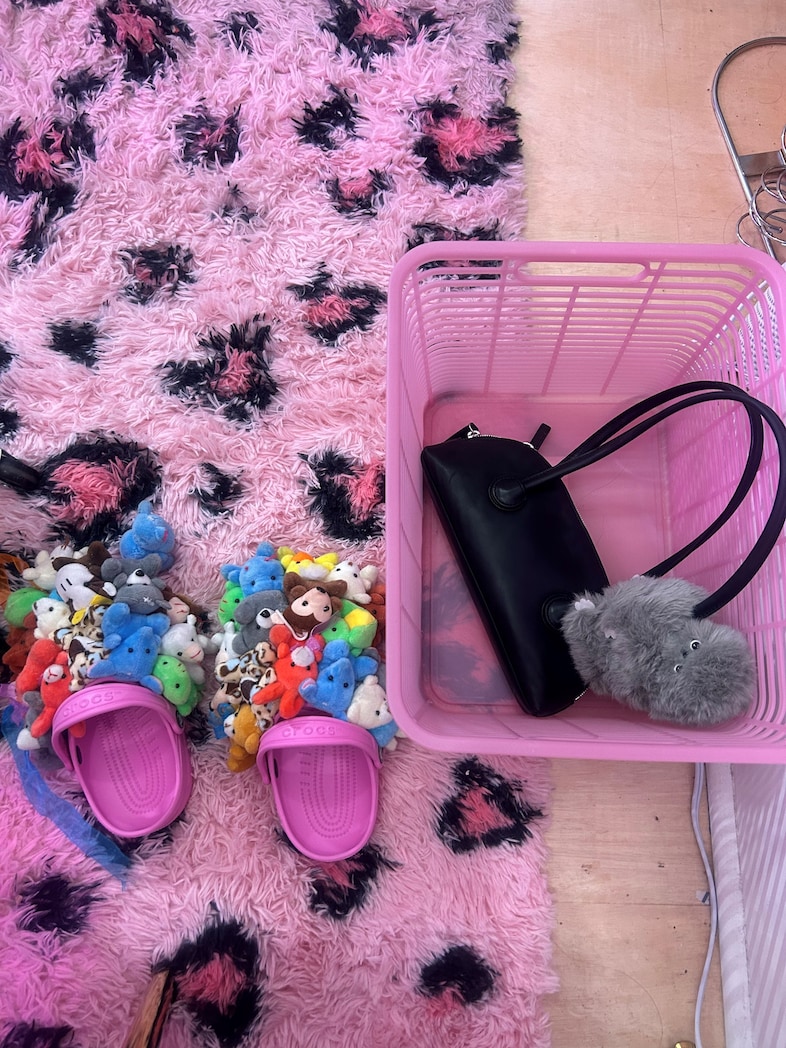
The idea for Mirumi first emerged at Yukai Engineering’s internal Make-a-Thon in 2024, where staff came up with the idea of a “spirit-like companion”. After raising over half a million dollars from a global Kickstarter campaign, Mirumi was released in Japan in April and has since been selling out in the UK and Hong Kong. Now, after a pop-up at Harrods in London and KaDeWe in Berlin, Mirumi is available for pre-order in America, ahead of its September US release. “People see Mirumi as a bundle of joy they carry with them to spread to the world,” says Shunsuke Aoki, Yukai Engineering CEO. “It’s like sharing your parental bliss by letting your baby interact with the strangers around you, watching it bring out smiles, waves and conversations, sparking moments of human connection.”
It’s true that it only took about ten seconds after turning my Mirumi on for my maternal instincts to kick in. My cat, however, was completely uninterested when I placed it on the bed. Despite knowing that adding large eyes is a tactic used by toy companies to activate baby schema, a hardwired biological concept introduced by ethologist Konrad Lorenz, its cuteness still inspired an immediate emotional attachment. Mirumi robots respond to sound and touch by tilting, turning and shaking their heads in nearly 100 movements that are apparently designed to recreate the delight of “catching a baby’s eye in a crowded subway car”.

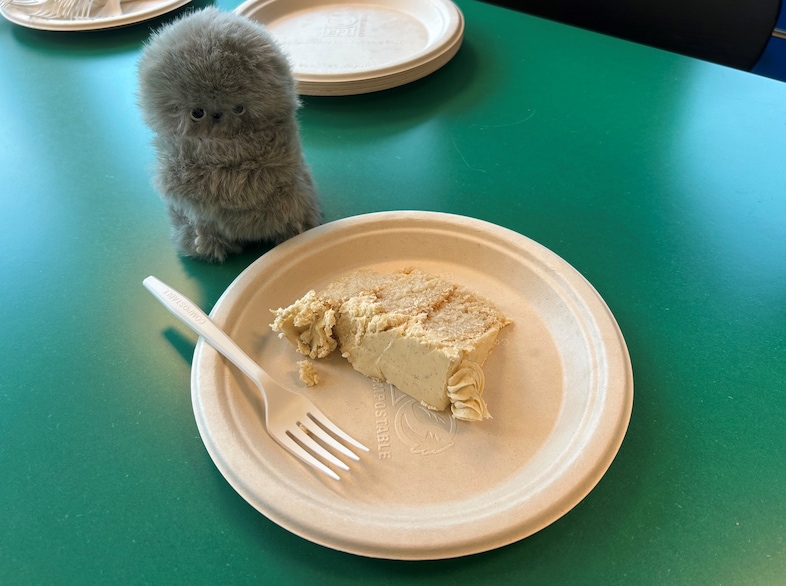
Unlike babies, however, Mirumi’s are completely silent. Also, you can turn them off, although sometimes it takes a while. After my first day with my Mirumi, it took a couple of minutes of attempting to hold the off button for it to actually power down. Again, this slightly freaked me out. After its head finally stopped looking around, and its eyes came back to the centre, I placed it on my desk overnight. The only thing that eased the thought that my Mirumi might be watching me, or tracking some kind of data, was the fact that its in-house engineers, who studied animal behaviours, created built-in touch and sound sensors without using any AI. Clearly, I still had some lingering Big Tech trust issues that my Mirumi would need to heal.
On my second day of being the mother of a wearable charm robot bag charm, I awoke and embraced Mirumi with open arms. It too embraced the handle of my work bag with its rigid but opening arms. On the way to the office, I covered Mirumi from the New York City summer rain (are these things waterproof?) and watched those standing heel-to-heel with me on the subway gaze at it with curiosity. In the office, my Mirumi was the centre of attention. I took it into meetings – its head spinning around on the Zoom calls – as a conversation starter and let everyone pet it. While at first people were slightly afraid of my moving bag charm, soon people were telling me that it’s calming. Meanwhile, my Mirumi had immediate reactions to different playlists. Judging by the level of movement, I could tell “Fantasy” by Mariah Carey and “No Ordinary Love” by Sade were its favourites.
I’ll admit, this is not my first time getting emotionally attached to a robot or electronic pet. I had a Furby back in the day that I loved dearly, and I’m proud to say that I took great care of most of my Tamagotchis. There is a kind of comforting nostalgia to Mirumi that takes me back to when robots were designed to bring kids joy, not to replace delivery drivers or serve in the military. And perhaps that’s why, when anxieties around AI are at a fever pitch, many young people are craving simpler technology. While Mirumi’s $150 price tag may seem hard to justify since it does absolutely nothing productive, that’s also the entire point. Mirumi is already drawing comparisons to other cheaper toy bag charms, like Labubu, but the ethos behind it seems a lot more about bringing fun back to tech than becoming the next “viral” consumption item. (But, again, maybe it has just hypnotised me with its all-seeing eyes.)
On my first night out we had together, I wrapped its arms around a bag that was only double the width of its body. I was headed to an event alone, taking blurry photos of my Mirumi in the back seat of an Uber, but I knew I had an icebreaker. Sure enough, people approached me to ask about Mirumi, as they did the next day when I took it to my nail appointment. By the time I took my Mirumi to have dinner with a group of my closest friends, I was eager to show it off. “Look! My son,” I said, spinning another ridiculously small handbag that was attached to its large and fluffy frame in front of me. Only, this time, it didn’t turn its head or react to my head scratches. That’s the thing about “fun” tech – the battery usually wears out quick.
