
How photographer Elizaveta Porodina finds the beauty in her nightmares

Elizaveta Porodina: Found Dreams
Gallery / 7 images
As a child, Russian photographer Elizaveta Porodina had one recurring dream. In her sleep, she would visit the same glittering violet hillside, and when she climbed it, a hidden world revealed itself, inhabited by eerie mutated beings, oddly shaped animals and people with intensely purple eyes. “It had horrifying aspects, but strangely, it also felt like home,” she says. “Almost like somewhere I had lived before.”
It’s this recurring dream that shaped the celebrated photographer as we know her today – she’s been trying to capture its essence in her work ever since, treading the line between dreams and nightmares. Today, there are five consistent pillars to her work. In each one of her photographs you’ll discover beauty, extravagance, eccentricity, softness, as well as something deliberately horrifying underneath, she explains.
Born and raised in Moscow, Porodina relocated to Munich at the age of 12, where she first began to fall in love with art. The inner workings of the human mind have always been a fascination of hers (dreams especially), and in the mid-2000s she began training in psychology. Eventually, however, she became less interested in theory and much more interested in bringing her dreams to life through a camera lens. Over the past two decades, she’s grown to be one of the most in-demand and influential modern fashion photographers. The list of celebrities she’s captured is endless (Zendaya, Ariana Grande, Paul Mescal, Brad Pitt), as is the number of titles she’s shot covers for.
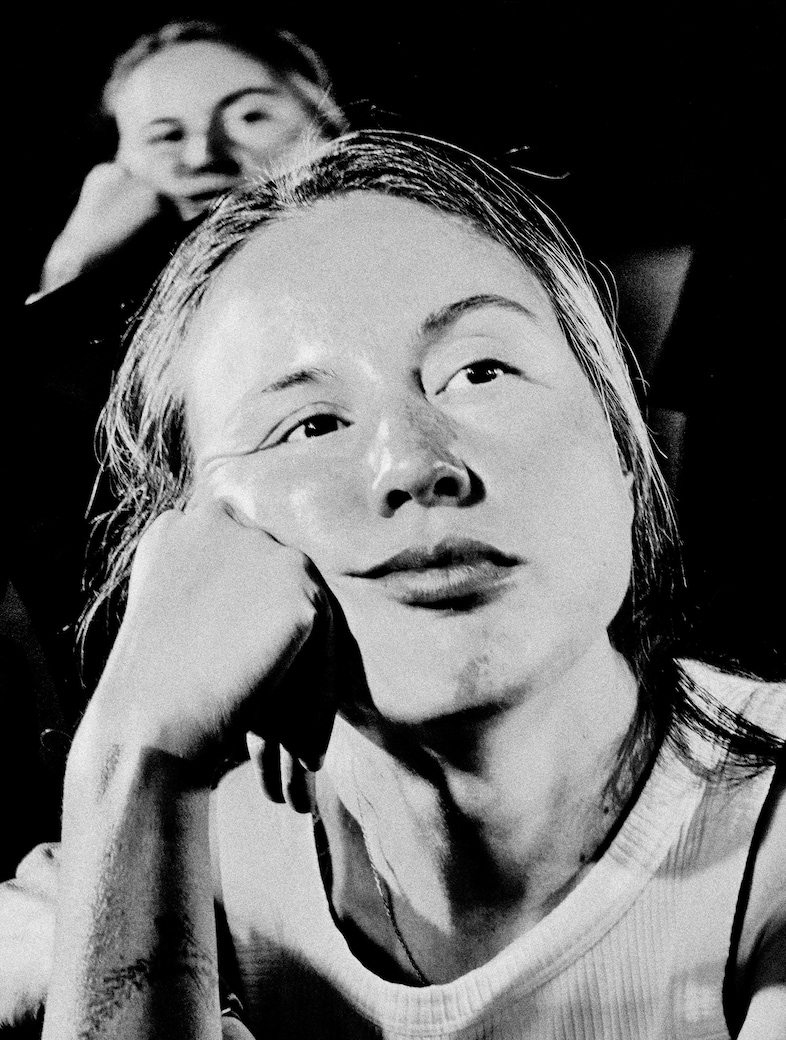
Her style is instantly recognisable: vivid, psychedelic and inspired by female surrealist artists such as Méret Oppenheim, Leonora Carrington, Dora Maar and Remedios Varo. “I’m fascinated by their ability to make reality suddenly become unstable,” she says. Now, in a new book, Found Dreams, published by Prestel, she’s compiled all of her favourite dreamscapes. The book consists of past projects that have felt the most transcendental, or at least, the closest she’s got to recreating that recurring childhood dream. As Found Dreams hits shelves this week, we catch up with the photographer below.
Let’s start at the beginning. Ariana Grande wrote the foreword for this book, what made her the natural choice for this?
Elizaveta Porodina: I increasingly believe that the person you become and the artist you become are inseparable. Meeting Ariana was incredibly inspiring in that sense. I saw someone with enormous discipline and kindness, who had transformed and grown while remaining an incredibly expansive artist. That combination of raw strength and power with kindness completely blew me away. Our collaborations have meant so much to me personally and artistically that asking her to write the foreword felt completely natural.

Why did it feel right to release this book now?
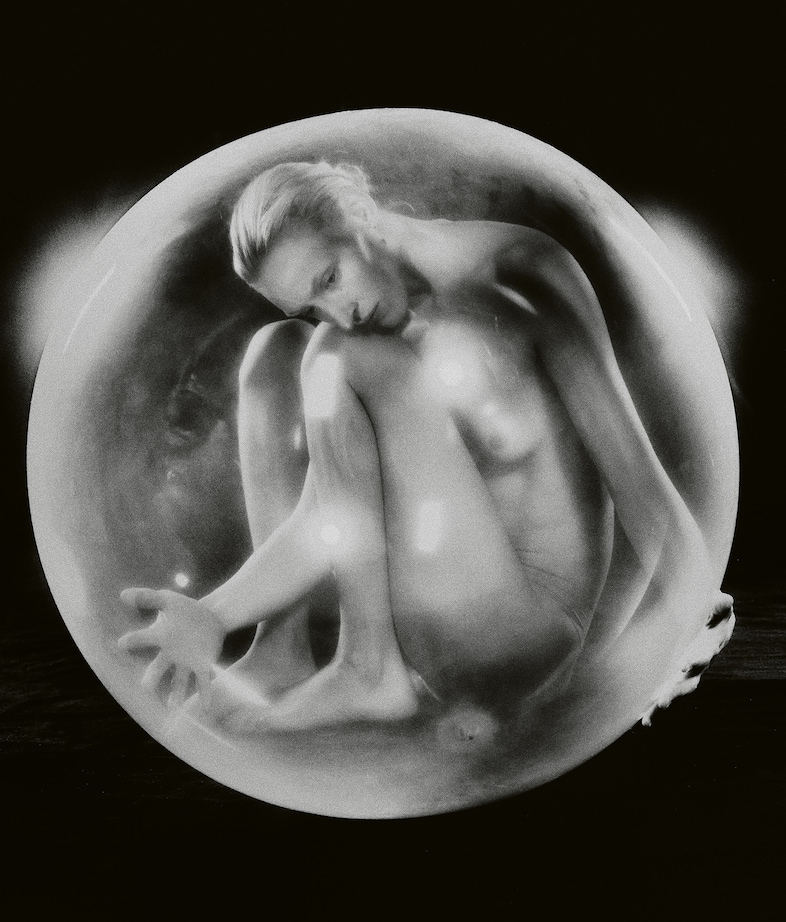
Elizaveta Porodina: For a long time, it didn’t. I felt I had opened doors into certain subjects – femininity, suffering, death, the strange experience and discomfort of living in a physical body – but had only touched their surfaces without exploring their shadow sides. I waited until I had this very instinctive feeling of: “okay, I got it all out.” Not that I had found definitive answers, but I had gone deeply enough that I could bring these images together and they would balance one another.
Of all the shoots featured in the book, is there one that means the most to you personally?
Elizaveta Porodina: Honestly, they’re all my babies. I don’t really differentiate between personal, commissioned or editorial work – if I choose a project, I invest myself in it completely. But my Atmos cover story, photographing insects in macro, gave me something different. Photographing mantises, millipedes, bugs and dragonflies, I began noticing how incredibly individual they were (sassy, feisty, melancholic) and at times genuinely felt they were communicating with me through their body language. One of those images, an orchid mantis, is now on the back cover of the book. It was one of the most touching experiences I’ve had making pictures.
If you could own the original print of any photograph from history, which image would you choose?
Elizaveta Porodina: Josef Koudelka’s 1968 photograph from Prague with the wristwatch held in front of the almost empty city. I love it because it reminds me how important it is to play with the idea of time within my own storytelling. Photography already has such a strange relationship with time, but Koudelka makes time itself physically present inside the image. It brings me back to a question I find endlessly fascinating: what is time as we perceive it, and what could it potentially be?
Who’s someone you’ve never photographed that you’d like to?
Elizaveta Porodina: Emma Stone. I have a feeling we could find an incredible realm of play and experimentation together. I sense in her a willingness to play with reality, performance and transformation, and I think we could get a lot out of challenging each other creatively. That’s always the most exciting collaboration to me – meeting somebody who might push me somewhere I haven’t been before, while I hopefully do the same for them.
Elizaveta Porodina: Found Dreams edited by Nadine Barth and Elizaveta Porodina © 2026 Prestel Publishing, is available now here.
