
Trump celebrates release of Cuban man from months in detention at Alligator Alcatraz

President Donald Trump has cheered the release of an inmate from the notorious Alligator Alcatraz immigrant detention center in the Florida Everglades after he was freed by a judge earlier this month.
“Welcome home to Justo Betancourt, whose Daughter, Arianne, fought very hard to free her father from Alligator Alcatraz,” the president wrote on Truth Social Sunday. “Enjoy your Freedom together!!!”
Uncharacteristically, Trump did not question the justice’s ruling against his administration and struck a more magnanimous tone than might have been expected, perhaps aware of the need to soften his stance on immigration issues ahead of this November’s midterm elections.
Betancourt, 54, a Cuba-born resident of Miami, was detained on October 29 last year after he reported for his annual check-in with immigration authorities, assuming it would be a formality.
Instead, he was held and initially moved between detention centers in Florida and Texas before being incarcerated at Alligator Alcatraz until May 13, when U.S. District Judge Kyle Dudek granted his petition for a writ of habeas corpus, finding that he had been wrongly detained and ordering the government to release him within 48 hours.
Betancourt’s daughter, Arianne, led the campaign to secure his release, explaining that he had completed probation related to prior criminal convictions, had always complied with the requirements imposed on him by immigration officials, and had a work permit application pending.
In February this year, she had joined a community advocacy group called the Workers Circle and taken part in weekly vigils outside of the facility in which her father was being held.
Speaking to The Guardian last week, Betancourt said her father had emerged from the center looking gaunt and underweight, showing hesitancy in his movements and slurring his speech.
She also revealed that, days after being set free, he had been taken to hospital after suffering what doctors believed was a series of mini strokes, a diagnosis they were initially unable to confirm because the electronic monitoring tag clamped to his ankle prevented them from carrying out an MRI scan.
“If he had a headache, if he didn’t feel good, if his glucose was high, they’d just tell him to drink more water,” she said of the Alligator Alcatraz guards’ treatment of her father when he requested medical support for diabetes.

“I’m furious at the condition he’s in now. He’s not the same person he was before they took him in there, and I don’t know if he’ll ever be the same.
Arianne Betancourt continued: “It’s so much worse than I think most people imagine. Guys in there not getting food, all they know is being locked in a cage for months, then they’re dumped in a country where they have no family, nothing.
“My dad is only 54, and when he went in there he was sick but he was still sturdy, at least mentally. And he came out like this. It’s just the reality of so many.”
The announcement of Alligator Alcatraz’s opening last year was met with glee by Trump’s supporters, who bought and sold merchandise online championing it, and the president, then-homeland security secretary Kristi Noem and state governor Ron DeSantis all arrived to tour its grounds in person.
However, it was soon attacked by immigrant rights advocates, who argued its 1,300 male inmates were being treated inhumanely and kept in squalid conditions, and by environmentalists, who feared its impact on the local wildlife.
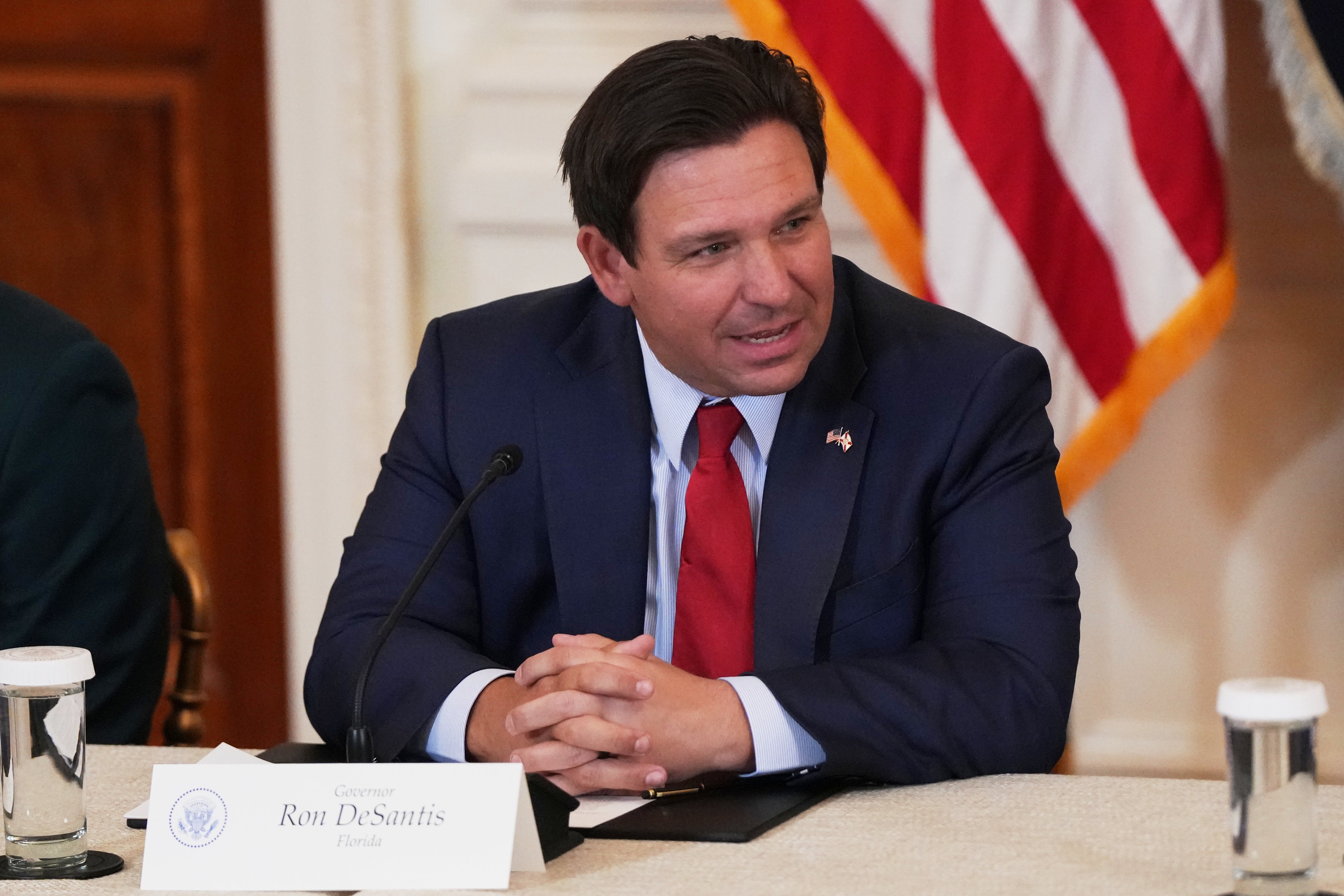
The New York Times reported last week that Gov. DeSantis could soon shut it down, insisting it had always been a temporary solution, as it is costing his state as much as $1 million per day to run.
A spokesperson for the Department of Homeland Security, which runs the center in partnership with the Florida Division of Emergency Management, denied it was “pressuring the state to cease operations at Alligator Alcatraz.”
They told The Independent that “Florida continues to be a valuable partner in advancing President Trump’s immigration agenda, and DHS appreciates their support” and added: “DHS continuously evaluates detention needs and requirements to ensure they meet the latest operational requirements.”
Eve Samples, the executive director of Friends of the Everglades, a group that sued the administration for Alligator Alcatraz, welcomed the potential closure.
“This dark chapter in Everglades history can’t end soon enough,” she said.
“Until then, we’re not taking our foot off the gas – we’re headed back to federal district court with more strong claims to bring. The only acceptable remedy is shutting down Alligator Alcatraz and full remediation of the harm inflicted.”
