

Robbie, a caregiver robot, now rolls into their living room several times a day, offering crucial support to Brenda and Brian Marquis, who faced increasing challenges after the passing of their second service dog, Booker T. Bones.
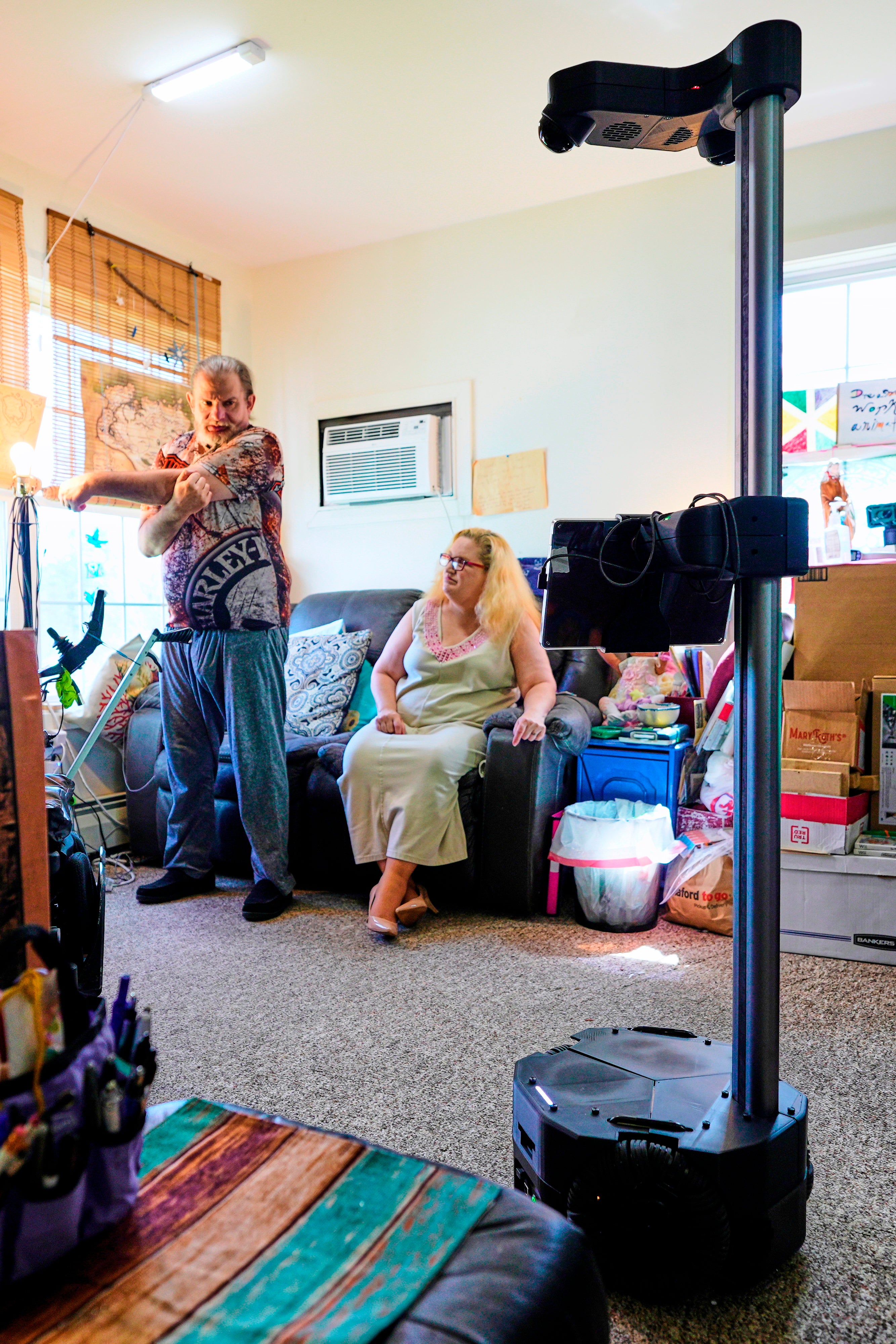
“Do you want to exercise now? Please answer yes or no,” the robot asks 59-year-old Brian Marquis, who lives with a traumatic brain injury sustained in a 2012 car crash. His affirmative response prompts the robot’s googly-eyed digital screen to display an exercise video, guiding him through an afternoon workout.
This immediate, practical assistance highlights a growing need in the United States, where the oldest baby boomers are turning 80 this year, and a severe shortage of home care aides persists due to low wages, high turnover, and demanding workloads.
While the decades-long dream of helpful, lifelike home robots, often inspired by fictional machines like The Jetsons’ Rosie, remains largely unfulfilled, the machine assisting the Marquis family offers a tangible glimpse into emerging possibilities.
This robot, piloted by a University of New Hampshire laboratory with funding from the National Institute of Aging, represents a significant step forward.
Brenda Marquis initially envisioned a different kind of robotic assistance when she emailed a robotics professor at the nearby University of New Hampshire (UNH) to seek advice on robotic dogs. Instead, she found Robbie, a wheeled robot some have likened to a coat rack, officially known as Stretch 4.
This device now spends much of its day at a charging station between the kitchen and bedroom, emerging to perform vital tasks, such as prompting Brian, who also lives with dementia, to eat lunch or drink water.
Brenda, 59, explained that both she and her husband contend with physical, cognitive, and emotional disabilities, making daily life complex. “We’ve been kind of trapped in a problem here in New Hampshire of being able to find and recruit enough home care support,” she said during an interview at their Durham, New Hampshire, apartment.
Navigating her motorized wheelchair while caring for Brian, she added, “That was when I started looking into robotics and trying to figure out what to do.”
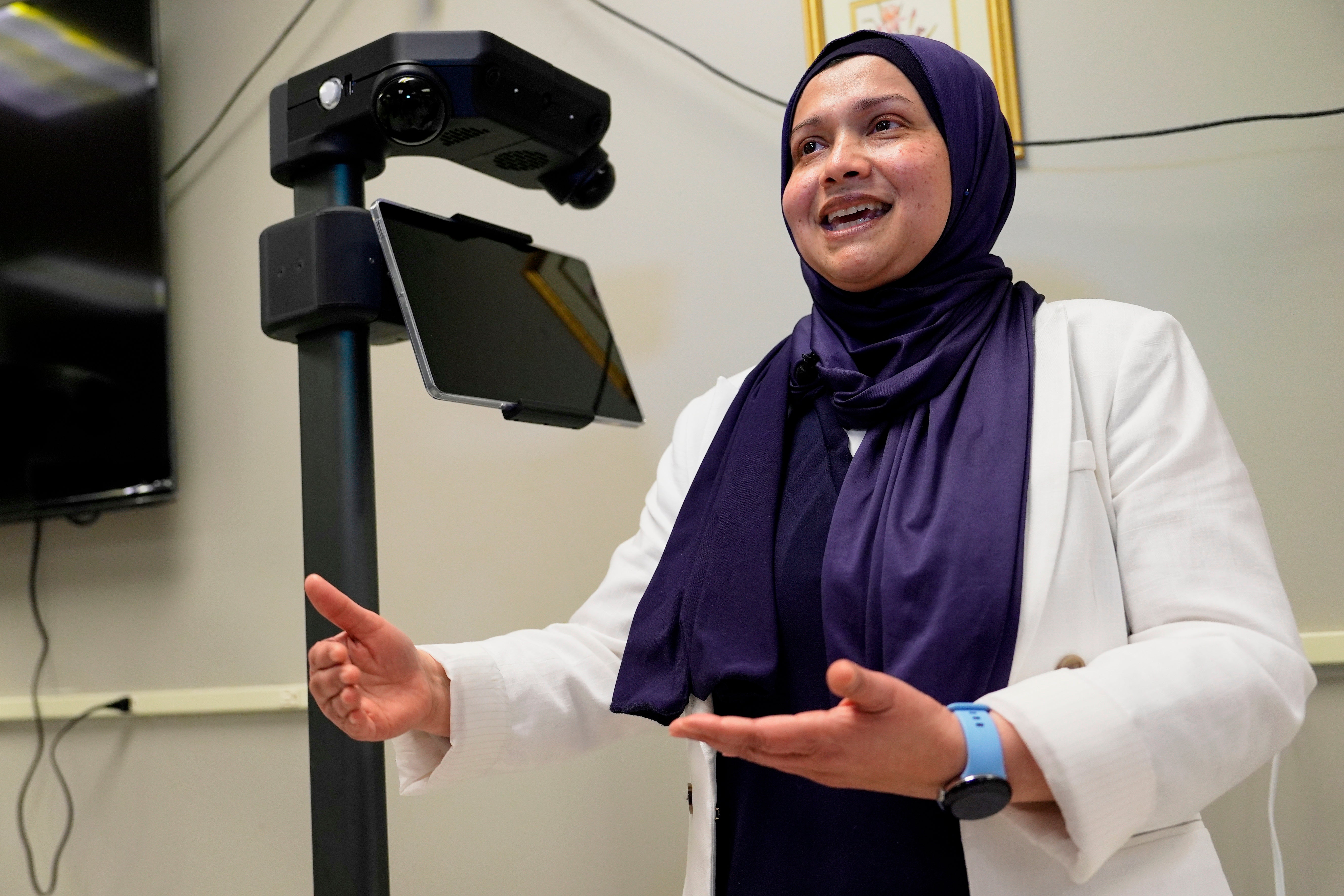
Her inquiry led her to Momotaz Begum, a UNH computer science professor dedicated to experimenting with “socially assistive” robots designed to aid individuals with Alzheimer’s or other forms of dementia.
Begum’s robotics lab, home to various experimental robots including four-legged models, conducted focus groups with older adults in memory care units to understand their preferences for home companions.
While many expressed a desire for pet-like robot designs, Begum noted, “The common feedback that we got about Stretch was, ‘OK, this one looks like a coat hanger.’ But what we learned over time is that the look doesn’t matter.”
Beyond robotic vacuum cleaners, the most common form of caregiving technology for many older adults is an AI-powered voice assistant like Alexa. Some manufacturers have expanded this concept into swiveling tabletop machines, such as ElliQ, designed for companionship for the elderly.
However, Professor Begum finds these insufficient for her goal of reducing caregiver burden, stating, “the caregiver actually does way more than social companionship.” Humanoid robots, meanwhile, remain largely impractical for home use and pose potential physical risks to individuals with limited mobility if they malfunction.
The creators of Hello Robot, the company behind the Stretch series, emphasize simplicity as a core design principle.
“Our robot’s very practical, pragmatic. I think it communicates that,” said CEO Aaron Edsinger, a former director of robotics at Google. He added, “If you show up looking like a humanoid, that expectation’s going to be set so high, it’s going to be very hard to do.”
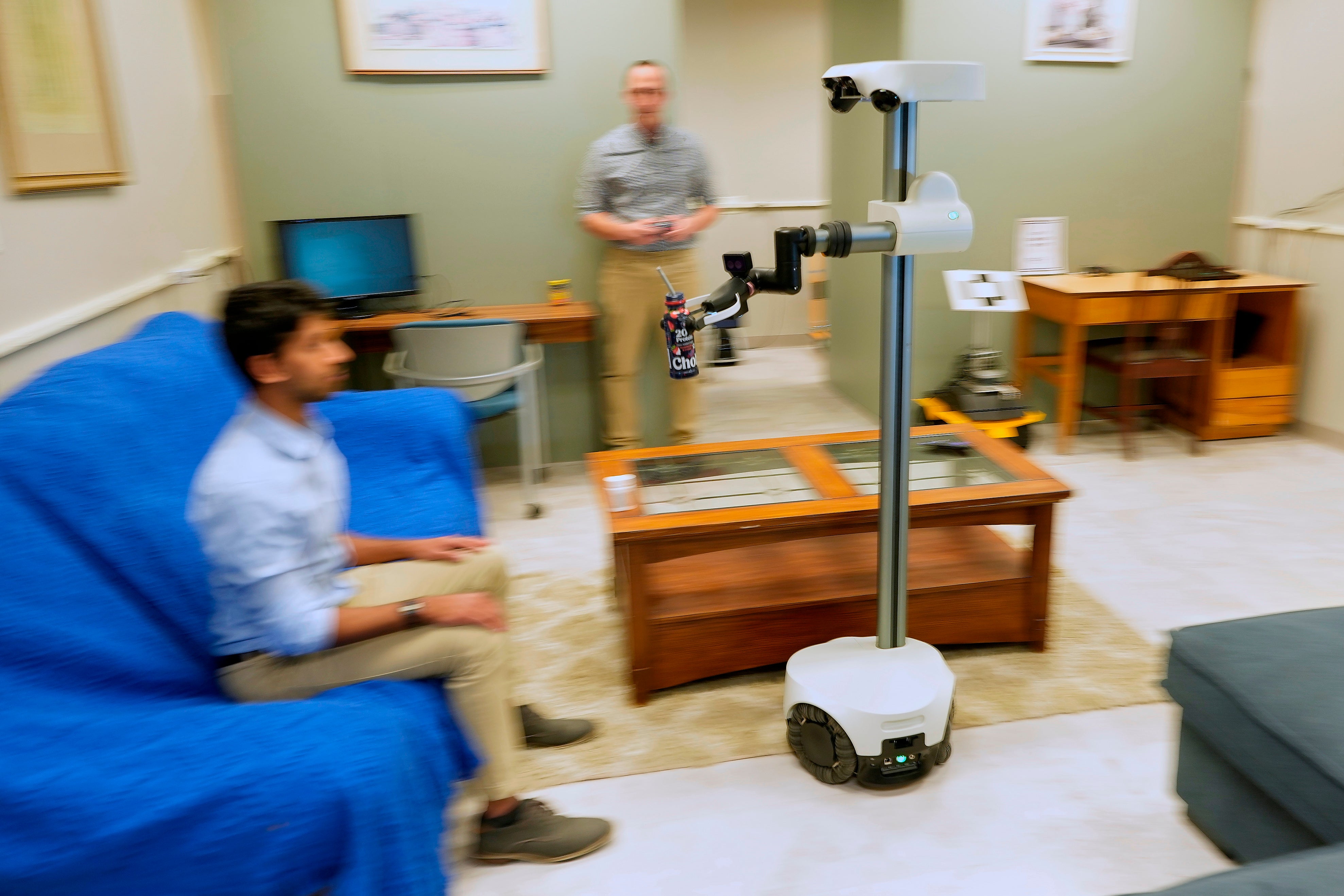
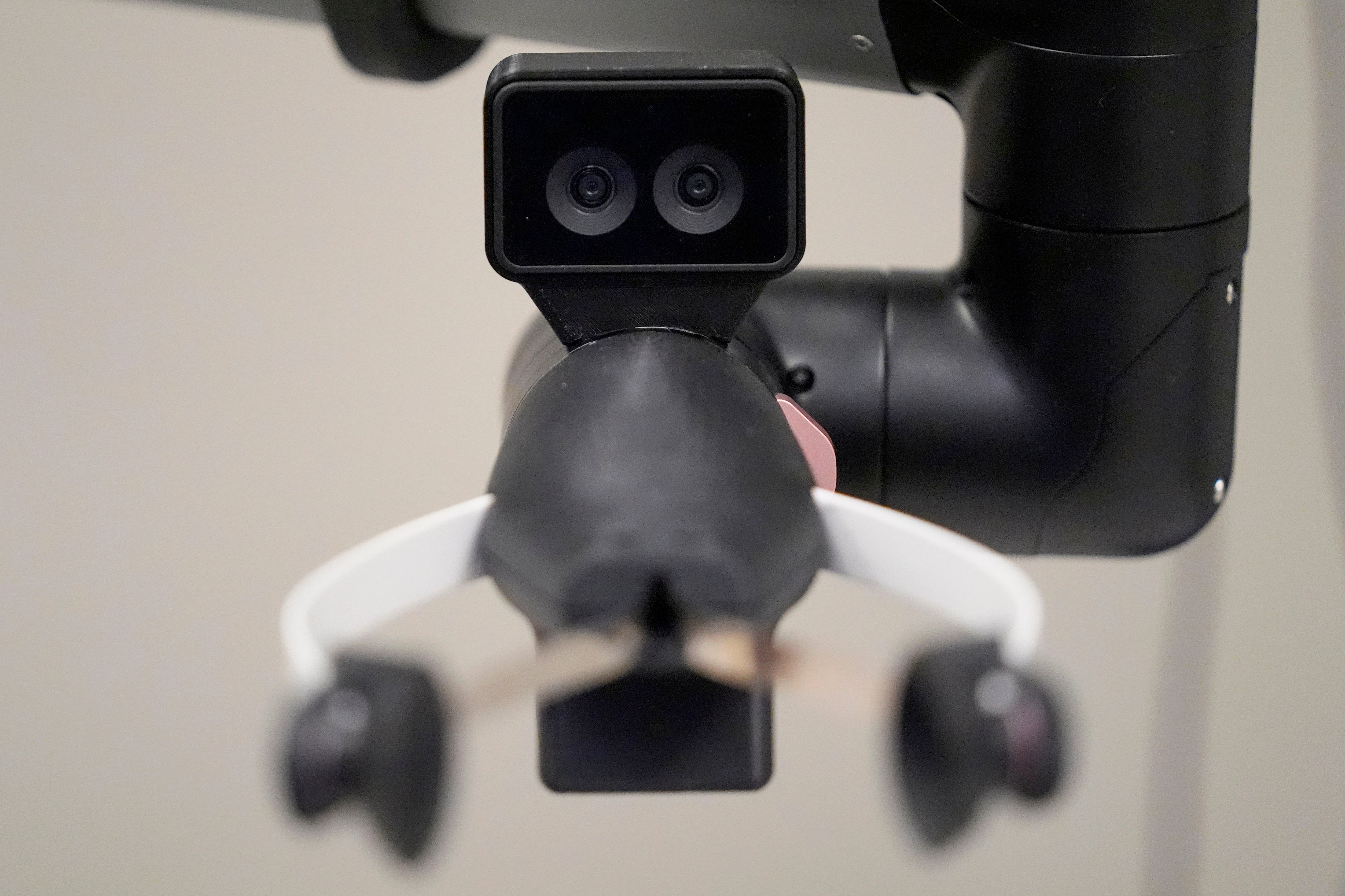
The typical Stretch 4 model features a telescoping gripper that can retrieve a water bottle and hold it for a person to drink through a straw. It can also assist in reading the fine print on a prescription bottle.
The robot integrates information from its cameras and onboard sensors, alongside other sensors installed in the home, to accurately determine its location and identify who is in the room.
Manufactured at Hello Robot’s headquarters in Martinez, California, and priced at nearly $30,000, the new model, launched in May, is far from ubiquitous like a Roomba or an AI-powered speaker. Yet, for its target clientele, it represents a vital lifeline.
Robbie’s programmed care protocol for Brian, prominently displayed on the couple’s wall, includes exercise instructions, meal and medicine reminders, evening routine prompts, and quick washup reminders that activate only after Brian enters the bathroom.
The impact on Brian has been profound. “I was never into technology,” he admitted. “Then I realized I can’t remember to wash my face and my armpits. So, it just really kind of set me free almost.”
For Brenda, Robbie has alleviated hours of daily work and helped reduce expenses. Previously, fearful of leaving her husband alone for too long, she relied on Instacart for groceries. Now, with Robbie providing care, she can leave the house to shop on her own. “I can go ahead and go to that mahjong game or whatever. Robbie’s gonna take care of him,” she affirmed.


